Annapurna Circuit short version trek
Overview
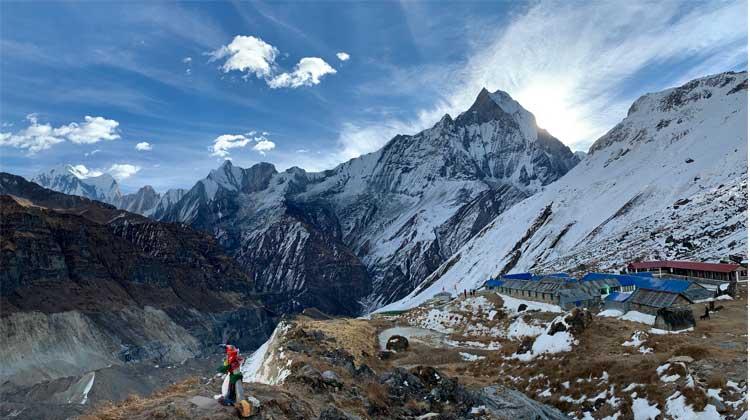
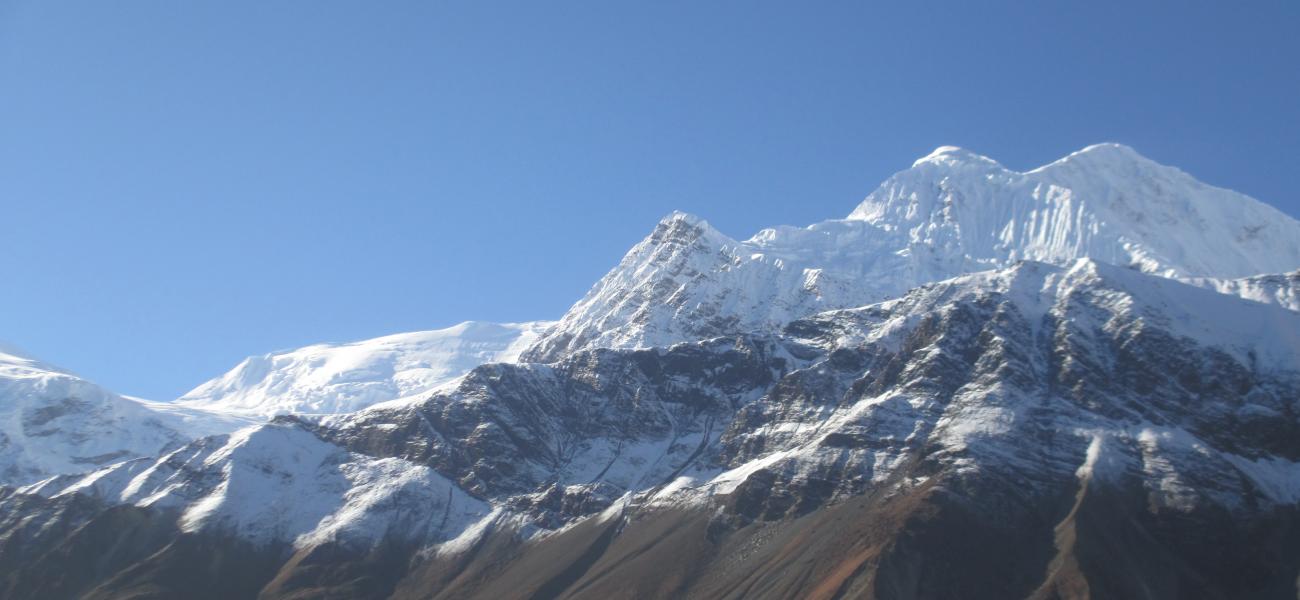
Annapurna Circuit short version trek is the biggest pleasure that provides you the wonderful chance to observe the natural views of Mt. Annapurna ranges and Mt. Dhaulagiri. The trek opens the path to see beautiful scenes from Poon Hill. It also takes you to Manang, Jomsom and the Muktinath Temple with different beautiful traditional villages. The different traditional villages show unity in diversity among different religions and castes in Nepal. There are four regions that complete the trek for the Annapurna Circuit. They are Lamjung, Manang, Mustang, and Magda. Lamjung and Myagdi are known as the lower elevation areas. These consist of different greenery plant species, lush green subtropical valleys and beautiful villages with unique culture and tradition. Manang and Mustang are the areas with higher elevation. You can see the inspiration of Tibetan culture in Manang. Mustang is famous for Tibetan culture. It is also known as the last place of an ancient Bonpo Religion.
Trip Highlights
- Pokhara and Kathmandu city
- Traditional Villages
- Annapurna I, II, III and IV, Mt. Dhaulagiri, Mt, Machhapuchhre
Itinerary
Day 1: Meet at Kathmandu Airport, transfer to hotel
Meet at the Tribhuvan International Airport in Kathmandu and transfer to hotel. When I had time to settle in and freshen up after your long flight, you will be invited to visit our office for a briefing about your program. During this visit, which will help you check your equipment and facilitate the processing of other necessities, such as the National Park permits, etc.
Day 2: Full day visit of Kathmandu Valley Tour
Day 3: Drive to Kathmandu Syange / Jagat (1100 m)
Day 4: Syange / Jagat trek to 1960m Dharapani
Day 5: Chame trek Dharapani: (2630 m.)
Day 6: Chame to Pisang trek (3300m)
Day 7: Pisang to Manang trek (3570m)
Day 8: Manang - Acclimatization Day
Day 9: Manang trek to Letdar (4250m)
Day 10: Letdar Phedi trek (4420m)
Day 11: High Camp to Muktinath trekking Phedi or (3800 m)
Day 12: Muktinath to Tatopani Unit (1180m)
Day 13: Tatopani trek to Ghorepani (2850m)
Day 14: Ghorepani to poonhill hiking and trekking to Hile (1495m)
Day 15: Trek to Hile Nayapul drive to Pokhara
Day 16: Pokhara - Kathmandu, drive or fly to Kathmandu,
Inclusion / Exclusion
Inclusion
- Airport Pickup and Drop
- 3 Nights’ accommodation in Kathmandu and 1 nights in Pokhara including breakfast
- Kathmandu sightseeing with professional English-speaking tour guided
- Transportation as per itinerary KTM- shege - / Pokhara -Kathmandu
- Meals (BLD including hot drinks and tea/coffee)
- An English-speaking Professional guide
- Trekking permit, National park & TIMS card fee (ACAP-TIMS)
- All wages, equipment, meal, medical and accident insurances for trekking staff
- First aid medical kits for emergency
- Trekking Map
- Frontier trek Duffle bag, T-shirt, or cap
- Farewell dinner in Kathmandu
Exclusion
- International Flight Fare
- Nepal Entry Visa Fee
- Personal Insurance (Travel, Emergency Medical, Rescue)
- Meal (Lunch and dinner) during stay in Kathmandu
- Personal Trekking Gears, extra expenses Phone Calls, Water, Laundry, Bar Bills, Battery Recharge, Internet etc.
- Tips for trekking staff
Trip FAQs
-
WHAT IS A TEA HOUSE TREK (TH)?
TH trek means a Tea House Trek. Some of the most popular trekking routes are served by lodges making it possible for you to stay at a local Tea house (a mountain thatched hut that's made of mud, brick and wood) during your trek. Tea house treks are less expensive then Camping treks and are largely suitable for small groups. Usually during busy seasons if private rooms in smaller villages are fully occupied you might have to sleep in a dormitory. Price includes accommodation in lodges, guide, porters and all meals. it would be wise not to expect it to be like the hotel u stay at in Kathmandu; but its reasonably cozy, warm & homely...u can call it luxury on a rugged trail & it can literally be a blessing in disguise because weather patterns can really be unpredictable sometimes.....especially at higher altitudes.
-
DO YOUR GUIDE/PORTERS SPEAK ENGLISH?
Our cultural tour guides are pretty proficient. The trekking guide (Sirdar) and his assistants speak a reasonable amount of English and are good enough to explain to you about the places, local culture or any sight that catches your eyes or is of interest to you.
-
WHAT ABOUT SECURITY DURING TREKKING?
Security of our clients is of foremost & vital importance for us. All our guides and other support crew are carefully chosen for your trips. Our guides hold licenses issued by the Government of Nepal. They are very honest and reliable. But we would also advise you to take care of your own personal belongings. If you are on 'camping treks' please do not leave your bags unattended at any time for your own safety. Take your main bag inside the tent once you reach campsite. At night, put all bags and belongings in the middle of the tent. Your guide assigns a Sherpa on turn wise basis to guard the campsite throughout the night. If you are on a 'Tea house or GAP trek' arrangement, you will be sleeping in a local tea house. You have to take sensible precautions yourself at all times. Never leave your baggage unattended and keep your lodge room locked when you go out. Prevention is always the best kind of cure.
-
WHAT HAPPENS IN CASE OF AN EMERGENCY?
In the event of a serious sickness or a casualty, which we surely believe will not happen; you will be rescued by a helicopter. Since you are entirely liable for all the expenses incurred in the event of your having to be evacuated; please make sure that it is covered by your insurance before assigning for it or u must be prepared to pay on your own after getting back to Kathmandu. Ask your guide to arrange a runner to the nearest communication point and inform our office about the requirements of a helicopter. While asking for the helicopter, please send a name of the sick person and always give the exact location from where the helicopter can airlift u {our guides will help u on this} do not leave your stationed point even if you are getting better once u have called in the helicopter.
-
CAN WE CHANGE THE ITINERARY?
Depending on any given situation, you can modify it to some extent after consulting with your guide. However, the date of your trek completion should always coincide with the original itinerary. You should keep in mind that this is an adventure trip into some of the most remote regions on earth, where any unforeseen events may compel you to go for a change in your itinerary. In such cases, we or your guide will suggest the best alternative similar to your original itinerary.
-
ARE YOU A LICENSED TREKKING AGENCY?
Yes, we are a licensed trekking agency. We have been organizing tours, treks and expeditions for our valued clients for more than a decade. We enjoy our work.
-
HOW DO WE GET SAFE DRINKING WATER ON A TREK?
On camping treks, our staff will boil and cook meals treated by potassium permanganate or iodine. On GAP treks, you will be able to buy safe hot drinks in the tea house. We recommend that you to bring water purification pills. On the trail, water from the streams is safe if away from settlements.
-
HOW SHOULD I DRESS DURING A TREK?
The clothing you bring will need to allow for both the warmth of the days and the chill of the nights. While trekking during the day at lower altitudes, lightweight trekking trousers and T-shirts are recommended. It's always a good idea to carry a waterproof jacket and some warmer clothing with you though as mountain weather is notoriously unpredictable. For the cold nights, thermal underwear, a warm fleece jacket and even a down jacket will help to keep you warm. Good shoes are of great importance. They must be sturdy and comfortable. For higher altitude treks where you may have to tread snow for long hours, good boots are available for rent in Kathmandu. In view of local customs, try not to wear too skimpy or revealing clothes. Your reception by locals can vary greatly on the way you dress.
All Inclusive Cost
USD 1593
Per Person
BOOK NOW QUICK ENQUIRY- Best Price Guarantee
- Hassle-Free Booking
- Team of highly experienced Experts
You may also like !!
Our Best Selling Packages You May Like.