Annapurna Base Camp (ABC)
Overview
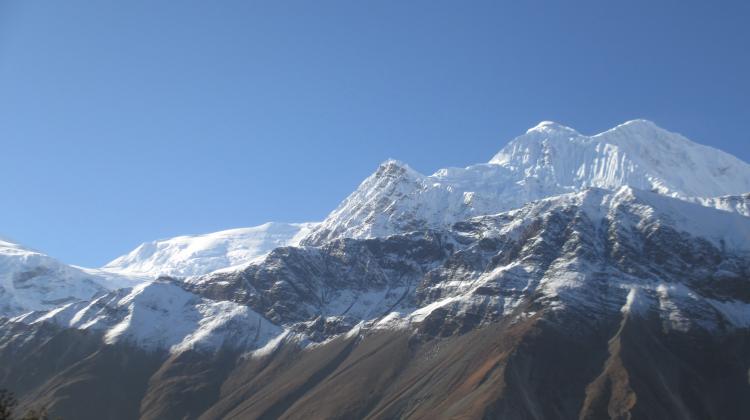
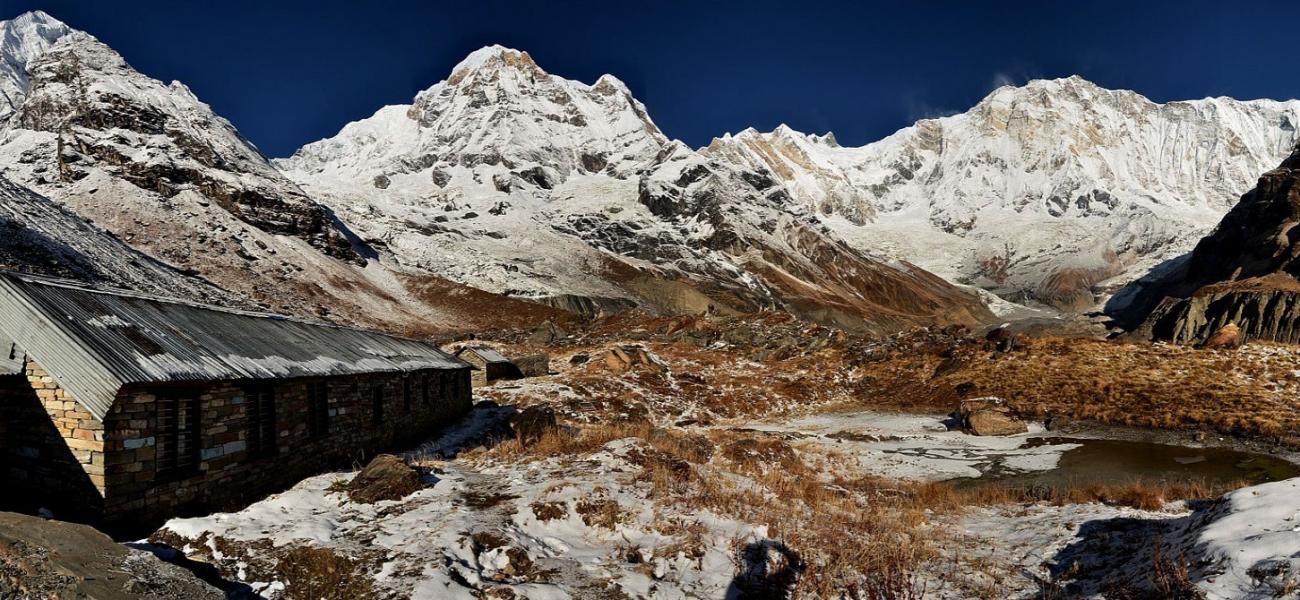
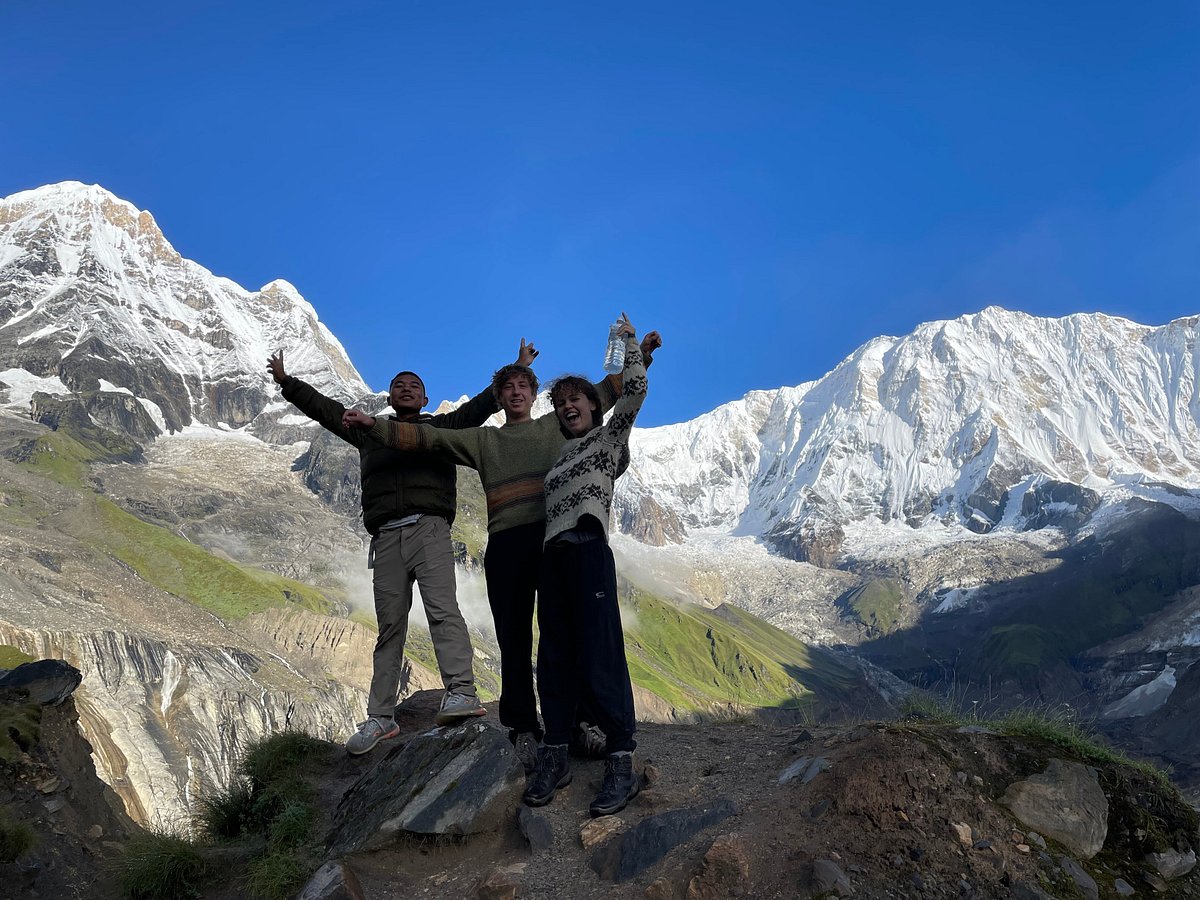
Annapurna Base Camp Trek is one of the most popular and enjoyable trekking adventures in Nepal, which involves trekking through the central Himalayas up to the Annapurna Sanctuary. It is an ideal example of how trekking through Nepal provides you with the experience of diverse terrains, the culture of Gurung and Magar communities, terraced fields, rhododendron forests and mountain views. The highlight of this adventure lies in the Annapurna Base Camp trekking, which takes you to an elevation of 4,130 meters, where you will be surrounded by an amphitheater full of Himalayan mountains. The Annapurna Base Camp trek also takes you to Machchapuchhare Base Camp (3,700m), which will provide you with magnificent views of Mount Machchapuchhre (Fishtail). You will pass by villages like Chhomrong, Bamboo, Deurali, Jhinu Danda, and many other places from where you can enjoy magnificent views of Annapurna I (8,091m), Annapurna South, Hiunchuli, Gangapurna, Machchapuchhre and many other Himalayan mountains.
You will enjoy comfortable accommodations at the hotels in Kathmandu and Pokhara before and after the trek, and during the trek, you will be accommodated in traditional teahouses run by local families. Meals will be arranged throughout the course of the trek to provide energy for the days full of hiking in the Annapurna region.
You will see traditional Gurung and Magar villages such as Ghandruk and Chhomrong, as well as other mountain settlements that can offer you the opportunity to experience the unique Himalayan culture, admire the beautifully kept villages, and experience the hospitality of the locals.
It can be done by physically active first-timers and by experienced trekkers equally, as it is a trek that is achievable for those who are ready to spend several days hiking in the mountains at different elevations.
What to Expect on Annapurna Base Camp (ABC) Trek – 12 Days
Annapurna Base Camp Trek provides an ideal balance between picturesque views of the mountains, varied terrain, authentic local culture, and an exciting Himalayan experience. During 12 days of your trip, you will get to travel through quaint villages of the Gurung and Magar communities, traverse dense rhododendron forests, pass by waterfalls, and hike through alpine valleys until you finally reach the spectacular Annapurna Sanctuary. While the trek includes a number of days when you are hiking up and down, it can be classified as moderately strenuous, and thus is appropriate for beginners with a good level of fitness.- Stand at Annapurna Base Camp (4,130 meters), where towering Himalayan peaks surround you from every direction and create an impressive natural amphitheater.
- Explore new terrain with each and every step, as you move into the world of bamboo forest and high altitude after being in subtropical forests and terraced fields.
- Walk over the suspension bridges, the Modi Khola river, and quaint villages against the stunning backdrop of the Annapurna region.
- Sleep in the teahouses in the mountain range owned by the locals and feel their hospitality.
- See the beautiful views of the mountains such as Annapurna I, Annapurna South, Hiunchuli, Gangapurna, Machhapuchhre, and many more.
- Experience the perfect combination of the Himalayan scenery, culture, mountain people, and adventure in the Annapurna Base Camp Trek, which is one of the most popular among the Nepali treks.
Extra Highlights of the Annapurna Base Camp Trek - 12 Days
Apart from the magnificent mountain vistas and world-renowned sights, the Annapurna Base Camp Trek has many other little things that ensure an absolutely memorable experience. It offers the opportunity for extra activities along the trail while you pass through stunning forests, charming mountain towns, diverse cultures, and shifting natural environments. Thus, the following attractions can make this already amazing Himalayan trek even more unique.- Walk along traditional mountain trails that have connected villages in the region for generations.
- Walk along mountain trails that have connected villages across the Annapurna region for generations.
- See colorful prayer flags, mani stones, chortens, and other cultural elements along the trekking trail.
- Witness the changing landscape as the trail leads from subtropical forests and farmlands into alpine terrain and mountain valleys.
- Enjoy the peaceful atmosphere of mountain mornings, away from the bustle of the cities, and breathe in the fresh Himalayan air.
- Look out for native birds and wildlife as you trek through the Annapurna Conservation Area.
- Experience meeting other trekkers from various places in the world during evenings spent in local teahouses.
- Experience the simple lifestyle of mountain communities and learn how locals earn their livelihoods through farming, tourism, and traditional practices.
- Experience the starry sky and see how the beauty of the stars can be viewed without the city’s artificial lights.
- Gain a deeper appreciation for the importance of conserving and protecting the natural environment of the Annapurna region.
Annapurna Base Camp Trek – What to Expect?
The Annapurna Base Camp Trek provides a fantastic opportunity to enjoy an adventurous Himalayan journey while exploring local culture and magnificent natural scenery along the way. During the trekking trail, you are bound to find variations in topography, mountain villages, forests, rivers, and mountains. This trek is good for beginners as well as trekkers who love high-altitude treks.- Trek through a combination of ascents, descents, stone staircases, forest trails, suspension bridges, and rocky terrain as you approach the base camp.
- Expect several hours of walking daily and plan to be in good physical condition to easily accomplish the trek.
- Expect cold weather and rough terrain since you will be going up, which means being away from the warm areas.
- Interact with the local communities en route and observe how they have been living traditionally in the villages within the Annapurna area.
- Enjoy the hospitality of the local teahouses where you can relax after a full-day trek in the company of the friendly Himalayan locals.
- As you get closer to the Annapurna Base Camp, be ready to see the change in the surrounding scenery with the majestic peaks of the Himalayas surrounding the sanctuary.
- Get to Annapurna Base Camp at 4,130 meters and get a sense of satisfaction from completing this popular trek in Nepal.
Best Time for the Annapurna Base Camp Trek
The best time to do the Annapurna Base Camp Trek is during spring (March–May) and autumn (September–November). During these seasons, you can enjoy stable weather, favorable temperatures, and good visibility, and experience the magnificent views of the Annapurna Range during the entire trekking process. Although the trek can be done during winter and monsoon seasons, changing weather conditions can render some trails difficult and reduce mountain visibility.- Spring Season (March to May): Enjoy pleasant weather, flowering rhododendron forests, flowers in abundance in the natural world, and amazing views of the mountain landscape.
- Autumn Season (September to November): The best time for tourists to visit Annapurna Base Camp is autumn because of the nice weather, dry trails, cool mountain climate, and clear sights of the mountain ranges because of the end of the monsoons.
- Winter Season (December to February): Experience a peaceful climate and wonderful views of snowy surroundings and mountain landscape. Despite the very cold weather conditions and even snowfall at some high elevations, including at the Annapurna Base Camp, winter is also a good time for trekking in the region.
- Monsoon Season (June to August): See lush green forests, waterfalls, and beautiful natural scenery due to the effect of rain. However, rain, slippery trails, leeches, and poor mountain visibility make this season the worst time for trekking in the region.
Accommodation and Food during the 12 Days Annapurna Base Camp Trek
The accommodation and food facilities available during the 12-day Annapurna Base Camp Trek are planned in such a manner that you can be comfortable and well-nourished during the trekking experience.You will enjoy comfortable accommodations at the hotels in Kathmandu and Pokhara before and after the trek, and during the trek, you will be accommodated in traditional teahouses run by local families. Meals will be arranged throughout the course of the trek to provide energy for the days full of hiking in the Annapurna region.
- Relax and enjoy the comfortable accommodations in hotels in Kathmandu and Pokhara before and after the trek, which provide you with comfort to rest and prepare for the adventure that is about to come your way.
- Have clean and comfortable accommodation in the teahouses along the trekking route with basic but comfortable rooms with everything needed for you provided by the locals.
- Relax in the teahouse dining halls after a long day of trekking, where you can warm up, enjoy a meal, and spend time with fellow trekkers.
- Make sure to begin each day of your trekking journey with an early and nutritious meal that will include a variety of foods such as eggs, porridge, Tibetan bread, pancakes, toast, muesli, and drinks. Indulge yourself with a tasty lunch and dinner comprising various foods like dal bhat, fried rice, noodles, pasta, soup, momos, potatoes, curries, and vegetables. There are plenty of hot drinks like tea, coffee, ginger tea, lemon tea, and hot chocolate available at teahouses in order to keep yourself warm due to the harsh climate in mountain regions.
- Choose different varieties of vegetarian food items available at teahouses as freshly made foods.
- Keep in mind that the menu will be simple at higher altitudes, since it is quite hard to transport food items in those regions, but still you can have fresh and healthy food made from local ingredients.
- Have access to clean drinking water at teahouses on the way, and minimize plastic usage by using a reusable water bottle and purification tablets for water filtration before drinking.
Cultural Experiences During the Annapurna Base Camp Trek - 12 Days
The Annapurna Base Camp Trek offers more than spectacular mountain scenery. It is an opportunity to be able to immerse yourself in the rich culture and traditions of the Annapurna region by traveling through attractive mountain villages. As part of your trekking trip, you will be introduced to the Gurung and Magar ethnic groups and learn about their traditions and culture. You will understand how deep-rooted the religions of Hinduism and Buddhism are in this region.You will see traditional Gurung and Magar villages such as Ghandruk and Chhomrong, as well as other mountain settlements that can offer you the opportunity to experience the unique Himalayan culture, admire the beautifully kept villages, and experience the hospitality of the locals.
- Learn about the traditions and way of life of the Gurung and Magar communities, including their agricultural practices, festivals, traditional clothing, and long-standing connection with the mountains.
- You will also see traditional stone houses, terraced farmlands, old mountain villages, and rural landscapes that reflect the resourcefulness and way of life of local communities.
- You will come across prayer flags, chortens, mani stones, and Buddhist monasteries that can tell you a lot about the spirituality, the religions, and culture of the area.
- You will enjoy the true Himalayan hospitality staying in the family-run teahouses that offer the warmest welcome from the local families, delicious food, and friendly conversation with the hosts.
- You will try various authentic Nepali dishes such as dal bhat, noodles, soups, momos, and many other delicacies, all prepared in accordance with traditional recipes and using locally grown products.
- You will also discover the harmony between the two religions - Hindu and Buddhism – that are reflected in the temples, monasteries, shrines, festivals, and architecture of the villages.
- Interact with local residents throughout your journey, gaining valuable insight into daily life in the Himalayas, traditional farming practices, and how mountain communities adapt to changing seasons while preserving their cultural identity.
- Learn about the history of trekking and tourism in the Annapurna region, and discover how responsible tourism has contributed to education, employment opportunities, infrastructure development, and improved livelihoods for local communities over the years.
- Experience a peaceful Himalayan lifestyle that has been preserved for generations, where strong community values, enduring cultural traditions, and sustainable tourism continue to shape everyday life while protecting the unique heritage of the Annapurna region.
Altitude and Acclimatization on the Annapurna Base Camp Trek - 12 Days
The Annapurna Base Camp Trek reaches a maximum altitude of 4,130 meters at Annapurna Base Camp. However, despite the fact that it is classified as moderate altitude trekking, the reduced oxygen content in the air at higher altitudes may influence the hikers. It is very important to adhere to the itinerary.- Ascend to the highest point of your hike at Annapurna Base Camp (4,130 meters). The thinness of the air and lower oxygen concentration at the altitude make acclimatization among the key aspects of the process. By making sure that you have enough time to get used to the altitude, your body will be ready for it.
- Plan your itinerary and ascent in such a way that your body will be given enough time to naturally adapt itself to the increasing altitude as you ascend through the Annapurna region. Such an approach greatly decreases the probability of getting any altitude sickness.
- Spend every night at increasingly higher altitudes and give yourself time to get accustomed to it while lowering your chances of developing Acute Mountain Sickness (AMS).
- Enjoy the constant help of your professional guide who will pay attention to the state of your overall health, evaluate your level of energy, and be attentive to the first signs and symptoms of altitude sickness during your trekking.
- Make sure you constantly undergo assessment of your state of health through pulse oximetry where necessary, thus allowing your guide to assess your oxygen saturation and heart rate at increased heights and the state of your body's adaptation to the altitude.
- Take immediate action if you experience symptoms of altitude sickness, and inform your guide if you develop a headache, dizziness, nausea, fatigue, or shortness of breath. It depends on your physical condition what measures your guide will advise you to take – rest, go to a lower place, or stop your adventure.
- Make sure that your adaptation will be a success by drinking plenty of water, eating healthy food, and walking at the proper pace, as all these factors are crucial for the adaptation process of your body to the altitude.
- Inform your guide about any signs of discomfort that you may have, such as headaches, dizziness, vomiting, poor appetite, shortness of breath, unusual fatigue, or any other unusual feeling.
Trekking Difficulty of the Annapurna Base Camp Trek - 12 Days
Annapurna Base Camp Trek is a moderately difficult trek that will be perfect both for beginners in good shape as well as for experienced trekkers. Though the Annapurna Base Camp trek is not a climb or mountaineering, it involves several days of constant ups and downs, stone staircases, and trekking at high altitude. Provided that you have a well-balanced program and are well prepared for this trek, you can make this tour successfully with the help of your guide.It can be done by physically active first-timers and by experienced trekkers equally, as it is a trek that is achievable for those who are ready to spend several days hiking in the mountains at different elevations.
- One should be ready to walk 5 to 7 hours per day, with the duration depending on the destination, the trail, the weather conditions, and the rhythm of the group. Hiking becomes harder because of the thin air while approaching Annapurna Base Camp, which is at an elevation of 4,130 meters, despite the relatively small gradients.
- Enjoy many types of trails during the hike, with steep climbs up the mountains, long descents, stairs made of stones, forest trails, suspended bridges, trails along the river, and rocky mountainous terrain.
- Be ready to deal with the challenges of the higher elevation and low levels of oxygen, which might increase the level of difficulty for some parts of the trail despite it being moderate.
- There is no need for any mountaineering skills or equipment that would require such knowledge. Physical readiness, endurance, and motivation will help you to have a comfortable hike.
- Before starting the hike, one should train, as pre-trip preparations may significantly affect the overall success of the trip. One should train regularly, for example, do walking, hiking, running stairs, jogging, cycling, etc., in order to prepare his/her legs.
- One should remember trekking tips like walking at a proper rhythm, drinking plenty of water, eating healthy food, having a sufficient amount of sleep, and following all the instructions of your guide about altitude, trails, and acclimatization.
Permits Needed for the Annapurna Base Camp Trek
All trekkers must obtain the required permits before entering the Annapurna region. These permits help conserve the natural environment, support local communities, and maintain trekking trails and facilities within the protected area. If you have organized your trekking with Nepalaya Treks, then all permits are automatically taken care of by Nepalaya Treks; thus, you don’t have to worry about anything but enjoying your Himalayas.- Annapurna Conservation Area Permit (ACAP): Annapurna Conservation Area Permit (ACAP) is a mandatory permit that all foreign trekkers need to enter the Annapurna Conservation Area. The price of the permit is NPR 3,000 (tax included) per foreigner; approximately $22, and NPR 1,000 for the citizens of SAARC countries. One can get the ACAP from the office of the Nepal Tourism Board in Kathmandu or Pokhara. Passport and Nepal visa are mandatory during the application.
- TIMS Card (Trekkers’ Information Management System): As per the new rules of trekking and trekking itinerary, one may require having the TIMS Card for the Annapurna Base Camp Trek. The TIMS card keeps a record of the trekkers for proper management and in case of any emergency situation. In case it is needed, the trekking agency will take care of getting you the TIMS card before your trek begins.
Travel Insurance for the Annapurna Base Camp Trek
It is very important to get travel insurance for the Annapurna Base Camp Trek because of the remoteness of the mountains and the high elevation of the trek, which reaches 4,130 meters above sea level. Although the trek itself is not very difficult, there can be some emergency situations, for example, altitude sickness, injuries, and weather. Select a travel insurance policy that covers trekking up to 4,500 meters above sea level. In this way, you will have insurance coverage during the trekking tour from Lukla to Annapurna Base Camp, as well as during the entire trekking tour at all points above 2,000 meters. You must always verify the maximum height of coverage provided in the insurance policy before buying it.- Make sure that your insurance policy offers emergency helicopter evacuation insurance. It is especially helpful when trekking in the Himalayas because this kind of transport is likely to be faster and more secure in cases of Acute Mountain Sickness, injuries, or any other emergencies that occur in mountains with poor road connections.
- It is important to choose a plan that provides comprehensive medical protection, including emergency care, hospital stays, doctors' visits, diagnostic examinations, medicines, and other expenses connected with possible medical emergencies while trekking in Nepal. It will greatly minimize your costs in case of emergency situations.
- Check whether there is coverage for trip cancellation and interruption, delays and missed departures due to unforeseen events like weather conditions, natural disasters, problems with airline schedules, illness or other circumstances. This insurance can be very useful if you buy an optional flight between Kathmandu and Pokhara.
- Get coverage for lost, stolen, and delayed baggage to protect your equipment, luggage, documents, and valuables in case something happens to your luggage while traveling. Such insurance will prevent you from having troubles related to your luggage in Nepal.
- Carry your insurance policy in written and electronic form together with your emergency contacts, contacts of your insurance company, and all necessary information about your policy.
- Be sure to check your insurance policy carefully before your trip to see if it covers you while trekking in Nepal and trekking at the maximum altitude included in your route, since standard travel insurance often excludes adventure activities and/or high altitude trekking unless special coverage or an adventure sports add-on is bought.
Why Choose Trekking with Nepalaya Treks?
Choosing a good trekking agency is very important in order to ensure that you have a great time while traveling to the Annapurna Base Camp. Our team at Nepalaya Treks will do everything in order to ensure the safety, comfort, and enjoyment of your trekking tour that begins with your arrival in Nepal and ends with leaving it. You will have a wonderful experience of exploring the Annapurna region in a safe and comfortable way, enjoying the amazing landscapes, culture, and hospitality of the people.- Our professional and experienced guides have extensive knowledge of the Annapurna region, ensuring a safe, enjoyable, and informative trekking experience. Not only will your experience be very safe and fun, but it will also be very educational due to all the information you will get regarding the history and culture of the Annapurna region.
- Make use of the services provided by the friendly local guides and porters. The professionalism, local knowledge, and warm hospitality provided by the guides and porters will ensure that you will have a great time on the trek without worrying about any logistical and service matters along the way.
- Have a comfortable stay during your trekking trip, including quality hotels in Kathmandu and Pokhara before and after the trek, as well as clean and comfortable family-run teahouses in the mountains.
- Enjoy trekking in a small group, allowing for more personal attention from your guide, a comfortable walking pace, and greater opportunities to appreciate the region's landscapes and culture.
- We will take care of all the planning and logistics as we professionally organize all required trekking permits, transportation, and trip coordination in order for you not to have to worry about anything.
- Make use of the complimentary trekking equipment, which includes a sleeping bag, down jacket, duffel bag, and trekking poles. Such equipment will decrease your packing load as well as save you money.
- Stay healthy on your trek as we provide regular health monitoring. Our experienced guides may use a pulse oximeter to monitor the oxygen saturation level as well as the heart rate of trekkers at higher elevations and detect the early signs of altitude sickness.
- Take advantage of our professional and immediate customer service round-the-clock, seven days a week. We assure you that we'll be available whenever you have any questions, travel planning, or other urgent matters, in case of an emergency.
- Our prices are fair without hidden charges, and you'll receive the best rates for our services, professional guides, comfortable lodging, efficient transportation, well-planned itinerary, and great customer service.
- Support responsible tourism with us as we work to protect the environment and respect the local communities and their distinct cultures in the Annapurna region.
Why Choose This Itinerary?
The 12-day schedule is meticulously planned to allow you to have a pleasant trekking experience in the Annapurna region, thanks to the combination of picturesque trails, typical villages, and the beautiful Annapurna Sanctuary. This itinerary combines scenic trails, traditional mountain villages, and the highlights of the Annapurna Sanctuary while allowing you to gradually gain altitude and enjoy a well-paced trekking experience.- You follow the planned itinerary with a gradual climb to trek in a comfortable manner from the lowlands up to the Annapurna Sanctuary, with your body having enough time to naturally get used to the increasing altitude and minimize the chances of developing altitude-related illnesses.
- After a truly unforgettable hike through the Annapurna Sanctuary, arrive at the famous Annapurna Base Camp (4,130 meters) and enjoy the fantastic panoramic views of some of the highest and most beautiful peaks in the Himalayas.
- For beginners who have decent physical condition and for experienced trekkers, the itinerary provides an easily reachable yet exciting Himalayan adventure that does not require any technical climbing skills and special mountaineering experience.
- Travel comfortably while resting adequately in hotels in Kathmandu and Pokhara during the days before and after the trek, as well as in welcoming family-run teahouses on the way.
- Have the opportunity to admire amazing views of Annapurna I, Annapurna South, Hiunchuli, Machhapuchhre, Gangapurna, and many other peaks in the Himalayan range, discovering new mountain views on every stage of the trek.
- Be amazed by the great variety that the Annapurna area has to offer and enjoy trekking in rhododendron and bamboo forests, in the valleys of rivers, in the terraces of farming lands, over suspension bridges, among the mountains, and through the villages of the Gurung and Magar ethnic groups.
- Use the services of professional local guides who will look after your safety and comfort and make your trek as easy and enjoyable as possible for you.
Responsible Tourism
Nepalaya Treks is convinced that responsible tourism can help preserve both natural and cultural resources of the Annapurna region, and promote sustainability in the lives of local people. Therefore, all trekkers are advised to follow the principles of responsible tourism, being respectful to the environment, local culture, and mountain community. Responsible behavior can help protect the Annapurna Conservation Area for future generations.- It is necessary to maintain respect for the local culture, customs, and worshiping sites during the entire trekking adventure by dressing decently, asking people for their consent to take pictures, and being courteous when visiting monasteries, temples, chortens, mani stones, and worshiping sites.
- Take a reusable water bottle with you, fill it up with purified water in the teahouses or at the water stations along the way, using purification pills or a portable water filter. It may be a small step, but very important in order to minimize your carbon footprint and help preserve the environment.
- Use rubbish bins when you have them, or take garbage home when there are no special containers available in villages, forests, rivers or highlands. Do not leave garbage behind in the Annapurna region.
- Stick to officially marked routes while trekking in order to minimize soil erosion, protection of sensitive plants, and minimize your influence on the fragile ecosystem of the Annapurna Conservation Area.
- Purchase items made by locals in teahouses and local stores, which include handmade items, local food and drinks, and other local items. The money spent on these products will be going directly into the pockets of the mountain people.
- Save on water and electricity, as both are valuable natural resources of remote Himalayan settlements where the water is taken from nature and electricity is generated using solar panels and mini-hydro systems.
- Do not disturb flora and fauna of the Annapurna Conservation Area. Watch the animals from a distance and do not disturb them. Please note that collecting flowers or damaging local nature in any way is prohibited.
- Listen to your guide's recommendations concerning attitudes to the local culture, garbage disposal, and behavioral norms.
- Always follow the principles of the "Leave No Trace" principle to make sure that you leave all campsites and villages in the same condition as you found them and the pristine landscape of Annapurna remains untouched for future generations.
Group Size
Annapurna Base Camp Trek can be made available for both smaller groups and larger groups depending on your travel style. No matter whether you want to go alone on the Annapurna Base Camp Trek, with your family, friends, or as a group, we at Nepalaya Treks provide you with a pleasant, personalized, and secure adventure throughout the trail.- Take advantage of small group numbers to have a more personal experience, making the most of the chance to engage with your guide in an informal way, walk at a leisurely pace, be more flexible, and make the most of the breathtaking scenery and local culture.
- Enjoy your journey in bigger groups and have more assistance from more government-licensed guides and experienced trekking staff who will coordinate everything, pay attention to everyone, and make sure that every member of the group feels safe during the trek.
- Have an extra guide to assist your group if there are eight or more people in it to facilitate the management of your group and to respond faster on the trail.
- Trek at a moderate pace with all group members encouraged to walk together with the help of the trekking team and having enough time to stop and rest, take photos, and look around.
- Go on a private group tour and make your choice about your travel dates, trekking route, trekking pace, and other specific requirements for your trip to Annapurna Base Camp.
Private Departure Available
For those who desire to have a more personalized experience on the trekking, you may have private departures of the Annapurna Base Camp Trek - 12 Days. You will be able to select your preferred trekking dates, and you can also have a flexible trekking experience along with your family, friends, or even a private group without the participation of others. With private departures, you can have a comfortable trekking experience within the Annapurna region along with the support of your trekking group.- Private treks are organized for individual adventurers, couples, families, groups of friends, as well as corporate groups in order to have an exclusive trip with all your chosen people, making your Himalayan trip much more personal and unforgettable.
- Flexible departure options will give you the ability to plan your trek as you like, making it convenient for you to organize your holiday and not to coincide with the peak period of tourism, as well as choosing the most suitable season for you.
- A tailor-made trekking experience will provide you and your group with more flexibility during your journey by making it possible to change your pace of walking, taking rests, stopping to see some interesting things, and taking photos in places where it is possible.
- Personal assistance from your private guide will take care of all your needs during your trek, giving you professional route guidance, helping you with altitude problems, providing you with cultural information about Nepal, its traditions and customs, as well as answering all your questions.
- An opportunity to enjoy the privacy and exclusivity of the trip will give you the chance to explore the Annapurna region of Nepal according to your own schedule and without the necessity to coordinate it with other trekkers.
- An excellent option for family vacations, honeymoons, parties, corporate retreats, school expeditions, as well as for trips of friends together.
Trekking Equipment Rental Information
If you do not have all the needed trekking equipment, there is no problem. You can rent most of the trekking equipment in Kathmandu before your Annapurna Base Camp Trek starts. This way, you will avoid having to buy costly equipment, as Nepalaya Treks will be able to help you rent the best trekking equipment for your trekking trip.- Most of the important trekking gear will be made available through Nepalaya Treks: sleeping bags, down jackets, trekking poles, and duffels. Some selected pieces of equipment will be made free for use on the trekking trail; this is to minimize your baggage-carrying burden and ensure that you carry reliable equipment for the mountain trekking.
- Other trekking gear like trekking boots, backpacks, gaiters (if needed), rain gear, and others can be rented from trusted trekking shops in Kathmandu. We shall make suggestions on such reputable rental shops in Kathmandu where you can rent high-quality trekking gear at affordable costs.
- All rental equipment suggested by us is well maintained and suitable for Himalayan trekking; hence, this equipment is clean, well functioning, and durable to withstand different weather changes, different temperature levels, and different trekking trails on the way to Annapurna Base Camp.
- Do spend some time testing and checking your rental equipment before starting trekking. You should ensure that your boots fit well, your backpack is well adjusted, and your clothing and other equipment are in good condition. Properly fitted equipment will definitely improve your comfort during the whole trekking trail.
- Your personal clothing and base layers should be brought from your place if possible: thermal clothing, gloves, trekking socks, trekking pants, hat, sunglasses, and other personal belongings. Since this clothing and other equipment are in direct contact with the skin, wearing your own clothes makes you feel comfortable, hygienic, and well-fitted during trekking.
- If you have an old but well-broken-in pair of trekking boots, we advise you to bring them because wearing familiar footwear gives you more support, minimizes risks of getting blisters, and increases comfort level while trekking on different mountain trekking trails for several days continuously.
- Our professional trekking team is ready to assist you in acquiring additional trekking equipment in case you need to rent, buy, replace, or change some of your trekking gear before leaving from Kathmandu for the Pokhara and Annapurna trekking trail.
- Some extra equipment may be necessary depending on the seasonal conditions of the trekking trail in case of trekking in winter months. Annapurna Base Camp Trek does not require crampons normally. In case of snowfall or ice on the trail, especially in winter months, your guide may advise you to rent microspikes or crampons.
How to Prepare for the Annapurna Base Camp Trek
Proper preparation is what makes the difference between a successful, comfortable, and enjoyable Annapurna Base Camp Trek. Although this trek can be taken by beginners who are in good physical condition, it is a week-long trek involving walks on various terrains, numerous ascents and descents, and trekking in the high-altitude area of 4,130 meters above sea level. It is important that you be physically prepared before going on this adventure in the Himalayas.- Work on your physical condition a few weeks before starting the trek with some regular walking, hiking, jogging, biking, swimming, and stair climbing.
- Train by carrying a lightweight backpack whenever you can, especially if you are planning to carry your own daypack during the trek. Training with similar weight makes your body accustomed to walking for several hours in mountain terrain.
- Take appropriate clothing in case of changing weather in the mountains, including moisture-wicking clothes, warm clothes for insulation, a waterproof jacket, gloves, a warm hat, sunglasses, and trekking pants. The temperature can vary significantly from the lower villages up to Annapurna Base Camp.
- Trekking shoes should be packed in your bag that fits well and are well-broken-in since well-fitting shoes will prevent you from getting blisters and foot injuries. This is essential for you to avoid trekking challenges due to ill-fitting shoes.
- Make sure you pack the things you need for trekking, including water bottles, water purifiers, sunscreen lotion, lip balm, headlamps, and first aid kits.
- Educate yourself about high altitude trekking and the signs of AMS and trek at the advised pace. Drinking plenty of water, having nutritious food, and notifying your guide of any discomfort you feel during your trek will be enough right acclimatization.
- It is necessary to get insurance coverage for your trek to Nepal and make sure that your insurance covers all aspects of your trekking, including high altitude trekking, evacuation, and any interruptions on your way. It is necessary to always carry both copies of your insurance documents.
- Be mentally ready for your trekking experience by considering the unpredictable mountain climate, trail, and trekking itinerary. Your flexibility and compliance with your guide’s recommendations are essential for a fun trekking experience.
- Check your gear before departing from Kathmandu and ensure that all your essential gears are functioning well and are properly sized. Should you require additional gear, Nepalaya Treks can help you out in that respect.
Trip Highlights
- Relax your tired muscles in the hot springs of Jhinu Danda.
- Relish the teahouse accommodation.
- Explore the villages of Gurungs and Magars like Ghandruk and Chhomrong.
- Go through the beautiful suspension bridges as well as through the valley of Modi Khola.
- Visit the rhododendron forest, bamboo forest, and Alpine landscape.
- Enjoy the mesmerizing views of Annapurna I, Annapurna South, Hiunchuli, Machhapuchhre, and Gangapurna.
- Get to Annapurna Base Camp, which is situated at an altitude of 4,130 meters. It is one of the most popular trekking sites in Nepal.
- Enjoy the trek inside the Annapurna Sanctuary with all surrounding ranges of the Himalayas.
Itinerary
Day 1: Arrival at Tribhuvan International Airport and Transportation to Your Hotel (Elevation: 1,300 Meters)
On arrival at Tribhuvan International Airport in Kathmandu, one of our representatives will greet and transport you to your hotel. After that, you can have some rest from your travel, or alternatively, you can visit Thamel, the area known for restaurants, cafes, trekking equipment shops, and a vibrant atmosphere. In the evening, there will be a welcome dinner party when you can meet with your trekking guide and other fellow trekkers. During the process of briefing, the guide will brief you regarding the trekking route, trekking conditions, altitude precautions, and other essential information. Max Elevation: 1,300 meters
- Travel Distance: 6 to 8 kilometers
- Travel Hours: 30 to 45 minutes
- Accommodation: 3-Star Hotel
- Meals Included: Welcome Dinner
Day 2: Drive from Kathmandu to Pokhara (822 meters) (Optional: Flight)
Day 3: Drive to Birethanti and Trek to Magar Village
Day 4: Trek to Ghorepani and Continue to Tadapani
Day 5: Trek to Chhomrong (2,170 meters)
Day 6: Trek to Himalaya Hotel (2,920 m)
Day 7: Trek to Annapurna Base Camp (4,130 meters)
Day 8: Trek to Dovan
Day 9: Trek to Modi Khola
Day 10: Trek to Phedi and Drive Back to Pokhara
Day 11: Drive from Pokhara to Kathmandu (Optional: Flight)
Day 12: Final Departure
Inclusion / Exclusion
Inclusion
- Airport pickup upon arrival and drop-off at the airport before your departure.
- Accommodation in a comfortable 3-star hotel in Kathmandu.
- Hotel accommodation in Pokhara.
- Twin-sharing accommodation in local mountain teahouses throughout the trek.
- Traditional dinner on arrival in Kathmandu.
- Food as per the itinerary.
- Transport as per the itinerary.
- English-speaking trekking guide certified by the Government.
- Porter services for luggage transportation on the trail.
- Guide and porter cost in terms of salary, food, accommodation, and insurance.
- Annapurna Conservation Area Permit (ACAP).
- TIMS (Trekkers’ Information Management System) card, if needed according to latest trekking regulations.
- Complimentary use of a sleeping bag, down jacket, duffel bag, and trekking poles during the trek.
- A comprehensive first aid kit carried by your guide.
- Regular health monitoring with a pulse oximeter during the trek.
Exclusion
- International airfare to and from Nepal.
- Nepal entry visa fees.
- Optional domestic flights between Kathmandu and Pokhara.
- Travel insurance which covers high altitude trekking.
- Costs incurred for emergency helicopter evacuation (unless covered under travel insurance).
- Clothing and trekking gear that are not included with Nepalaya Treks.
- Bottled water, soft drinks, alcohol, and snacks.
- Personal spending such as hot showers, WiFi, phone charging, laundry, telephone calls, and souvenirs.
- Tipping for your guide, porter, and driver.
- Miscellaneous expenditure arising from flight delays, unfavorable weather, landslides, strikes, political instability, sickness, or any other unexpected situation.
- Extra accommodation, transport, and meals which may not be part of the program.
- Any services not specifically mentioned under Cost Includes.
Check List
Annapurna Base Camp Trek needs adequate preparation and packing of the right gear. The hiking route passes through various types of landscapes such as lush subtropical forests and traditional mountain villages, to harsh alpine terrain where Annapurna Base Camp lies (4,130 meters). The weather is unpredictable and varies on the course of the trek, especially at the higher altitude. Hence, warm layers of clothing, rain-proof gear, and reliable trekking tools are recommended. Here is the list of essential items that one needs to pack for an enjoyable and hassle-free trek.
General
- Four-season sleeping bag
- Down jacket
- Duffel bag
- Windproof and waterproof lightweight jacket
- Daypack (25-35 liters)
- Rain cover for your backpack
- Headwear and accessories
- Warm hat which covers your ears
- Sun hat or cap
- Neck gaiter or buff
- Ultraviolet-protected sunglasses
- Headlamp with extra batteries
- Sunscreen (SPF 35-60)
- Lip balm with SPF
Hands
- Lightweight trekking gloves
- Warm insulated gloves
- Waterproof outer gloves (optional during the cold season)
- Upper body clothing
- Moisture-wicking long-sleeve trekking shirts
- Thermal base layer
- Fleece jacket or woollen sweater
- Insulated down or synthetic jacket
- Waterproof and windproof outer jacket
- Sports bra (for females)
Lower body clothing
- Thermal leggings or base layer pants
- Waterproof and windproof trekking pants
- Fleece pants (warm)
- Comfortable trekking pants
- Lightweight casual pants for evening time
- Undergarments
Footwear
- Waterproof trekking boots with ankle support
- Comfortable sandals or camp shoes
- Lightweight sneakers (optional)
- 4-5 pairs of warm trekking socks
- Sock liners (optional)
Personal first aid and medicines
- Your personal prescription medications
- Adhesive bandage
- Blister treatment materials
- Pain relievers (Ibuprofen or Paracetamol)
- Diamox (prescribed by your physician)
- Antiseptic cream
- Insect bite or anti-itch cream
- Water purification tablets
- Toiletries and personal care
- Toothbrush and toothpaste
- Biodegradable soap and shampoo
- Hand sanitizer
- Wet wipes
- Toilet paper
- Quick-dry towel
- Nail clipper
- Waterproof bags for wet clothes and waste
Important documents
- Original passport
- Four passport-size photos
- Nepal entry visa (optional)
- Travel insurance documents
- Flight tickets or travel schedule (both print and digital copies)
- Emergency contacts
Electronics
- Power bank
- Mobile phone
- Camera with memory card
- Extra camera batteries
- Charging cables
- Universal travel adapter
- Smartwatch or GPS device (optional)
Optional items
- Trekking poles
- Reusable water bottle or hydration bladder
- Water filter or purifier
- Energy bars, nuts or dried fruits
- Notebook and pen
- Playing cards or small book
- Earphones or headphones
- Binoculars (optional)
Trip FAQs
-
1.Is the Annapurna Base Camp Trek suitable for beginners?
Yes. The Annapurna Base Camp Trek is an ideal choice for physically fit beginner trekkers. However, even though you will trek on foot for a number of hours each day from an altitude of 4,130 meters, there is no need for any mountaineering or technical skills to accomplish your journey. With appropriate preparation and with the help of professional guides, you can easily make it. -
2. How do I prepare for the Annapurna Base Camp Trek?
It is very crucial that you prepare before heading out. Walking, hiking, climbing stairs, jogging, and other aerobic activities are highly advised to build endurance and stamina; always wear your broken-in trekking shoes and carry appropriate clothing required during the changes in weather while climbing the mountains. -
3. Which permits are necessary for the Annapurna Base Camp Trek?
Foreign trekkers should acquire an Annapurna Conservation Area Permit (ACAP), and there is a possibility that the TIMS Card will be required depending on the government policies at the time. All the permits will be organized for you when you book the trip with Nepalaya Treks. -
4. Is the Annapurna Base Camp Trek challenging?
The Annapurna Base Camp Trek is considered a bit challenging. The hiking days include treks ranging from 5 to 7 hours each day that involve uphill and downhill trekking, stone steps, suspension bridges, and forest trails. Although this trek involves considerable physical activity, technical climbing skills are not required. -
5. How high is the trek?
At the peak of your trek lies Annapurna Base Camp, located at an elevation of 4,130 meters above sea level. It is here that you can experience breathtaking views of the famous mountains, including Annapurna I, Annapurna South, Hiunchuli, Machhapuchhre, Gangapurna, and many other mountains in the Himalayas range. -
6. How many hours do you walk per day?
Trekkers have to spend around 5 to 7 hours trekking per day, which depends on the itinerary, condition of the trail, weather, and the speed of the trekkers. Some days you would get to walk less and have ample time to explore the mountain. -
7. What kind of accommodation is there during the trekking?
For accommodation in Kathmandu and Pokhara before and after the trekking, I am going to arrange a comfortable hotel stay. However, during trekking, you will have to spend nights at teahouses, which provide twin-sharing rooms, a comfortable bed, a bathroom, and dining halls for trekkers. -
8. What kind of meals are served during the Annapurna Base Camp Trek?
Freshly prepared meals are served during the trekking which include dal bhat, fried rice, noodles, pasta, soup, momo, potato, curry, vegetables, and much more. Eggs, porridge, toast, Tibetan bread, pancakes, muesli, and tea are available as breakfast items. -
9. Is drinking water easily available on the trail?
Yes. There is a provision of water at teahouses on the trekking trail. It is common practice among trekkers that they carry one reusable water bottle and purify their drinking water during the trek through purification tablets or portable water filters. -
10. Do I have to be worried about altitude sickness?
Though Annapurna Base Camp lies below many other Himalayan trekking destinations, altitude sickness may arise due to the height of above 3,000 meters. This trekking package contains the slowest gain in altitude for acclimatization, and your trekking guide will keep a check on you throughout the journey. Hydration is key here. -
11. Is travel insurance important for the Annapurna Base Camp Trek?
Yes. Travel insurance is very important and is highly recommended to have comprehensive travel insurance. This insurance must cover you for high-altitude trekking up to 4,500 meters, evacuation by helicopter, hospital treatment costs, interruption to your trip, and travel delay. -
12. When is the best season to do the Annapurna Base Camp Trek?
The ideal season to conduct this trek is from March to May (spring season) and September to November (autumn season). In the spring season, you will enjoy the rhododendron forests, whereas in the autumn season, you will enjoy a cool and crisp atmosphere and perfect mountain views throughout the Annapurna Himalayas. -
13. What should I pack for the Annapurna Base Camp Trek?
You will need to pack yourself comfortable trekking clothes, base layer clothes for moisture control, a warm fleece or down jacket, waterproof clothes, trekking shoes, gloves, a warm cap, sunglasses, sunscreen lotions, a reusable water bottle, toiletries, and medicines if any. The trekking gear will be supplied by Nepalaya Treks. -
14. Can one hire trekking equipment in Kathmandu?
Yes, most of the trekking equipment is available for rent in Kathmandu before you start your trekking. These include trekking boots, backpack, sleeping bag, down jacket, trekking pole, and other trekking equipment. Nepalaya Treks can assist you in hiring quality rental equipment at reasonable prices. -
15. Will I have my guide and porter during the trek?
Yes. The trek will be guided by a government-licensed English-speaking trekking guide who makes sure that you are safe and keeps an eye on the itinerary while sharing the local knowledge during the trek. Porters are hired to transport your main duffel bag so that you trek comfortably with only your daypack. -
16. How much can a porter carry?
A porter normally carries the luggage for two trekkers with a total weight limitation of around 20-25 kg. It means that each trekker should carry not more than 10-12 kg in their duffel bag and personal items in daypacks. -
17. Is there Wi-Fi during the Annapurna Base Camp Trek?
There are Wi-Fi facilities in almost all the teahouses where you stay during the trek. Wi-Fi connectivity can differ depending on the particular location and weather conditions. Internet in the high-altitude teahouses is often slower and costs extra money. -
18. Is it possible to charge my electronic devices on the trek?
Yes, most teahouses have facilities for charging mobile phones, cameras, and other electronic gadgets. But there will be an extra charge for charging at high altitude locations, as the power supply comes from the sun and small hydropower plants there. -
19. Is it possible to customize the Itinerary of the Annapurna Base Camp Trek?
Yes, private trips are usually customized according to your schedule, level of fitness, interests, and time available to you. Nepalaya Treks can assist you in booking sightseeing activities, extra nights at hotels, upgrading transport services, or extending the itinerary before or after trekking in Nepal. -
20. What makes Annapurna Base Camp Trek the most visited trek in Nepal?
Annapurna Base Camp Trek provides beautiful scenery of the Himalayas, different kinds of terrain, a meeting of Gurung and Magar culture, tea house facilities, and an easy trekking experience all in one tour. It includes all the features that will attract people from all over the world to visit Nepal.
All Inclusive Cost
USD 1455
Per Person
BOOK NOW QUICK ENQUIRY- Best Price Guarantee
- Hassle-Free Booking
- Team of highly experienced Experts
You may also like !!
Our Best Selling Packages You May Like.