Annapurna Circuit Trek
Overview
The Annapurna Circuit Trek is a 15-day trekking adventure that takes you through some of the most diverse landscapes in Nepal, ranging from lush valleys and dense forests to barren high-altitude landscapes. You begin your journey in Kathmandu and travel to Dharapani, where the trekking portion of the adventure begins.
The trekking route passes through popular mountain settlements such as Chame, Pisang, Manang, Yak Kharka, and Thorong Phedi. The itinerary also includes an acclimatization day in Manang to help you prepare for the higher sections of the journey before continuing towards Thorong La Pass, the major highlight of the trek. After crossing the pass, you descend to the sacred pilgrimage site of Muktinath before continuing through the Kali Gandaki Valley to Jomsom. Your journey concludes in Kathmandu after an additional sightseeing day in Pokhara, followed by a leisure day in Kathmandu.
The trekking route passes through popular mountain settlements such as Chame, Pisang, Manang, Yak Kharka, and Thorong Phedi. The itinerary also includes an acclimatization day in Manang to help you prepare for the higher sections of the journey before continuing towards Thorong La Pass, the major highlight of the trek. After crossing the pass, you descend to the sacred pilgrimage site of Muktinath before continuing through the Kali Gandaki Valley to Jomsom. Your journey concludes in Kathmandu after an additional sightseeing day in Pokhara, followed by a leisure day in Kathmandu.
What to Expect on the Annapurna Circuit Trek – 15 Days
The Annapurna Circuit Trek is a diverse 15-day Himalayan adventure that takes you through changing landscapes, traditional mountain settlements, high-altitude terrain, and the dramatic rain-shadow region of Mustang. The journey begins in Kathmandu with a drive to Dharapani via Besisahar, where the trekking portion of the adventure begins.
From Dharapani, you follow the famous Annapurna Circuit trail through Chame, Pisang, and Manang. During your journey, the scenery slowly transforms from forests and valleys into the alpine area. You will spend an acclimatization day in Manang before continuing toward Yak Kharka and Thorong Phedi.
The major highlight of the journey is crossing Thorong La Pass at 5,416 meters, the highest point of the trek. You will descend into Muktinath and trek further through the arid regions of Mustang and Kali Gandaki Valley to Jomsom. From there, you continue to Pokhara and then back to Kathmandu.
From Dharapani, you follow the famous Annapurna Circuit trail through Chame, Pisang, and Manang. During your journey, the scenery slowly transforms from forests and valleys into the alpine area. You will spend an acclimatization day in Manang before continuing toward Yak Kharka and Thorong Phedi.
The major highlight of the journey is crossing Thorong La Pass at 5,416 meters, the highest point of the trek. You will descend into Muktinath and trek further through the arid regions of Mustang and Kali Gandaki Valley to Jomsom. From there, you continue to Pokhara and then back to Kathmandu.
- Walk through the forest, river, valley, alpine and Himalayan regions.
- Follow the Annapurna Circuit route from Dharapani toward Thorong La Pass.
- Visit the traditional mountain villages, like Chame, Pisang, Manang, Yak Kharka, and Muktinath.
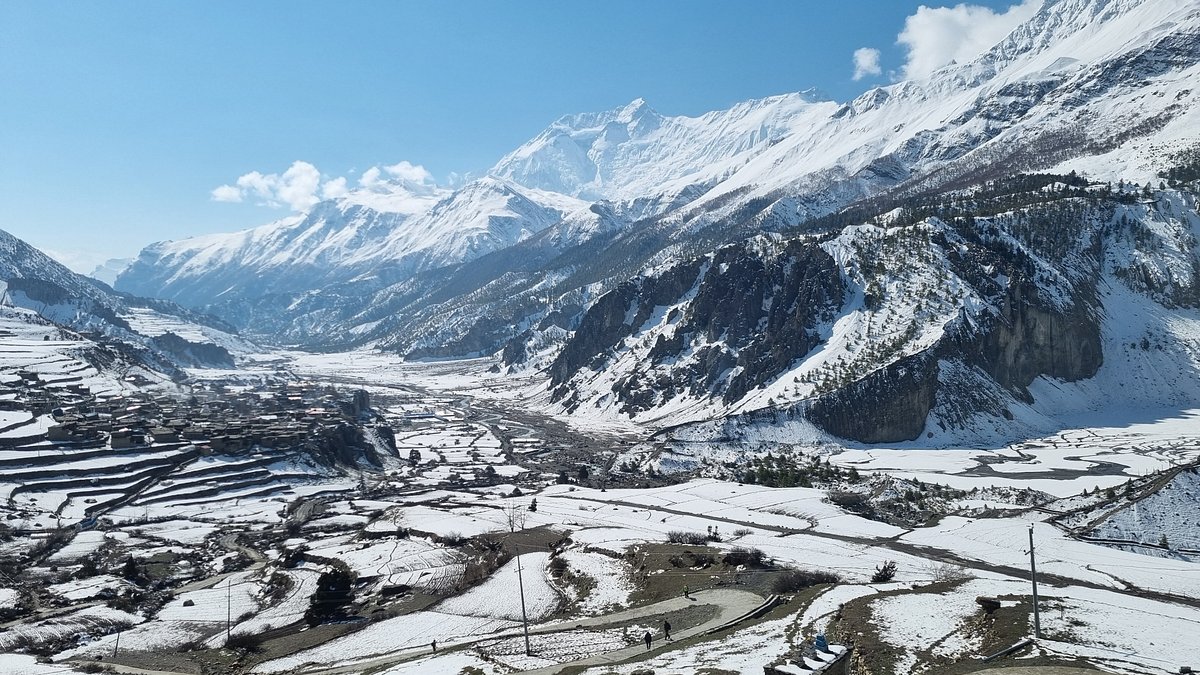
- Check out the nearby mountains, such as Annapurna II, Annapurna III, Annapurna IV, Gangapurna, and Lamjung Himal.
- Marvel at the Paungda Danda rock formation on your way to Pisang.
- Spend a day adjusting to altitude in Manang and visit Gangapurna Lake, Gangapurna Glacier, or Ice Lake.
- Get above the 4,000 meters mark and walk through the high alpine area of Yak Kharka and Thorong Phedi.
- Climb up to the Thorong La Pass at 5,416 meters, the highest pass of the trek.
- Visit Muktinath, one of the pilgrimage sites for both Hindus and Buddhists.
- Experience the dramatic change from the Annapurna region to the dry landscapes of Mustang.
- Walk through parts of the Kali Gandaki Valley on the way towards Jomsom.
- One can travel either by air or road between Jomsom and Pokhara, based on how things work out and weather conditions.
- One gets leisure time in Pokhara and Kathmandu.
Extra Highlights of the Annapurna Circuit Trek – 15 Days
Apart from crossing Thorong La Pass and exploring the Annapurna region, this 15-day itinerary combines trekking, scenic drives, cultural experiences, and leisure time. The trek combines long scenic drives, traditional mountain trails, high-altitude trekking, and time for relaxation in Pokhara and Kathmandu.
You begin the journey in Kathmandu and travel through the Nepalese countryside towards Besisahar and Dharapani. Throughout the trek, you will pass through forests, villages, river valleys, and mountain areas before reaching the high-altitude sections of the trail. After completing your trekking experience, you get some days to rest in Pokhara before heading back to Kathmandu for sightseeing.
You begin the journey in Kathmandu and travel through the Nepalese countryside towards Besisahar and Dharapani. Throughout the trek, you will pass through forests, villages, river valleys, and mountain areas before reaching the high-altitude sections of the trail. After completing your trekking experience, you get some days to rest in Pokhara before heading back to Kathmandu for sightseeing.
- Other attractions of the Annapurna Circuit Trek include:
- Traveling through the hills, towns, rivers, and countryside from Kathmandu to Dharapani.
- Walking through Besisahar, which is one of the major gates to the Annapurna region.
- Traveling through forests, villages and suspension bridges in the Marsyangdi Valley.
- Experience the gradual transition from forested landscapes to dry, high-altitude terrain.
- Sleeping in teahouses in the mountains along the trekking path.
- Walk through alpine pastures used by yak herders.
- Experience changes in climate and vegetation as you gain altitude.
- Going through Thorong La Pass in the early morning before sunrise.
- Moving down from the Himalayas to the dry area of Mustang.
- Seeing parts of the Kali Gandaki Valley before reaching Jomsom.
- Journey from Jomsom to Pokhara by plane or by land according to plan.
- Enjoy some rest near Phewa Lake in Pokhara on your day off.
- Observe the contrast between the high Himalayan environment and the lakeside environment of Pokhara.
- Road/flight journey back to Kathmandu from Pokhara.
Best Time for the Annapurna Circuit Trek
As the Annapurna Circuit Trek involves reaching an altitude of 5,416 meters at Thorong La Pass, the weather and the seasonal factors also affect the trekking trip. It should be noted that during the trip, different climate zones are crossed, including valleys and forests and even a cold and high-altitude Himalayan zone.
The most appropriate seasons to conduct the Annapurna Circuit Trek are spring and autumn, as they involve more stable trekking conditions and better visibility of the mountain landscape. At that time, the temperature of the air is relatively warm in many parts of the trail and only becomes much colder at higher altitudes.
The most appropriate seasons to conduct the Annapurna Circuit Trek are spring and autumn, as they involve more stable trekking conditions and better visibility of the mountain landscape. At that time, the temperature of the air is relatively warm in many parts of the trail and only becomes much colder at higher altitudes.
- Spring (March – May): One of the most appropriate seasons to make this trip is the spring season. Lower parts of the route become more green, while in some places rhododendron forests are blooming. The weather starts to become warmer, and the mountain landscape is clearly visible in favorable conditions.
- Autumn (September – November): Another appropriate season to go on a trek is the autumn season. After the monsoon season, the landscapes become clear and fresh with good visibility of the Himalayan mountains and valleys.
Trek Accommodation and Meals on the Annapurna Circuit Trek – 15 Days
Hotel accommodation in Kathmandu and Pokhara is provided during the 15-day Annapurna Circuit Trek, as well as teahouse accommodation during the trekking part of the journey. In general, hotels in Kathmandu and Pokhara offer better comforts, while accommodation in the mountains will be much simpler and depends on the availability of facilities in each town.
For the duration of trekking, you will be accommodated in local teahouses or lodges in such towns as Dharapani, Chame, Pisang, Manang, Yak Kharka, Thorong Phedi, Muktinath, and Jomsom. As you gain altitude, accommodation and food options generally become more limited due to the mountain environment.
For the duration of trekking, you will be accommodated in local teahouses or lodges in such towns as Dharapani, Chame, Pisang, Manang, Yak Kharka, Thorong Phedi, Muktinath, and Jomsom. As you gain altitude, accommodation and food options generally become more limited due to the mountain environment.
- Accommodation in standard hotels is expected during your stay in Kathmandu and Pokhara.
- Accommodation in local teahouses or lodges is expected during the trekking part of the journey.
- Twin-sharing accommodation is to be expected in most mountain accommodations.
- Bathroom facilities are often shared in mountain teahouses.
- Generally, facilities will become more basic with an increase in altitude.
- Common meals include dal bhat, noodles, fried rice, pasta, soup, vegetables, momos, eggs, bread, and pancakes.
- Enjoy hot beverages such as tea, coffee, ginger tea, lemon tea, and hot chocolate in many teahouses.
- Vegetarian options will be generally available along the trekking route.
- Take a reusable water bottle and drink filtered, boiled, or purified water.
- Pack some snacks like chocolate, energy bars, nuts, or dried fruits for trekking days.
- Rest and have your meals in the communal dining area available in most mountain teahouses.
- Have more diverse options for food and accommodation after arriving in Pokhara and Kathmandu.
Cultural Experiences During the Annapurna Circuit Trek – 15 Days
Beyond its mountain scenery and adventure, the Annapurna Circuit Trek offers opportunities to experience the culture and daily life of communities across the Annapurna and Mustang regions.
The trek passes through several traditional communities, namely Dharapani, Chame, Pisang, Manang, and Muktinath. During the walk along the trekking route, you will have a chance to see traditional housing, local farming, religious sites, and the impacts of Himalayan culture. The latter can be observed at Muktinath, which is a major pilgrimage site for Hindus and Buddhists.
The trek passes through several traditional communities, namely Dharapani, Chame, Pisang, Manang, and Muktinath. During the walk along the trekking route, you will have a chance to see traditional housing, local farming, religious sites, and the impacts of Himalayan culture. The latter can be observed at Muktinath, which is a major pilgrimage site for Hindus and Buddhists.
- Visit traditional communities along the Annapurna Circuit trekking route.
- Observe the lifestyle of people living in the Himalayan and Trans-Himalayan zones.
- Observe prayer flags, sacred sites, and other elements of Himalayan religious culture.
- Visit Muktinath, which is an important pilgrimage site for Hindus and Buddhists.
- Learn about interactions between local communities and trekkers.
- See how the locals show their hospitality during your stay in teahouses.
- Learn how the locals adapt their lifestyle to the challenging mountain conditions.
- View farming of livestock and yaks at higher altitudes.
- Experience the village life of Annapurna and Mustang zones.
- Interact with local communities during overnight stays in mountain villages.
- Understand how geology, altitude, and climate influence the lives of local communities.
Trekking Difficulty of the Annapurna Circuit Trek – 15 Days
Annapurna Circuit Trek lasts for 15 days and is usually considered a moderate to strenuous trekking route in the Himalayas. To complete this route successfully, one should be in decent shape and have good endurance. This is mainly due to the fact that the trek goes through Thorong La Pass at 5,416 meters elevation.
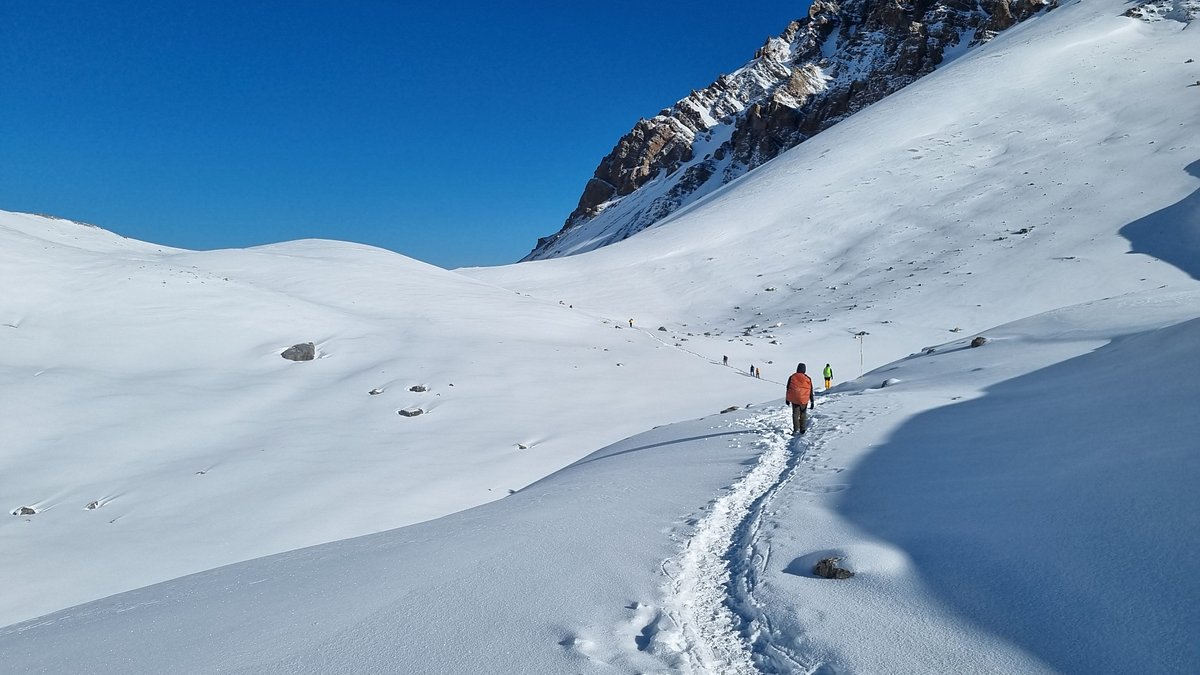
You will be walking many hours daily on this trek and doing steep ascents and descents, rocky trails, and walking at a high elevation on mountain paths. The difficulty increases as you move above 4,000 meters, particularly around Yak Kharka, Thorong Phedi, and Thorong La Pass.
No special climbing skills are needed to complete this trekking route; however, because of the high altitude and difficulties of pass crossing, it is necessary to be properly acclimatized and prepared.It will take you around 3 to 7 hours of walking per day (more on the Thorong La Pass crossing day).
You will be walking many hours daily on this trek and doing steep ascents and descents, rocky trails, and walking at a high elevation on mountain paths. The difficulty increases as you move above 4,000 meters, particularly around Yak Kharka, Thorong Phedi, and Thorong La Pass.
No special climbing skills are needed to complete this trekking route; however, because of the high altitude and difficulties of pass crossing, it is necessary to be properly acclimatized and prepared.It will take you around 3 to 7 hours of walking per day (more on the Thorong La Pass crossing day).
- Steep ascents and descents, rocky paths, stone steps, and mountain trails.
- Maintain a steady walking pace rather than trying to hike too quickly.
- Drink plenty of water during your trek, especially at higher altitudes.
- Prepare yourself for the trip with the help of hiking, walking, and stair climbing workouts.
- Build your endurance before beginning the trek.
- Let yourself acclimate slowly while you move towards higher altitudes.
- Take the acclimatization day at Manang seriously and prepare yourself for the high sections of the trail.
- Altitude sickness signs include headache, dizziness, nausea, fatigue or difficulty breathing at high altitudes.
- Make sure you let your guide know about the symptoms of altitude sickness.
- Be prepared for low temperatures and sudden changes in weather at higher altitudes.
- Follow the instructions of your guide when it comes to passing through difficult parts of the trail.
- Get enough rest during trekking days to conserve your energy for the higher sections.
- Be prepared to start the pass crossing before sunrise.
- It is important that you ensure that there is adequate clothing and layers since there will be a variation in temperatures along this route.
- Be prepared for changing trail conditions caused by rain, snow, or landslides.
- The descent from Thorong La Pass to Muktinath is challenging.
Why Trek with Nepalaya Treks?
The Annapurna Circuit Trek covers diverse terrain and elevations, includes different modes of transport and mountain accommodation, and features challenging high-altitude sections. Working with an experienced trekking agency can make the preparation and overall trekking experience smoother. As a team at Nepalaya Treks and Adventure, we try to arrange the important aspects of your journey, including transportation, lodging, trekking permit, guides, etc. From your arrival at Kathmandu and journey to Dharapani to your journey back from Pokhara to Kathmandu, we help you in all aspects of your journey.
- Guided by experienced and lic
- ensed guides who know about the Annapurna Circuit and its diverse trail conditions.Make your stay in hotels and teahouses according to the schedule and availability of the facilities.
- Guided on the pace, rest, water intake, and process of acclimatization as you climb up.
- Assisted with the preparation of the trekking gear and other preparations for the trek.
- Assisted with the acclimatization day at Manang.
- Professional guidance while trekking through the tough high-altitude parts, like Thorong La Pass.
- Assisted with transportation services from and to Kathmandu, Dharapani, Jomsom, Pokhara, and Kathmandu.
- Assistance with altitude-related concerns and changing weather conditions along the route.
- Guidance by professionals who know about the traditional communities and different places of interest on the Annapurna Circuit.
- Assistance in case of an emergency situation while trekking.
Why Choose This Itinerary?
The Annapurna Circuit Trek for 15 days allows you to visit different landscapes, mountain communities, and high mountains of the Annapurna region. The itinerary includes not only scenic drives but also gradual trekking in the Marsyangdi Valley, an acclimatization day in Manang, passing of Thorong La Pass, and descending through Muktinath and Mustang. Besides, after the end of the trekking part of your travel program, you will have a rest and some free time for visiting Pokhara and Kathmandu.
- Trek along the well-known Annapurna Circuit path from Dharapani to Jomsom.
- Reach Thorong La Pass, located at an altitude of 5,416 meters.
- See diverse landscapes: forests, river valleys, alpine areas, and the rain-shadow area of Mustang.
- Visit traditional mountain villages like Chame, Pisang, Manang, Yak Kharka, and Muktinath.
- Have an acclimatization day in Manang before ascending to higher areas.
- Visit tourist sights such as Gangapurna Lake, Gangapurna Glacier, or Ice Lake during the acclimatization.
- See Paungda Danda rock formation near Pisang.
- See Annapurna II, Annapurna III, Annapurna IV, Gangapurna, Lamjung Himal, and other mountains around.
- Pass Thorong La Pass – the highest and most difficult part of the trekking route.
- Visit Muktinath – one of the popular places for pilgrimage for both Hindus and Buddhists.
- See the dry landscapes of Mustang and Kali Gandaki Valley.
- Get from Jomsom to Pokhara by plane or road depending on the weather conditions and arrangements.
- Enjoy a free day at Pokhara.
- Tour around Kathmandu with additional time available for shopping and sightseeing.
Responsible Tourism
The significance of responsible tourism should be noted during the Annapurna Circuit Trek since the trail passes through sensitive areas in the Annapurna and Mustang regions. Being respectful to local cultures and minimizing your impact will contribute to the preservation of the environment and assistance to local communities whose life depends on the development of tourism in this area.
- Avoid wasting resources and respect the local culture.
- Be respectful of local customs and practices.
- Ask for permission to take pictures of local people, especially in case of celebrations of cultural or religious nature.
- Be respectful of the monasteries, temples, prayer flags, mani walls, shrines and other places of worship.
- Bring reusable water bottles and try not to use plastic water bottles.
- Purify water from sources using appropriate purification tablets, filters and other purification techniques.
- Do not litter with plastic, packaging of food, tissues and other waste.
- Dispose of your rubbish at proper places.
- Walk only along designated paths in order to prevent soil erosion.
- Avoid disturbing wildlife or damaging plants and other natural features.
- Conserve water and electricity in teahouses and lodges.
- Use fewer amounts of water and natural resources at high altitudes.
- Contribute to the local community by using local facilities and purchasing things from the locals.
- Follow the instructions of your guide about protecting the environment and proper trekking.
- Respect the cultural and religious significance of Muktinath and other sites of interest.
- Leave natural and cultural places as they were to enjoy them later by other trekkers.
Group Size
An Annapurna Circuit Trek package can be planned and tailored to suit groups comprising two people, families, friends, and private groups based on the way you travel and what you would like out of the trip. The number of people in the group will determine the pace of the walk, how coordinated the group is, and the amount of assistance each member will get during the entire walk.
Go for an Annapurna Circuit Trek guided by a licensed guide and accompanied by experienced porters depending on the size of the group.
Go for an Annapurna Circuit Trek guided by a licensed guide and accompanied by experienced porters depending on the size of the group.
- Have an assistant guide for large trekking groups as required.
- Book your trekking dates ahead of time.
- Choose an appropriate speed that suits the physical ability of the group.
- During the hiking process, take breaks for water, photography, relaxation, and to enjoy the scenery of the mountains.
- Get professional assistance during the trek regardless of the size of the trekking group.
- Choose your trekking companions according to your travel preferences.
- Travel with your family, friends, workmates, or your trekking mates.
- Stay coordinated with your trekking group throughout the journey.
- Socialize with other trekking members if you are trekking in a big group.
- If you are trekking in a small group, remain flexible and take opportunities to socialize with other trekkers.
- Before going trekking, discuss the physical condition and trekking tastes of your group with your guide.
- Take breaks during the trek and adjust the pace at which you will hike according to the needs of the group.
- Get help where needed during the trek, especially in places such as the Thorong La Pass.
Private Departure Available
For people interested in having a more flexible trekking experience, it is possible to go for a private departure in the 15-Day Annapurna Circuit Trek. This allows you to trek with your chosen companions and enjoy a more personalized experience with your trekking team. It also provides greater flexibility with walking pace, rest periods, and other daily arrangements.
It is also possible for one to decide about his or her mode of transport in case of the road or flight sections along the trekking route. One can choose from such transport services as Deluxe Tourist Bus, Private Car, or Domestic Flight for the sections between Kathmandu and Pokhara, while in case of the Jomsom to Pokhara section, it can be done either by flight or road depending upon the itinerary, weather, and availability of transportation.
It is also possible for one to decide about his or her mode of transport in case of the road or flight sections along the trekking route. One can choose from such transport services as Deluxe Tourist Bus, Private Car, or Domestic Flight for the sections between Kathmandu and Pokhara, while in case of the Jomsom to Pokhara section, it can be done either by flight or road depending upon the itinerary, weather, and availability of transportation.
- Trek privately with your family, friends, your spouse, or even alone.
- Get more flexibility while traveling along the established Annapurna Circuit trekking route.
- Choose the departure date according to your traveling plans.
- Decide between the Deluxe Tourist Bus, Private Car, or Flight for Kathmandu–Pokhara transport.
- Go for a deluxe tourist bus for a cheap and comfortable overland journey.
- Choose a private car for more privacy and flexibility.
- Take the domestic flight between Kathmandu and Pokhara to save traveling time.
- Choose between flight or road transport between Jomsom and Pokhara as per arrangements and weather.
- Have your own pace of walking according to your ability.
- Spend more time taking photographs, having rest, and enjoying the surroundings.
- Discuss your health condition and needs before starting the trekking.
- Receive more attention and help along the whole journey.
- Enjoy greater flexibility in organizing your walking and resting periods.
- Trek along with your companions throughout the journey.
- Be more comfortable in a way suitable to you and your companions.
Equipment Rental Information
If you are missing any essential equipment for the 15-day Annapurna Circuit Trek, you can rent many trekking items in Kathmandu or Pokhara before starting the trek. Renting can be a practical option for travelers who rarely undertake high-altitude treks, as it can save both money and luggage space. Taking into account that the trek passes through Thorong La Pass at the height of 5,416 meters, proper equipment is especially important for cold weather.
- The variety and prices of the equipment for renting, such as sleeping bags, down jackets, trekking poles, and duffel bags, are defined by the rental service and trekking packages.
- It is possible to rent other trekking equipment, including backpacks, trekking boots, gaiters, and other equipment for trekkers.
- Use proper traction equipment in case there is any snow or ice in the higher sections of the route.
- Make sure that all rented equipment is fit and suitable for the weather.
- Check if the rented clothes and equipment are clean and good.
- Take personal equipment such as thermal clothes, gloves, trekking socks, base layers, and other clothes that are season-specific.
- Use comfortable and fit trekking boots that were tested prior to the trek.
- Keep your equipment as lightweight as possible to reduce your overall load.
- Microspikes may be used if there is some snow or ice making higher sections of the trail slippery.
- Take enough warm clothes for the cold sections of the trail around Yak Kharka, Thorong Phedi, and Thorong La Pass.
- Have clothes that will be windproof and waterproof for unpredictable weather in the mountains.
- A warm insulated jacket and sleeping bag are especially important for higher areas.
- Talk about trail and weather conditions with your trekking company or guide before renting specialized equipment.
- Test and get acquainted with your rented trekking equipment before moving to the higher sections of the route.
- Do not completely rely on the rental equipment for personal equipment such as footwear, socks, base layers, and medications.
Trip Highlights
- Explore Nepal's capital, Kathmandu.
- Relax in Pokhara and enjoy a walk around Phewa Lake.
- Return to Pokhara from Jomsom by plane or road, depending on weather conditions.
- Trek through the majestic landscapes of the Mustang region and the Kali Gandaki Valley.
- Visit Muktinath, a sacred pilgrimage site for both Hindus and Buddhists.
- Cross the high Thorong La Pass (5,416m), the highest point of the trek and one of its most challenging sections.
- Experience changing landscapes as you trek above 4,000 meters towards Yak Kharka and Thorong Phedi.
- Spend a day in Manang acclimatizing to the altitude and choose to explore Gangapurna Lake, Gangapurna Glacier, or Ice Lake.
- Enjoy some leisure time in Kathmandu.
- Enjoy leisure time in Pokhara, including a visit to Phewa Lake.
- Return to Pokhara from Jomsom by air or road, depending on weather conditions.
- Trek through the dramatic landscapes of the Mustang region and the Kali Gandaki Valley.
- Visit the Muktinath area, which is considered holy for Hindu and Buddhist religious people.
- Cross Thorong La Pass (5,416m), the highest point of the trek and one of the most challenging sections of the route.
- Trek through varied terrain at elevations above 4,000 meters as you make your way to Yak Kharka and Thorong Phedi.
- Spend a day acclimatizing in Manang and choose to explore Gangapurna Lake, Gangapurna Glacier, or Ice Lake.
- See the picturesque rock formation of Paungda Danda on your way to Pisang.
- Enjoy views of stunning peaks such as Annapurna II, Annapurna III, Annapurna IV, and Gangapurna.
- Explore traditional Himalayan settlements such as Chame, Pisang, Manang, Yak Kharka, and Muktinath.
- Begin your trekking journey in Dharapani along the famous Annapurna Circuit route.
- Walk through diverse landscapes in the Annapurna region, including forests, river valleys, and alpine terrain.
Itinerary
Day 1: Arrive in Kathmandu (1,400m) and transfer to your hotel.
Welcome to Nepal! Upon arrival at Tribhuvan International Airport, you will be welcomed by a representative from Nepalaya Treks & Adventure, who will take you to your hotel. Once you arrive at the hotel, you can either rest in your room or explore the surrounding area, depending on your arrival time. In the evening, you can prepare yourself for the Annapurna Circuit Trek. This is a good time to check your trekking gear and make any other necessary arrangements. You will also meet your guide and receive a brief introduction to the trek.
- Travel Distance: Approximately 5–10 km, depending on airport and hotel location
- Travel Hours: Approximately 30–60 minutes
- Accommodation: Hotel in Kathmandu
- Meals Included: Breakfast
Day 2: Drive from Kathmandu to Dharapani (1,960m) via Besisahar (7–8 hours).
Day 3: Trek from Dharapani to Chame (2,710m), taking 5–6 hours.
Day 4: Trek from Chame to Pisang (3,300m), taking 5–6 hours.
Day 5: Trek from Pisang to Manang (3,540m), taking 6–7 hours.
Day 6: Acclimatization/Rest Day in Manang (explore Ice Lake or Gangapurna Glacier).
Day 7: Trek from Manang to Yak Kharka (4,110m), taking 3–4 hours.
Day 8: Trek from Yak Kharka to Thorong Phedi (4,600m), taking 3–4 hours.
Day 9: Trek from Thorong Phedi to Muktinath (3,800m) over Thorong La Pass (5,416m) (7–8 hours).
Day 10: Trek from Muktinath to Jomsom (2,715m), taking 5 hours
Day 11: Fly or drive from Jomsom to Pokhara (820m).
Day 12: Free day or local sightseeing in Pokhara. Rest day
Day 13: Drive or fly from Pokhara to Kathmandu.
Day 14: Leisure day in Kathmandu for shopping or final preparation.
Day 15: Final Departure from Kathmandu
Inclusion / Exclusion
Inclusion
- Airport pickup and drop-off in Kathmandu.Hotel accommodation in Kathmandu and Pokhara.
- Teahouse accommodation during the trek.
- Breakfast in Kathmandu and Pokhara.
- Breakfast, lunch, and dinner during the trek.
- Licensed trekking guide.
- Porters and their expenses.
- Annapurna Conservation Area Permit (ACAP).
- TIMS card, where applicable.
- Kathmandu to Dharapani transportation.
- Jomsom to Pokhara transportation by flight or road.
- Pokhara to Kathmandu transportation.
- Government taxes and service charges.
- Emergency assistance during the trek.
Exclusion
- International airfare.
- Nepal visa fee.
- Travel insurance.
- Personal medical and evacuation expenses.
- Lunch and dinner in Kathmandu and Pokhara.
- Personal drinks and snacks.Personal trekking gear and clothing.
- Costs of renting any equipment.
- Washing clothes, internet, phone calls, and charging costs.
- Hot showering and other personal costs.
- Entry cost for sightseeing.
- Tipping for guides, porters, and drivers.
- Extra costs incurred for lodging and transport because of delay.
- Cost of helicopter rescue, if needed.
- Any costs that are not included under Cost Includes.
Check List
The Annapurna Circuit Trek, which lasts for 15 days, encompasses many different climatic zones, including the hot zone of Kathmandu and Dharapani up to the freezing climate of Thorong La Pass at an elevation of 5,416 meters. Along the way, you will come across different types of forests, alpine regions, the dry Mustang region, and varying weather. It is for this reason that you should prepare to carry clothes and equipment appropriate for both cold and hot climates. At the same time, make sure you do not overpack and keep your trekking kit light.
General
- Four-season or all-season sleeping bag suitable for high-altitude trekking
- Warm down or synthetic insulated jacket
- Duffle bag for trekking equipment
- Windproof and waterproof outer shell jacket
- Daypack of around 25–35 liters
- Rain cover for your backpack
- Trekking poles
- Backpack or duffle bag liner
- Lightweight dry bags for organizing important belongings
- Small repair kit
Headwear and Accessories
- Warm woolen hat that covers your ears
- Sun hat or cap
- Neck gaiter or buff
- UV-protection sunglasses
- Headlamp with spare batteries
- Sunscreen with SPF 35–60
- Lip balm with SPF
- Lightweight face covering or buff for cold and windy conditions
Hands
- Lightweight trekking gloves
- Warm woolen or insulated gloves
- Waterproof gloves for rainy or snowy conditions
- Glove liners, if preferred
Upper Body Clothing
- Moisture-wicking trekking T-shirts
- Long-sleeve trekking shirts
- Thermal base-layer tops
- Fleece or woolen jacket
- Warm insulated jacket
- Waterproof and windproof outer shell
- Additional warm mid-layer for higher elevations
- Sports bra for women trekkers
Lower Body Clothing
- Thermal leggings or base-layer pants
- Comfortable trekking pants
- Waterproof and windproof trekking pants
- Fleece or insulated pants for colder sections
- Lightweight casual pants for evenings in Kathmandu and Pokhara
- Comfortable underwear
- Moisture-wicking base layers
Footwear
- Sturdy waterproof trekking boots with good ankle support
- 4–5 pairs of warm trekking socks
- Sock liners, if preferred
- Comfortable camp sandals or camp shoes
- Lightweight sneakers for Kathmandu and Pokhara, if desired
- Gaiters for muddy, wet, or snowy trail conditions
- Microspikes or suitable traction equipment if recommended according to seasonal conditions
First Aid and Medication
- Personal prescription medicines
- Basic first-aid kit
- Adhesive bandages
- Blister treatment kit
- Pain relievers such as paracetamol or ibuprofen
- Any altitude-related medication prescribed or recommended by your doctor
- Antiseptic or antibacterial cream
- Anti-itch or insect-bite cream
- Oral rehydration salts
- Water purification tablets or drops
- Personal medical supplies sufficient for the entire trek
Toiletries and Personal Hygiene
- Toothbrush and toothpaste
- Biodegradable soap and shampoo
- Hand sanitizer
- Wet tissues
- Toilet paper
- Quick-drying towel
- Nail clipper
- Moisturizer and lip balm
- Personal hygiene products
- Small plastic or waterproof bags for wet or dirty clothes
- Small waste bags for carrying personal rubbish
Important Documents
- Original passport
- Nepal visa or visa information, if required
- Passport-size photographs
- Travel insurance documents covering high-altitude trekking
- Emergency contact information
- Copies of important travel documents
- Flight tickets and travel itinerary in printed and electronic formats
- Copies of required trekking permits or related documents, if provided to you
Electronics
- Mobile phone
- Power bank
- Charging cables
- Universal travel adapter
- Camera and memory cards
- Spare camera batteries
- Headlamp and spare batteries
- Smartwatch or GPS device, if desired
- Portable charging equipment suitable for trekking conditions
Optional Items
- Hydration bottle or water bladder
- Portable water filter or purifier
- Energy bars, nuts, dried fruits, or other lightweight snacks
- Notebook and pen
- Book or playing cards
- Earphones or headphones
- Binoculars
- Small thermos or insulated water bottle
- Lightweight dry bags
- Small travel pillow or inflatable pillow
- Camera accessories, if required
Trip FAQs
-
1. Is Annapurna Circuit Trek Suitable for Beginners?
Yes, the Annapurna Circuit Trek can be suitable for beginners who are reasonably fit and prepared for several consecutive days of trekking. However, the trek is a challenging one as it takes you to Thorong La Pass, which is 5,416 meters high and involves steep descents and ascents and difficult paths. -
2. How Do I Prepare for This Trek?
Start preparing for your trip in advance with regular walking, hiking, stair climbing, running, cycling or any other endurance exercises to prepare your legs for many days of walking, uphill and downhill paths. You may train with a daypack to adapt to trekking conditions. -
3. What Is the Highest Point of the Trek?
The highest point of the trek is Thorong La Pass at 5,416 meters above sea level. Thorong La Pass crossing is the major difficulty of the Annapurna Circuit Trek and gives you magnificent views of the surrounding Himalayan scenery. -
4. How Difficult Is This Trek?
Annapurna Circuit Trek is a moderate-to-strenuous trek, which involves several hours of walking per day, steep descents and ascents, difficult paths and increasing altitude. Thorong La Pass crossing is the hardest part of the trek. -
5. What Are the Difficult Sections of the Trek?
The most difficult sections are the trek toward Yak Kharka and Thorong Phedi, followed by the early-morning crossing of Thorong La Pass. High altitude, low temperature, steep paths and difficult descent to Muktinath make this section difficult. -
6. Do I Need Any Technical Mountaineering Skills for This Trek?
No. You do not need technical climbing or mountaineering skills to complete the Annapurna Circuit Trek. However, one must be physically fit and well-equipped, especially when trekking at high elevations such as that of Thorong La Pass. -
7. What Can I See Along the Trek?
You will see green forests, river valleys, mountain villages, alpine landscapes, the dry terrain of Mustang, and snow-covered Himalayan peaks. Also, you can admire Annapurna II, Annapurna III, Annapurna IV, Gangapurna, Lamjung Himal, and other surrounding peaks. -
8. What kind of accommodation is available during the trek?
The accommodation is made up of hotels in Kathmandu and Pokhara, and teahouses or lodges on the trekking trail. Twin-sharing rooms are common in teahouses, while bathroom facilities may be shared and become more basic at higher elevations. -
9. What kind of food is served during the trek?
Teahouses along the trail serve a variety of meals for trekkers. The common types of food that one could eat include dal bhat, noodles, fried rice, pasta, soup, vegetables, momos, eggs, bread, and pancakes. The meals are usually vegetarian, and drinks include tea, coffee, ginger tea, and hot chocolate. -
10. Can altitude sickness be a problem on this trek?
Yes. Altitude sickness can be a concern because the trek reaches 5,416 meters at Thorong La Pass. When ascending, keep the following things in mind: gradual ascent, proper acclimatization, a comfortable pace, hydration, and adequate rest. -
11. What are the signs of mountain sickness?
They include headache, dizziness, nausea, vomiting, tiredness, loss of appetite, and difficulty breathing. Let your guide know of any strange symptoms that you may get while climbing to higher altitudes. -
12. How can I avoid altitude sickness?
In order to avoid altitude sickness, it is important to climb gradually, walk at a comfortable speed, drink water, eat nutritious food, get enough sleep, and follow all the guidelines of your guide. If any symptoms appear or get worse, please inform your guide about it. -
13. What sort of equipment will I need?
It is recommended to pack several layers of clothes, an insulated jacket, waterproof clothing, appropriate trekking shoes, trekking socks, gloves, a hat, sunglasses, a proper sleeping bag, trekking poles, head lamp, personal medications, and other trekking equipment. -
14. Do I need any special equipment for Annapurna Circuit trekking?
Technical gear for climbing is not required in case of Annapurna Circuit Trekking. Warm clothing, trekking boots, trekking sticks, and sleeping bags will be required at higher altitudes. Micro spikes can be very useful in case of snow or ice. -
15. Will I have a guide and porters?
Yes. There is always a trekking guide and porters licensed to accompany you during the trekking part of your tour. The guide assists with navigation, pacing, trail conditions, and altitude management, while porters carry your trekking luggage. -
16. Why do I need a guide for the Annapurna Circuit Trek?
A guide will not only make your trek easier but also keep you safe and organize things for you regarding navigation, pace, weather, altitude, and difficult areas on the trekking trail. The guide will also brief you about the areas you are going to visit.
.jpg "Annapurna Circuit trek 6")
All Inclusive Cost
USD 1235
Per Person
BOOK NOW QUICK ENQUIRY- Best Price Guarantee
- Hassle-Free Booking
- Team of highly experienced Experts
You may also like !!
Our Best Selling Packages You May Like.