Everest Base Camp Via Cho La Pass Trek – 16 Days
Overview
What to Expect on Everest Base Camp Via Cho La Pass
Everest Base Camp Via Chola Pass is more than ordinary trek to Everest Base Camp. It consists of an adventure to base camp of Everest and crossing of a high Himalayan pass and exploring the beautiful Gokyo Valley. From the start of the trek you will see different landscapes, Sherpa culture and enjoy some of the best views of the mountains in Nepal throughout the trek.- On the trail it is possible for the hike to be anywhere between 5 and 9 hours, depending on the terrain and elevation.
- Variation in landscape from forested valleys, river-crossings to rocky alpine and glacial environments.
- Important days have early morning starting times particularly during the hike against Kala Patthar and the crossing of Cho La Pass.
- Differences in temperature between lower villages and higher settlements (above 4,500 m).
- Learning experiences about Sherpa culture, community livelihood activities and mountain farming.
- Village houses made of stone and adorned with prayer wheels, mani walls and Buddhist monuments.
- Overnight camp sites in a mountainous landscape, where adventure and activities are available all year round.
Extra Highlights of the Everest Base Camp Via Cho La Pass
Beyond the major attractions such as Everest Base Camp, Cho La Pass, and Gokyo Lakes, there are numerous other smaller experiences that enhance this trek even more. These exceptional occasions bring something new to the adventure as well as enrich their knowledge about life in the Everest region.- Watch aeroplanes land and take off at one of the world's most renowned mountain airports , the Lukla Airport.
- Visit local bakeries and cafes in Namche Bazaar, a unique place at high altitudes.
- Visit ancient chortens, prayer wheels and stone-carved mani walls, which express the region's Buddhist heritage.
- Enjoy sky-clearing, excellent overnight star gazing opportunities in remote mountain villages.
- Observe the daily life of the local families of some of the world's highest permanent settlements.
- Explore small mountain villages where people stay for rejuvenation on the hiking, climbing path, and as trade centers.
Best Time for the Everest Base Camp Via Cho La Pass
Cho La Pass Trek Everest Base Camp can be all year round, but there are a lot of differences between seasons. The timing is crucial as you need to cross over Cho La Pass at 5420m and the weather and track conditions can dramatically impact the trek.- Spring (March – May): The most popular season of the year, pleasant weather, flowering rhododendron woodlands, and good mountain visibility.
- Summer/Monsoon (June – August): May be rainy, cloudy and slippery, so trekking or passing over Cho La Pass would be more difficult.
- Autumn (September – November): Offers clear mountain views, dry weather, and warm temperatures for high-altitude trekking.
- Winter (December – February): Cold temperatures and snowfall create more challenging conditions, but the trails are quieter with fewer trekkers.
Accommodation and Meals on Everest Base Camp Via Cho La Pass
The accommodation and food on the Everest Base Camp trek via Cho La Pass are essential because you will be spending over two weeks trekking in remote mountain locations. The teahouses along the way give basic accommodations and freshly cooked food, which helps keep you energized in high altitudes.- Accommodation includes a standard hotel stay in Kathmandu as well as teahouse accommodation for the entire trek.
- Twin sharing accommodation in teahouses with bedding facilities, blankets, and pillows is available.
- Accommodation is quite basic but comfortable and shared bathrooms are typical of higher altitudes.
- There are heated dining areas in teahouses and it acts as the primary gathering place at night time.
- All meals three times a day (breakfast, lunch, and dinner) are included during the trek.
- Typical meal options comprise Dal Bhat, fried rice, noodles, pasta, soups, potatoes, eggs, Tibetan bread, pancakes, and momo.
- There are drinks available including tea, coffee, hot lemon, ginger tea, and hot chocolate on the trekking route.
- More variety is offered by food options at lower altitudes while food becomes limited at higher altitudes.
- Safe drinking water is available through boiling water, purification process, or bottled water from the trail.
Everest Base Camp Via Cho La Pass :Why is it Popular?
Cho La Pass is a preferred path to Everest Base Camp for several reasons because this is not just another trekking route to EBC. This gives the option to see many famous peaks and passes along with the majestic lakes of Everest and different landscapes, thus giving trekkers an overall experience of the region of Everest.- Combines trekking from Everest Base Camp to Cho La Pass, Gokyo Lakes, Gokyo Ri, and Kala Patthar in a single trekking expedition.
- Provides a more adventurous trekking path than that offered by the usual Everest Base Camp Trek.
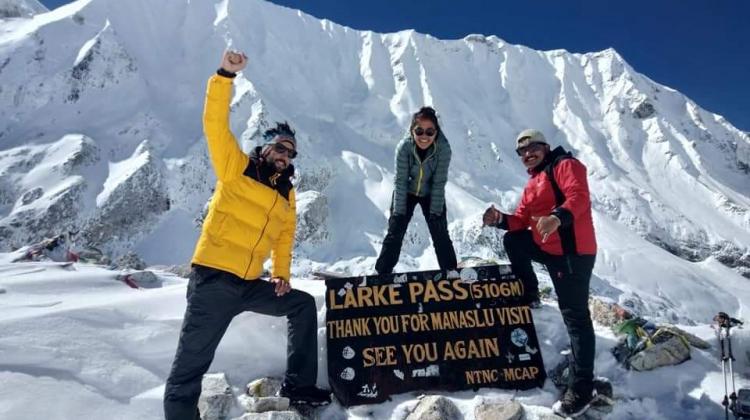
- Contains one of the most thrilling passages in the Everest region located at 5,420 meters.
- Gives an opportunity to visit both the Khumbu Valley and Gokyo Valley on the same expedition.
- Gives access to some of the most picturesque viewpoints in the Everest region suitable for mountain photography.
- Enables trekkers to delve deeper into the Everest region than just the Everest Base Camp route.
- Gives an opportunity to visit traditional Sherpa villages en route the trekking.
Cultural Experiences During the Everest Base Camp Via Cho La Pass
This trekking experience in the Himalayas is more than just an opportunity to visit high peaks and passes. This is also a chance for you to learn about the interesting culture of the Sherpas, a group of people who have been living in the Everest area for many years.- Visit the traditional Sherpa villages like Namche Bazaar, Khumjung, Pangboche, Dingboche, and Gokyo.
- Visit the age-old Buddhist monasteries which form an integral part of the daily life of mountains.
- Trek to the Tengboche Monastery, which is the biggest and most significant monastery in the Khumbu area.
- Meet the local residents, the owners of lodges, guides, and porters on the trek.
- Taste some delicious Sherpa and Nepalese food prepared in the teahouses en route.
- Have a glimpse of the Buddhist faith and culture that affects the lives of people in the Everest region.
- Enjoy the hospitality of the Sherpas that has made them world famous amongst trekkers and mountaineers.
Altitude and Acclimatization on the Everest Base Camp Via Cho La Pass
Altitude is one of the main considerations on the way to the Everest Base Camp through Cho La Pass Trek. With the hike getting higher and going over 5,000 meters, it is extremely important to be properly acclimatized to make sure that the trekking experience would be both safe and enjoyable.- The trek begins from Lukla (2,860m) and the highest point is Kala Patthar (5,545m).
- Cho La Pass (5,420m), Everest Base Camp (5,364m), and Gokyo Ri (5,357m) are situated over 5,000 meters.
- This itinerary has days allotted for acclimatization in Namche Bazaar and Dingboche.
- At higher altitudes, as there are lower oxygen concentrations that could make walking strenuous.
- The following are some of the common symptoms associated with high altitude, such as headache, fatigue, breathing difficulties, loss of appetite, and inability to sleep well.
- Hydration and proper pacing on the trek is necessary to deal with high altitude issues.
- Hydrating and abstaining from alcohol are some ways one can manage altitude sickness.
- The guides will be checking the trekkers for any signs of Acute Mountain Sickness (AMS).
Trekking Difficulty of Everest Base Camp Via Cho La Pass
Everest Base Camp Trek via Cho La Pass is said to be one of the toughest treks because of its high altitude, long walking days, and the hard trek through the Cho La Pass. Although climbing experience is not necessary, one should have good physical fitness to complete the hike.- Passing through Cho La Pass includes difficult climbs, rocky paths, and some snow or ice depending upon the season.
- The high altitude with less oxygen level increases the difficulty for trekking beyond 4,000 meters.
- Some parts includes glacier crossing, rough terrain, and long walks both up and down the mountains.
- Sudden weather changes may occur, particularly in the areas close to the pass and at high altitudes.
- Well-conditioned cardiovascular system, stamina, and strong legs will be beneficial during the trekking.
- Some acclimatization days are included in the journey to avoid altitude sickness.
Permits Needed for Everest Base Camp Via Cho La Pass
All the trekkers need to get the relevant permits to enter the region of Mount Everest. Permits facilitate conservation, infrastructure development, and management of tourists in the Khumbu region. Most trekking agencies take care of the permit arrangement beforehand, which is quite an easy task. Both the permits are compulsory for the Everest Base Camp trek through Cho La Pass, and they are required to be carried all through the trip.- Permit for Khumbu Pasang Lhamu Rural Municipality: This permit will cost you NPR 3,000 (USD 22 to 25) per individual and can be acquired either at Lukla or Monjo before entering into Khumbu Region.
- Entry Permit for Sagarmatha National Park: This permit costs NPR 3,000 (USD 22 to 25) per individual and can be obtainable from the Nepal Tourism Board office in Kathmandu or the entry point of the park at Monjo.
Travel Insurance for the Everest Base Camp Via Cho La Pass
It is highly advisable to purchase travel insurance before the Everest Base Camp trek through the Cho La Pass route, due to the remoteness of the area and difficult terrain. Due to the fact that the trek is done at altitudes of more than 5,500m and crossing the Cho La pass as well, having proper insurance is essential.- Make sure that insurance covers helicopter evacuation from mountain regions.
- Insurance for altitude sickness, accidents, and medical treatment is very desirable.
- Insurance for trip cancellation, interruption, or delay may also come handy in case of any disruption due to flights or weather conditions.
- You may consider insurance against lost, stolen, or damaged baggage and trekking gear.
- Make sure that adventure treks in Nepal are covered under insurance.
- It is better to carry a copy of your insurance document along on the trek.
- The companies providing helicopter evacuation generally insist upon proper insurance documents.
- It is advisable to read the insurance policy properly before your journey.
Why Trek with Nepalaya Treks?
It is very important to select the right trekking company that would guarantee a safe and unforgettable trip to Mount Everest. Nepalaya Treks offers its clients the services of skilled guides, well-organized trips and professional care during their stay.- Experienced government licensed trekking guides, having detailed knowledge about Everest region, local culture, and high altitude treks.
- Small size trekking groups which offer greater attention and flexibility and also a better trekking experience for you.
- Well-planned itinerary along with adequate acclimatization for minimizing the chances of altitude sickness.
- High quality local teahouse accommodations, having clean rooms, warm hospitality and freshly cooked meals at your disposal.
- 24/7 support services all the way from arrival till departure, providing you assistance with airport transportation and any other emergencies on your way.
- Safety oriented approach throughout the trek, with the health check-ups and first-aid services.
Why Choose This Itinerary?
This tour has been planned for those adventurers who want to experience something more than the traditional trek to Everest Base Camp. This tour will take you on an exciting journey to Everest Base Camp, Cho La Pass, Gokyo Lakes, Kala Patthar, and Gokyo Ri.-
Combine both the Everest Base Camp and Gokyo Circuit in one go, visiting all the highlights of the region without having to walk the same path twice.
-
Experience the exciting crossing of Cho La Pass (5,420m) which is considered one of the most beautiful and rewarding high passes in the Everest region.
-
See Kala Patthar and Gokyo Ri – two most beautiful viewing spots of sunrise as well as of Himalayas.
-
Enjoy two designated acclimatization days at Namche Bazaar and Dingboche.
-
Experience less crowd on the way to Gokyo Lakes than on the Everest Base Camp path.
-
The best combination of adventure and scenery with both Everest landmarks, glaciers, lakes, Sherpa culture and majestic mountains included.
Safety on the Everest Base Camp Trek
Your safety is our first priority during the entire trekking expedition. We have highly experienced guides who will always monitor your well-being and follow the well-planned schedule.- Daily health check-ups by means of an oxygen saturation meter to track your acclimatization and detect any symptoms of problems due to altitude.
- Experienced guides who know everything about high-altitude treks, capable of detecting the symptoms of AMS and making informed decisions during the trek.
- Fully equipped first-aid kit taken along with you all through the trek; containing all the supplies you will need to treat injuries and illnesses during the trek.
- Properly planned acclimatization day, that includes rest days in Namche Bazaar and Dingboche to assist your body to acclimatize safely.
- Helicopter evacuation service organized as and when needed through your travel insurance company.
- Ongoing check-ups of Acute Mountain Sickness (AMS).
Responsible Tourism
We feel that it is important to make sure that trekking is beneficial to not just the visitors but also the local population without causing any harm to the delicate Himalayan ecosystem. Nepalaya Treks follow responsible tourism practices that support sustainable travel and help preserve the Everest region for future generations.- Help the local Sherpa community, by hiring local guides, porters, and utilizing the local teahouses and other facilities.
- Follow the local culture and traditions by showing respect to monasteries, local villages, and other places.
- Minimize the amount of waste, by carrying around reusable water bottles and practicing environmentally friendly trekking.
- Help protect the environment by following the “Leave No Trace” policy and keeping the trekking trails clean.
- Encourage sustainable tourism that will bring financial benefit to local families without any damage to the area.
- Show respect to the wild life of the region and do not interfere with their habitats along your trek.
Group Size
We provide both group departures on schedule and private treks, depending on the individual’s preference. No matter whether the individual is traveling alone, with friends, or even within a big group, the trek will be comfortable and enjoyable for all participants.- Special small group departures to get more personalized service and interaction with your guide.
- Customize any private group regardless of its size and suitable for couples, families, friends, and corporate travelers.
- Get your guide's help and special attention to your pace, safety, and needs.
- Flexibility of the tours and possibility to arrange them, according to your schedule and preferences.
- Best suited for solo trekkers, couples, families, and groups with departure dates during trekking seasons.
Private Departure Available
If you would rather explore on your own terms and at your own pace, our private departure trips throughout the year are an option; allowing you to determine your travel itinerary and have a more personalized experience in the Himalayas.- Select the date you prefer based on your holiday plans and travel plan.
- Itineraries that can be flexible, according to your physical abilities, interests, or time constraints.
- Private guide and porter service for a more personalized approach to your trekking experience.
- Perfect choice for couples, families, friends, and corporate travelers looking for a bit of privacy.
- Have a personalized trekking experience without being tied down by the rigid group departure dates.
Equipment Rental Information
There is no necessity for buying costly trekking gear before your trip. Nepalaya Treks offers necessary equipment, and you will be able to hire more good quality equipment from Nepalaya Treks in Kathmandu.- Sleeping Bag and Down Jacket provided to keep you warm at higher altitude.
- Duffle Bag and Trekking Poles will be given for your additional comfort and convenience while trekking.
- Trekking Gear is available for rent and consists of backpacks, hiking boots, crampons, etc.
- Check your gear before leaving so that you don’t miss anything.
- Affordable rental service in Kathmandu; you can trek with light baggage.
Cost Box:
| No. of people | Price per person |
| 1 Pax | 3040 |
| 2-3 Pax | 2275 |
| 4-5 Pax | 2110 |
| 6-7 Pax | 1955 |
| 8-9 Pax | 1840 |
| 10 Pax | 1680 |
Trip Highlights
- Spot Himalayan Thar, monal, musk deer, and mountain birds
- Enjoy panoramic views of Everest, Lhotse, Ama Dablam, and more
- Explore Sherpa villages like Namche, Dingboche, and Gokyo
- Experience authentic Sherpa culture and hospitality
- Visit the famous Tengboche Monastery
- Walk alongside the Khumbu and Ngozumpa Glaciers
- Trek through the UNESCO-listed Sagarmatha National Park
- Enjoy a scenic mountain flight to Lukla
- Explore the stunning turquoise Gokyo Lakes
- Hike to Gokyo Ri (5,357m) for panoramic Himalayan views
- Watch a spectacular sunrise from Kala Patthar (5,545m)
- Cross the thrilling Cho La Pass (5,420m)
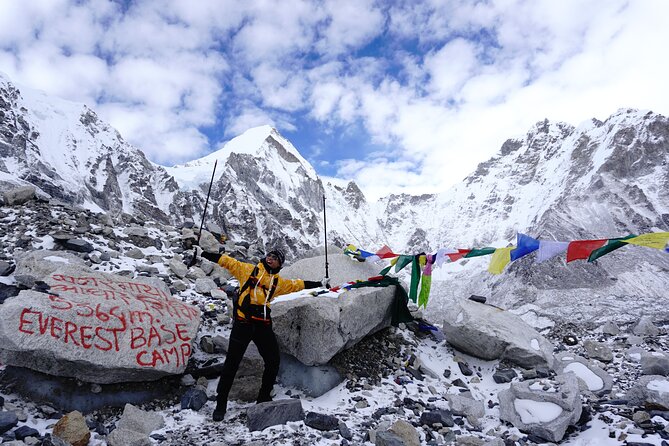
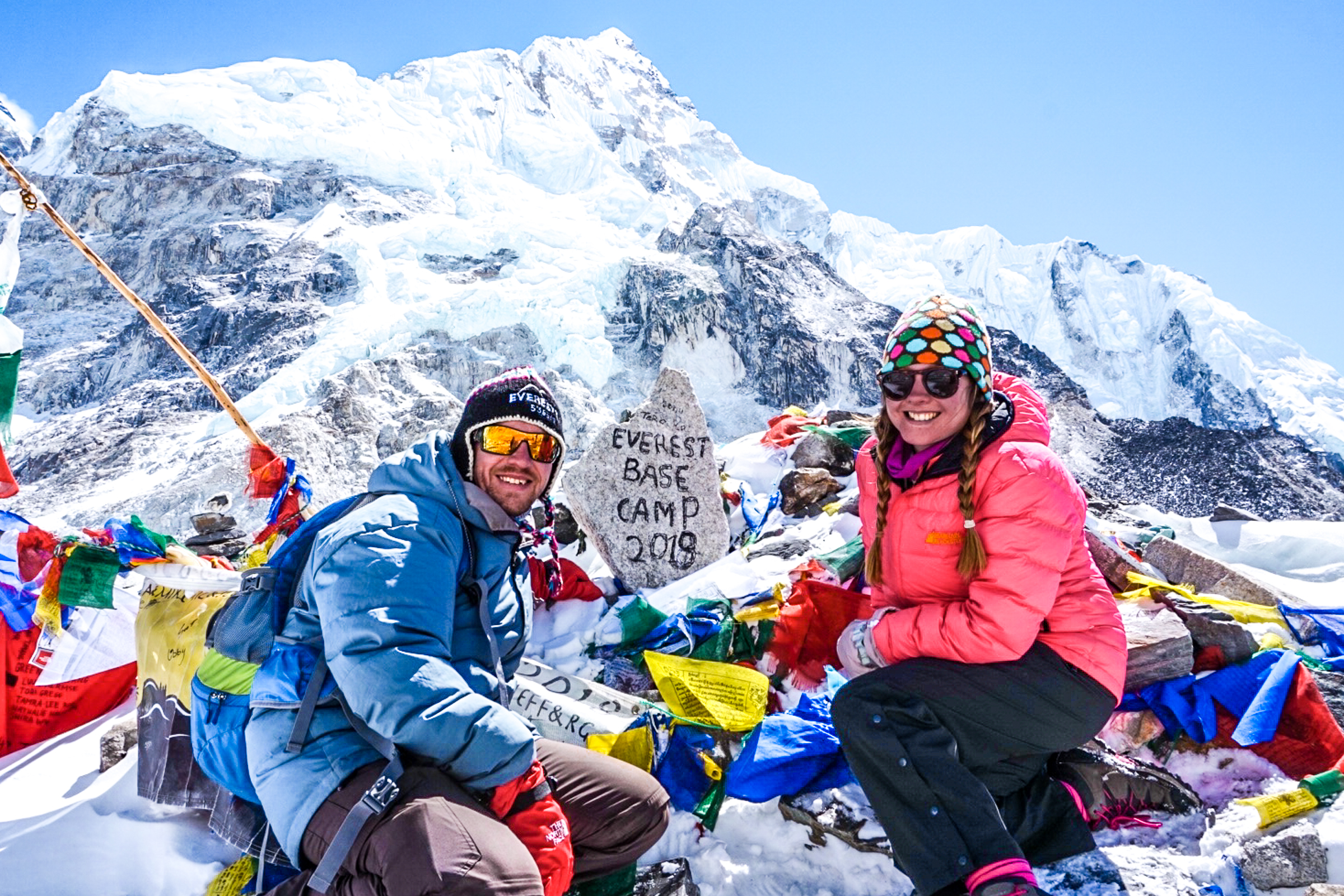
- Reach the legendary Everest Base Camp (5,364m)
Itinerary
Day 1: Arrival in Kathmandu and Hotel Check-in and Trek Briefing
Welcome to Nepal, gateway to the Himalayas. Our representative will meet you at Tribhuvan International Airport in Kathmandu, and then drive you to your hotel. Upon arrival, guests stay in Kathmandu's most popular tourist area, Thamel; to relax or indulge in some shopping on the busy streets. Your trekking guide will be available in the evening to give you a detailed trek briefing and final equipment check. This is a good chance to ask questions and get ready for your upcoming trip. You can also go to the nearby markets, cafe or cultural sight before moving on to a welcome dinner and spending an overnight night in Kathmandu based on your arrival time.
Max Elevation: 1,400 meters
Travel Distance: 6 to 8 kilometers
Travel Hours: 30 to 45 minutes
Accommodation: 3 Star Hotel
Meal Included: Welcome Dinner
Day 2: Fly to Lukla and Trek to Phakding (2,651meters)
Day 3: Trek to Namche Bazaar (3,440 meters)
Day 4: Acclimatization Day in Namche and Optional hike to the Everest View Hotel to adjust to altitude
Day 5: Trek to Tengboche (3,860 meters)
Day 6: Trek to Dingboche (4,350 meters)
Day 7: Acclimatization in Dingboche and Day Hike to the Nangkartshang Peak for Better Views
Day 8: Trek from Lobuche to Gorakshep and Everest Base Camp
Day 9: Lobuche to EBC and Back to Gorak Shep (5,164m) and Visit the Base Camp and View the Khumbu Icefall
Day 10: Kala Patthar and Trek to Dzonglha
Day 11: Cross Cho La Pass (5,420 meters) to Thagnak
Day 12: Trek to Gokyo
Day 13: Gokyo Ri Hike and Trek to Dhole
Day 14: Trek to Namche Bazaar
Day 15: Trek to Lukla from Namche Bazaar
Day 16: Fly to Kathmandu from Lukla
Inclusion / Exclusion
Inclusion
- Pick-up and drop-off at the airport from and to your private vehicle
- Hotel accommodation for two nights in Kathmandu with breakfast
- Three meals a day (Breakfast, Lunch, and Dinner) during the trek
- Sightseeing tour in Kathmandu with your private vehicle
- Teahouse/lodge accommodation during the whole trekking period
- Sagarmatha National Park Entry Permit and Khumbu Pasang Lhamu Rural Municipality Permit
- Round flight from Kathmandu to Lukla to Kathmandu, transfer to airport, and airport tax
- Experienced government licensed English-speaking trekking guide whose salary, food, accommodation, transport, and insurance will be included
- Strong and experience porter (One porter will share between two trekkers) whose salary, food, accommodation, and insurance will be included
- Basic medical kit to comprehensive first aid kit carried by the guide
- Assistance with emergency helicopter evacuation (Helicopter evacuation cost will be covered by traveler insurance policy)
- Sleeping bag, down jacket, duffel bag, and trekking pole will be provided during the trek (All the items should be returned after the trek)
- Government taxes and service charges
- Oxygen saturation monitoring every day to track altitude acclimatization and symptoms of AMS
Exclusion
- Lunch and dinner in Kathmandu
- Nepal visa processing cost (issuable on arrival at Tribhuvan International Airport)
- International flight ticket to and from Nepal
- Travel insurance and high altitude trekking insurance
- Expenses of personal nature like laundry, internet, phone calls, and shopping
- Any beverages (alcoholic or non-alcoholic) including tea, coffee, hot chocolate, soft drinks, bottled water, and any additional snacks to be bought while trekking
- Extra desserts and foods like cake, chocolates, pie, and pudding
- Charges for hot shower and device charging facilities in teahouse lodges
- Monument entrance fees in Kathmandu for sightseeing (around USD 30 per head)
- Tips for guide, porter, and driver
- Overhead baggage cost for Lukla air tickets for excess luggage beyond the baggage limit of the airline (10 kg checked and 5 kg hand carry)
Check List
It is crucial to have the right clothing and equipment for your trekking tour in the Everest region to ensure your comfort and safety during the trek. This trek takes you up to an altitude of more than 5,500 meters and involves crossing the Cho La Pass which makes it quite challenging. It is suggested to pack only the things you really need during the trip.
General Equipment
- All-season sleeping bag
- Down jacket
- Duffel bag
- Waterproof and windproof outer jacket
- Daypack (25-35 Liters)
- Backpack rain cover
- Reusable water bottles or hydration bladder
Protection for Head, Face & Eyes
- Warmer hat or beanie that covers the ears
- Sun hat or cap
- UV protection sunglasses
- Neck gaiter or buff
- Sunscreen (SPF 35-60)
- Lip balm with SPF
- Headlamp with extra batteries
Protection for Hands
- Lightweight trekking gloves
- Warmer fleece or wool gloves
- Waterproof and windproof outer gloves for cold conditions
Clothing for Upper Body
- Wicking long-sleeve trekking shirts
- Thermal base layers
- Fleece or wool jacket
- Down jacket for insulation
- Waterproof and windproof shell jacket
- Sports bras (for women)
Clothing for Lower Body
- Thermal leggings or pants
- Trekking pants
- Waterproof and windproof shell pants
- Warm fleece pants
- Casual pants for evening use
Footwear
- Waterproof trekking boots with ankle support
- Lightweight camp shoes or sandals
- 4-5 pairs of warm trekking socks
- Socks liners
- Lightweight sneakers
First Aid & Personal Medication
- Personal prescribed medications
- Band-aids
- Blister care kit
- Pain killers
- Diamox (for altitude sickness if recommended by your physician)
- Antiseptic ointment
- Water purification tablets
- Personal first aid supplies
Personal Belongings & Toiletries
- Toothbrush and Toothpaste
- Biodegradable soap
- Towel
- Toilet Paper
- Baby Wipes
- Sanitizer
- Nail Clipper
- Moisturizer
Important Papers
- Passport copy
- Four passport size photos
- Insurance documents
- Flight papers and copies of all important documents
- Permits for trekking (provided by the company)
Electronic Accessories
- Power Bank
- Cell phone and charger
- Camera with charger
- Extra memory card
- Extra batteries
Other Things
- Walking poles
- Energy Bars
- Travelling Pillow
- Notebook and Pen
- Playing Cards/Books
- Music Player
Hydration & Water
- Re-usable water bottle
- Water purifying tablets/pack
- Electrolyte Pack
Trip FAQs
-
What level of difficulty is the Everest Base Camp Cho La Pass Trek?
The Everest Base Camp Cho La Pass Trek is considered difficult because of its elevation, trekking days, and the pass at an altitude of 5,420 meters. Trekking enthusiasts must have a good physical condition and be used to walking for 5 to 8 hours on mountainous terrain. -
How many days do you need for the Everest Base Camp via Cho La Pass Trek?
It takes 15 to 18 days to finish the Everest Base Camp via Cho La Pass Trek. The 16-day itinerary is one of the most favored itineraries as it covers Everest Base Camp, Kala Patthar, and Gokyo Lakes; and also provides appropriate acclimatization days at Namche Bazaar and Dingboche. -
Is Cho La Pass dangerous to cross?
It can be done safely during the major trekking seasons because the weather is always favorable at that time. But crossing it may not be easy due to the presence of snow and ice on the pass. It can be done safely by trekking early and having a good guide. -
What is the best time to do the Everest Base Camp via Cho La Pass Trek?
Spring season (March to May) and autumn season (September to November) are the best time for the trip. These months offer a clear view of the mountain range, moderate temperature, and favorable weather conditions. Crossing Cho La Pass becomes more convenient during this time than in winter or monsoon season. -
Do I need previous trekking experience for Everest Base Camp via Cho La Pass?
Having prior experience with trekking is an added advantage but is not essential. There have been many new trekkers who have completed the journey successfully; despite having no prior experience with trekking. -
What permits are required for the Everest Base Camp via Cho La Pass Trek?
The trekkers need to have two permits for the trek, the Khumbu Pasang Lhamu Rural Municipality Permit and the Sagarmatha National Park Entry Permit. The permits are checked at various locations on the trail and are generally obtained through trekking agencies before starting the trek. -
Which is better Everest Base Camp Trek or Everest Base Camp via Cho La Pass?
The regular trek to Everest Base Camp is ideal for trekkers who want an easier trek. The Everest Base Camp – Cho La Pass Trek gives an adventurous experience, as it covers the Everest Base Camp, Kala Patthar, Gokyo Lakes, Gokyo Ri, and the thrilling passage of Cho La Pass.
All Inclusive Cost
BOOK NOW QUICK ENQUIRY- Best Price Guarantee
- Hassle-Free Booking
- Team of highly experienced Experts
You may also like !!
Our Best Selling Packages You May Like.