Short Annapurna Trek
Overview
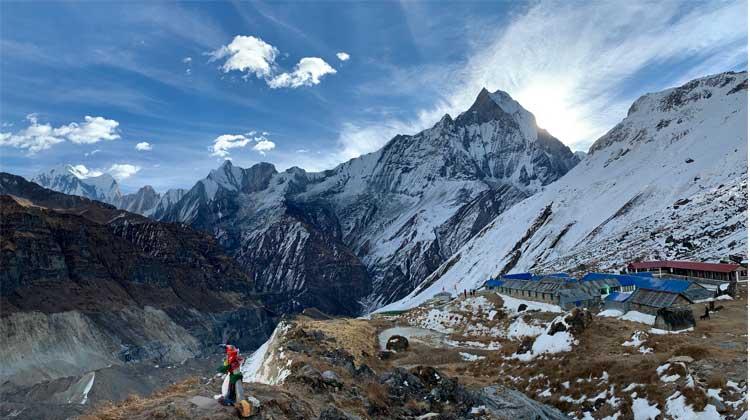
The Short Annapurna Trek is a 13-day Himalayan adventure that takes you through scenic trails to Annapurna Base Camp. This journey passes through beautiful rhododendron forests, traditional villages and natural hot springs. This Annapurna Sanctuary Trek via Ghorepani and Poon Hill is suitable for both beginners and experienced trekkers. At a comfortable pace, the trek takes you through rugged trails to the foothills of Annapurna. You will walk through Gurung villages and enjoy close views of the Annapurna Massif. The sunrise from Poon Hill and natural hot springs at Jhinu Danda are some of the best parts of the journey. Then, the trek begins from Nayapul after around an hour's drive from Pokhara and continues towards Ghorepani. Annapurna Base Camp, at around 4,130 meters, is the highest point. The trek offers amazing views of Annapurna, Dhaulagiri and Machhapuchhre. Thousands of hikers visit Annapurna Base Camp every year. The Annapurna Sanctuary is a natural amphitheater surrounded by 360-degree mountain views, making ABC a wonderful journey for nature and mountain lovers.
What to Expect on SHORT ANNAPURNA TREK?
The Short Annapurna Trek offers a mix of mountain scenery, peaceful forests, traditional villages and high-altitude trails. The journey includes both comfortable and challenging sections, with several hours of walking each day. You will also stay in local teahouses and experience the simple lifestyle, food and culture of the Annapurna region.- Walk through rhododendron, oak and bamboo forests with beautiful natural surroundings.
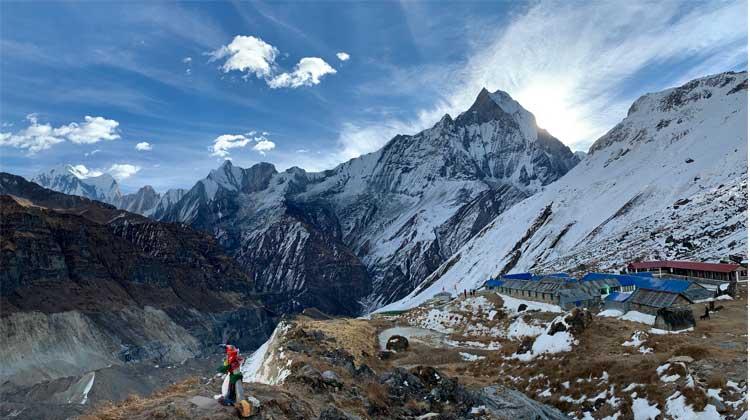
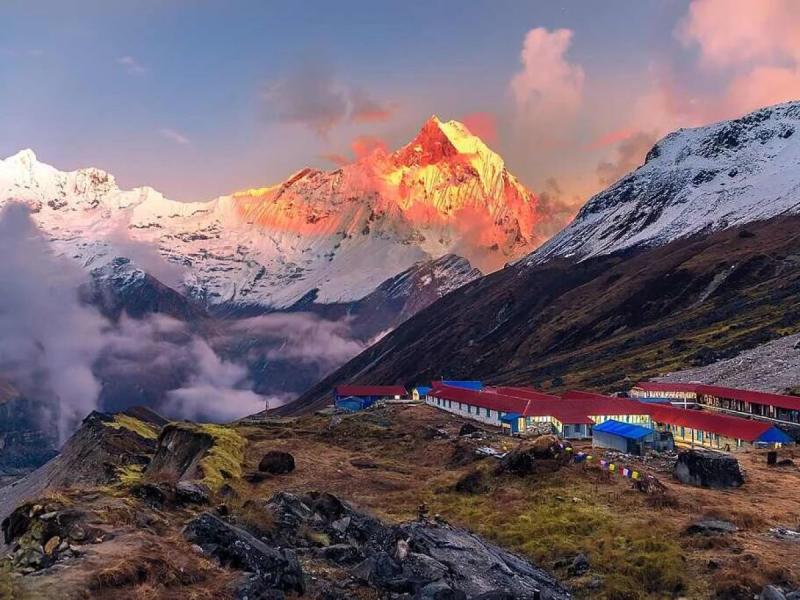
- Enjoy views of Annapurna I, Machhapuchhre, Annapurna South, Hiunchuli and other Himalayan peaks.
- Pass through traditional mountain villages and observe the local lifestyle and culture.
- Stay in simple teahouses with basic but comfortable facilities along the trail.
- Enjoy local meals such as dal bhat, noodles, pasta, rice, vegetables and soup.
- Gradually gain altitude and reach 4,130 meters at Annapurna Base Camp.
- Walk for around 5 to 8 hours on several days, with both uphill and downhill sections.
- Experience changing weather and temperatures as you move from lower hills to higher elevations.
- Relax in the natural hot springs at Jhinu Danda after completing the higher sections of the trek.
- Meet local communities and experience the warm hospitality of people living along the route.
Extra Highlights of the SHORT ANNAPURNA TREK
Short Annapurna Trek has several smaller experiences that make the journey more enjoyable beyond the main attractions. From peaceful mornings in mountain villages to quiet trails and local interactions, these moments add more variety to the overall trekking experience.- Enjoy peaceful mornings and evenings in the mountain villages.
- Experience the quiet atmosphere of the Annapurna Sanctuary away from busy city life.
- Cross small suspension bridges over mountain streams and rivers.
- Take short breaks at local teahouses while enjoying the surrounding scenery.
- Experience the gradual change in vegetation and landscape as the altitude increases.
- Capture memorable photographs of the changing trails, villages and natural surroundings.
- Enjoy clear night skies and a different view of the mountains after sunset.
- Experience the simple daily lifestyle of people living in the Himalayan region.
- Enjoy a refreshing change from everyday routines through several days of walking in nature.
Best Time for SHORT ANNAPURNA TREK
The best time for the Short Annapurna Trek is generally spring (March to May) and autumn (September to November). These seasons usually bring clearer skies, comfortable temperatures and better trekking conditions. Each season has its own advantages, so the best choice depends on the type of experience you prefer.1. Spring (March–May)
Spring is one of the best seasons for the Short Annapurna Trek. The weather is generally pleasant, the skies are often clear, and the trails become colorful with blooming rhododendrons. Temperatures are comfortable for walking, while the higher areas still offer excellent mountain views.2. Summer/Monsoon (June–August)
The monsoon season brings frequent rainfall, cloudy skies and wet, slippery trails. Leeches can also be present in lower forest areas. Mountain views may be limited by clouds, but the landscapes become green and fresh, making this season suitable for those who enjoy quieter trails.3. Autumn (September–November)
Autumn is considered the best season for clear mountain views and stable trekking conditions. The monsoon rain clears the atmosphere, creating better visibility of the surrounding peaks. The weather is generally comfortable, although the popular trails and teahouses can be busier during this period.4. Winter (December–February)
Winter brings cold temperatures, especially around Deurali, Machhapuchhre Base Camp and Annapurna Base Camp. Snowfall can occur at higher elevations and may affect trail conditions. However, the quieter trails, crisp mountain air and clear skies can make winter rewarding for well-prepared trekkers.Accommodation and Meals during SHORT ANNAPURNA TREK
Accommodation and meals are an important part of the Short Annapurna Trek experience. The package combines comfortable hotel stays in Kathmandu and Pokhara with simple teahouse accommodation in the mountains. Meals are mostly served at local teahouses, giving trekkers a chance to enjoy fresh and familiar food during the journey.- Stay in a comfortable 3-star hotel in Kathmandu on a twin-sharing basis, with breakfast included.
- Enjoy 2 nights in a 3-star hotel in Pokhara with breakfast before and after the trek.
- Stay in local teahouses throughout the trekking route with basic but comfortable facilities.
- Rooms are generally twin-sharing, while busy areas may have shared rooms with 4 to 5 beds during peak seasons.
- Breakfast options may include eggs, bread, pancakes, porridge, Tibetan bread, tea and coffee.
- Lunch and dinner usually include dal bhat, noodles, pasta, rice, vegetables, soup, momo and other simple dishes.
- Food choices become more limited at higher elevations, but basic filling meals are available along the route.
- Fresh seasonal fruits are also provided during the trek as part of the package.
- Bottled water, hot drinks, soft drinks and other beverages are available at additional costs.
- Hot showers, Wi-Fi and device charging may be available at teahouses for an additional fee.
SHORT ANNAPURNA TREK: What Makes It Popular?
The Short Annapurna Trek is popular for offering a complete Himalayan trekking experience within a manageable number of days. The trail takes you through beautiful forests, traditional villages and the Annapurna Sanctuary before reaching Annapurna Base Camp. It also combines mountain scenery with local culture, making the journey enjoyable for both nature lovers and adventure seekers. The route does not require technical climbing skills, which makes it accessible to many trekkers with good fitness.- Reach Annapurna Base Camp at 4,130 meters and experience the impressive mountain surroundings.
- Enjoy changing landscapes, from green forests and terraced fields to rugged high-altitude terrain.
- Experience the famous Poon Hill sunrise as an added highlight of the trekking route.
- Walk through the Annapurna Sanctuary, surrounded by towering Himalayan peaks.
- Pass through traditional mountain settlements and experience the local way of life.
- Enjoy a well-established trekking route with teahouses, meals and basic facilities along the way.
- Combine trekking with relaxing experiences such as the natural hot springs at Jhinu Danda.
- Complete the journey without needing mountaineering or technical climbing experience.
- Enjoy a balanced mix of adventure, nature, culture and relaxation in one trekking journey.
Culture Experience on the SHORT ANNAPURNA TREK
The Short Annapurna Trek is not only about mountains and nature but also gives you a chance to experience the culture of the Annapurna region. The trail passes through traditional villages where local communities have maintained their customs and way of life. You can interact with local people, stay in family-run teahouses and experience their daily lifestyle. The journey also offers a closer look at the traditions and hospitality of the Gurung and Magar communities.- Pass through traditional villages such as Ghandruk, Chhomrong and other small mountain settlements.
- Meet local people and learn about their daily life, work and traditions.
- Experience the warm hospitality of local families and teahouse owners.
- See traditional houses, terraced farms and village lifestyles along the trekking route.
- Taste local dishes and experience simple Himalayan food and dining traditions.
- Learn about the cultural practices and customs followed by communities in the Annapurna region.
- Visit local monasteries, temples or shrines found along the route when available.
- Experience a slower and simpler way of life away from Nepal's busy cities.
Altitude and Acclimatization for the SHORT ANNAPURNA TREK
The Short Annapurna Trek gradually takes you from the lower hills to Annapurna Base Camp at 4,130 meters, so adjusting to the increasing altitude is important. The itinerary includes gradual elevation gain, but everyone responds differently to altitude. Walking at a steady pace, staying hydrated and listening to your body can help make the trek safer and more comfortable.- The trek starts at a lower elevation and gradually moves towards higher areas, giving your body time to adjust.
- Poon Hill reaches 3,210 meters, while Machhapuchhre Base Camp is around 3,700 meters.
- The highest point is Annapurna Base Camp at 4,130 meters.
- Walk slowly and maintain a comfortable pace, especially as you move above 3,000 meters.
- Drink plenty of water throughout the day and avoid becoming dehydrated.
- Get enough rest and avoid unnecessary physical strain at higher elevations.
- Avoid alcohol and smoking at higher altitudes, as they can make adjustment more difficult.
- Inform your guide immediately if you experience severe headache, dizziness, unusual weakness, nausea or difficulty breathing.
- If altitude-related symptoms become serious, descending to a lower elevation is generally the safest response.
Difficulty Level of SHORT ANNAPURNA TREK
The Short Annapurna Trek is generally considered a moderate trek. It is suitable for beginners and experienced trekkers who have a good level of fitness and can walk for several hours a day. The trail includes uphill and downhill sections, stone steps and changing altitudes, with the highest point reaching 4,130 meters.- Most trekking days involve around 5 to 8 hours of walking.
- The trail has steep sections, stone staircases and uneven mountain paths.
- Altitude becomes more challenging as you approach Annapurna Base Camp.
- No technical climbing or mountaineering skills are required.
- Basic fitness and regular walking practice before the trek are recommended.
- A steady pace and proper rest can make the longer walking days easier.
- Good trekking shoes and comfortable clothing are important for different trail conditions.
- Beginners can complete the trek with proper preparation and support from an experienced guide.
- Weather, altitude and individual fitness can affect the overall difficulty of the trek.
Permits Required for SHORT ANNAPURNA TREK
The Short Annapurna Trek requires two important permits: the Annapurna Conservation Area Permit (ACAP) and the TIMS Card. Both should be arranged before starting the trek. The permits help manage trekking activities and maintain records for trekkers' safety. They can be arranged through a registered trekking agency in Kathmandu.- Annapurna Conservation Area Permit (ACAP): ACAP is required to enter the Annapurna Conservation Area. It can be obtained through the Nepal Tourism Board or a registered trekking agency. The current fee is NPR 2,000 (around USD 15) for foreign nationals per entry.
- TIMS Card: TIMS is required for the Poon Hill–ABC route and is issued through a registered trekking agency. The current fee is NPR 2,000 (around USD 15) for non-SAARC trekkers. Your agency can complete the registration and provide the electronic TIMS card before the trek.
Insurance for the SHORT ANNAPURNA TREK
Travel insurance is strongly recommended for the Short Annapurna Trek because the route reaches 4,130 meters and involves trekking in remote mountain areas. Nepal Tourism Board recommends insurance that covers trekking activities, medical treatment and emergency helicopter rescue.- Choose a policy that specifically covers trekking up to at least 4,130 meters.
- Make sure emergency helicopter evacuation is included, as rescue flights can be expensive.
- The policy should cover emergency medical treatment during the trek.
- Check whether the insurance covers altitude-related illnesses, including Acute Mountain Sickness (AMS).
- Carry a copy of your insurance policy and emergency contact details during the trek.
- Share your insurance information with your trekking agency before starting the journey.
- Check the policy terms carefully for exclusions related to altitude, pre-existing conditions or adventure activities.
- Rescue and evacuation costs are not included in the trekking package unless specifically stated; they should be claimed through your travel insurance.
Why Choose This Itinerary?
This 13-day Short Annapurna Trek itinerary is designed to give you a more complete experience of the Annapurna region without rushing through the major sections. It combines the Poon Hill route with Annapurna Base Camp, allowing you to enjoy both lower Himalayan landscapes and high mountain scenery. The route also includes cultural experiences, teahouse stays and time to relax after the trek. The Nepal Tourism Board also lists the Annapurna Base Camp route as a popular trekking itinerary in the region.- Combines Poon Hill and Annapurna Base Camp in one trekking journey.
- Includes a gradual route through different landscapes and elevations.
- Gives you time to experience local villages and mountain communities.
- Includes both trekking and comfortable road transportation between major destinations.
- Offers a mix of nature, culture, adventure and relaxation.
- Includes a relaxing stop at Jhinu Danda after the higher sections of the trek.
- Suitable for trekkers who want a complete Annapurna experience rather than a shorter ABC route.
- Includes experienced guides, porter support, permits, meals and accommodation as part of the package.
Safety on the SHORT ANNAPURNA TREK
Safety is an important part of the Short Annapurna Trek, especially because the route reaches 4,130 meters. Following a steady pace, staying hydrated and listening to your guide can help make the trek safer and more comfortable. Nepal Tourism Board also recommends trekking with a reliable guide or registered agency and being prepared for altitude-related risks.- Trek with an experienced and registered guide who can help with navigation, weather changes and emergencies.
- Walk at a comfortable pace and avoid rushing, especially at higher elevations.
- Stay hydrated and drink treated, boiled or filtered water throughout the trek.
- Watch for signs of Acute Mountain Sickness (AMS) such as headache, nausea, dizziness, unusual tiredness or loss of appetite.
- If altitude-related symptoms become worse, inform your guide immediately and descend to a lower elevation when advised.
- Carry essential items such as a first-aid kit, headlamp, rain protection, warm clothing and necessary medicines.
- Use trekking poles on steep and uneven sections to improve balance and reduce pressure on your knees.
- Check weather conditions before heading towards higher sections, as mountain weather can change quickly.
- Keep your travel insurance details and emergency contacts with you throughout the trek.
- Avoid trekking alone and stay with your group, particularly in remote or higher sections of the route.
Responsible Tourism
Responsible tourism helps protect the natural beauty and local culture of the Annapurna region while making sure tourism benefits the communities along the trail. During the Short Annapurna Trek, small choices such as managing waste, respecting local customs and supporting local businesses can make a positive difference. Nepal Tourism Board also encourages trekkers to follow designated routes, respect local culture and reduce their environmental impact.- Carry your waste with you and use proper waste-disposal facilities along the trail.
- Avoid single-use plastics where possible and carry a reusable water bottle.
- Stay on marked trekking trails to help protect vegetation and the surrounding environment.
- Respect local traditions, customs, religious sites and the privacy of local communities.
- Choose local teahouses, shops and services to support businesses in mountain communities.
- Treat guides, porters and other local workers fairly and respectfully.
- Avoid unnecessary use of firewood and support teahouses that use cleaner energy options.
- Use water carefully, especially in higher mountain areas where resources can be limited.
- Avoid disturbing wildlife, plants and natural surroundings during the trek.
- Leave the mountains as you found them by taking only photographs and leaving no unnecessary waste behind.
Group Size
The Short Annapurna Trek can be arranged for small groups, families, friends and larger private groups. At Nepalaya Treks, the group size can be planned according to your travel needs and preferred experience. Smaller groups offer more flexibility, while larger groups can be suitable for families, organizations, student groups or friends travelling together.- Small groups are ideal for couples, families and friends looking for a more personal experience.
- Larger groups can be arranged for organizations, student groups, corporate trips and other parties.
- An experienced trekking guide will accompany the group throughout the trekking route.
- One porter is generally provided for every two trekkers to help carry luggage.
- An assistant guide is provided for groups with more than 8 trekkers.
- Group members can walk at a comfortable pace while following the guide's instructions.
- Private departures are also available for groups wanting flexible dates and arrangements.
Private Departure Available
Private departures are available for trekkers who prefer to travel with their own family, friends or small group. You can choose a suitable departure date and enjoy a more flexible trekking experience. The itinerary can also be adjusted based on your group's pace, interests and travel requirements.- Choose your preferred departure date instead of joining a fixed group.
- Travel privately with family, friends, couples or your own group.
- Enjoy a flexible walking pace based on the group's fitness and comfort.
- Customize transportation, accommodation and other arrangements when required.
- Add extra rest days or make suitable changes to the itinerary.
- Receive dedicated support from an experienced trekking guide throughout the journey.
- Suitable for travelers looking for a more comfortable and personalized Short Annapurna Trek experience.
Equipment Rental Information
You do not need to purchase every piece of trekking equipment for the Short Annapurna Trek, as several essential items can be rented in Kathmandu or Pokhara. Rental options are useful for travellers who do not trek regularly or prefer to avoid carrying bulky gear after the trip.- Sleeping bags, down jackets, trekking poles and duffel bags can be rented or arranged before the trek.
- Some equipment may already be provided as part of your trekking package, depending on the arrangement.
- Rental equipment should be checked for proper size, condition and comfort before starting the trek.
- Good trekking shoes and personal clothing are usually better purchased or brought from home.
- Equipment rental charges depend on the item, quality and number of rental days.
- Your trekking agency can help arrange the required rental equipment before the trek begins.
- Return all rented equipment to the agency after completing the trek.
Trip Highlights
- Enjoy a mix of scenic trekking, mountain views, village experiences and comfortable travel.
- Experience local culture, traditional food and friendly teahouse hospitality.
- Relax in the natural hot springs at Jhinu Danda after the trek.
- See stunning peaks including Annapurna I, Annapurna South, Hiunchuli and Machhapuchhre.
- Reach Annapurna Base Camp at 4,130 meters and enjoy the surrounding Himalayan views.
- Pass through Machhapuchhre Base Camp at 3,700 meters on the way to ABC.
- Visit traditional Gurung villages including Ghandruk and Chhomrong.
- Trek through peaceful rhododendron, oak and bamboo forests.
- Experience the stunning sunrise from Poon Hill at 3,210 meters.
- Enjoy the scenic journey from Kathmandu to Pokhara through beautiful hills, rivers and villages.
- Explore Kathmandu and enjoy some time in the capital before starting the trek.
Itinerary
Day 1: Arrival in Kathmandu
Welcome to Nepal, after landing at Tribhuvan International Airport in Kathmandu, complete the arrival process and visa-on-arrival formalities if required. Once you exit the airport, our representative will be waiting to welcome you and transfer you to your designated hotel, which takes around 30 to 45 minutes. After checking in and taking some rest, you can explore the lively streets of Thamel, where you can shop for any last-minute trekking items or rent equipment if needed. In the evening, you attend a short trek briefing with your guide. You will learn about the trekking route, daily plans, safety tips and essential gear. It is also a good opportunity to meet your fellow trekkers before the journey begins. Enjoy the welcome dinner and get some good sleep so you are well rested for the days ahead.
- Max Elevation: 1,320 meters
- Travel Distance: 6 to 8 kilometers
- Travel Hours: 30 to 45 minutes
- Accommodation: 3-star Standard Hotel
- Meal Included: Welcome Dinner
Day 2: Drive or Fly From Kathmandu to Pokhara
Day 3: Drive from Pokhara to Nayapul, then trek to Ulleri (1,960 meters)
Day 4: Trek from Ulleri to Ghorepani (2,870 meters) through rhododendron forests
Day 5: Early hike up Poon Hill (3,210 meters) for sunrise, continue trekking to Tadapani (2,630 meters)
Day 6: Trek from Tadapani down to Lower Sinuwa (2,340 meters) via Chhomrong
Day 7: Trek from Lower Sinuwa to Deurali (3,200 meters) passing bamboo and Dovan
Day 8: Trek from Deurali via Machhapuchhre Base Camp (3,700 meters) to Annapurna Base Camp (4,130 meters)
Day 9: Descend from Annapurna Base Camp back to Bamboo (2,340 meters)
Day 10: Trek from Bamboo to Jhinu Danda (1,690 meters) and relax in the natural hot springs
Day 11: Walk to Ghandruk/Nayapul and drive back to Pokhara
Day 12: Drive or Fly Back to Kathmandu from Pokhara
Day 13: Final Departure
Inclusion / Exclusion
Inclusion
- Airport pick-up and drop-off by private vehicle
- Three daily meals, breakfast, lunch, and dinner during the trek
- 2 nights in a quality 3-star hotel in Kathmandu on a twin-sharing basis with breakfast
- 2 nights in a 3-star hotel in Pokhara on a twin-sharing basis with breakfast
- Experienced, licensed, English-speaking and government-registered trekking guide
- Sherpa porter service with 1 porter for every 2 trekkers, including their salary, meals, accommodation and insurance
- Annapurna Conservation Area Permit (ACAP) and TIMS Card
- Sleeping bag, down jacket, duffel bag and walking poles for use during the trek, if required
- Teahouse accommodation throughout the trekking route
- Assistant guide for groups with more than 8 trekkers
- Tourist bus transportation for Kathmandu–Pokhara–Nayapul–Pokhara–Kathmandu
- Assistance with emergency rescue arrangements when required, with the rescue cost covered by travel insurance
- All applicable government taxes, local fees and official charges
Exclusion
- Lunch and dinner in Kathmandu and Pokhara
- Nepal entry visa fees: USD 30 for 15 days, USD 50 for 30 days and USD 125 for 90 days
- Personal travel and medical insurance, including emergency evacuation coverage
- International airfare to and from Nepal
- Personal expenses such as laundry, phone calls and shopping
- Drinks and beverages during the trek, including tea, coffee, soft drinks, alcoholic drinks, bottled water and other additional beverages
- Extra food items and desserts such as chocolate, cake, pie and pudding
- Hot shower and device charging fees at teahouses
- Tips for the guide, porters and driver
- Any additional accommodation, meals or transportation required due to personal reasons, illness or an early return from the trek
Check List
Packing wisely is essential for a safe and comfortable Short Annapurna Trek. Since the trail passes through remote mountain areas and reaches high elevations, you should be prepared for changing weather and colder temperatures. Packing appropriate clothing, trekking equipment, and personal supplies will make your journey more enjoyable and help you to deal with the conditions at hand with greater confidence. The following packing list includes the recommended items to bring, for a smooth and well-prepared trekking experience.
General
- All-season sleeping bag
- Down jacket
- Duffle bag
- Light windproof and waterproof jacket
- Daypack
- Head, Ears, and Eyes
- Warm hat that covers ears
- Complimentary sunglasses with UV protection
- Buff or neck warmer
- Sunscreen (SPF 35–60)
- Headlamp with extra batteries
Hands
- Lightweight trekking gloves
- Waterproof winter gloves
- Inner liner gloves (optional but recommended)
Upper Body Clothing
- Long-sleeve T-shirts
- Thermal tops
- Warm fleece or wool jacket
- Sports bra (women)
- Windproof and waterproof jacket
Lower Body Clothing
- Thermal underwear (trousers)
- Waterproof and windproof Pants
- Warm trekking pants
- Hiking pants
- Casual sports pants
Footwear
- Waterproof trekking boots (must have)
- Casual sandals for the nighttime hours
- Woollen socks (4–5 pairs)
- Sock liners
- Light weight shoes or sneakers
First Aid and Medicines
- Adhesive bandages (plasters)
- Blister cream
- Anti-itch cream or insect repellent cream
- Pain relief medicine (such as ibuprofen)
- Bandages and sterile gauzes
- Water purification tablets
Important Documents and Personal Items
- Original passport
- Four passport-sized photographs
- Water bottle or hydration bottle
- Water purifier or purification tablets
- Printed copy of flight details
- Toiletries (toilet paper, soap, wet wipes, towel, toothbrush, toothpaste, etc.)
Extra Useful Items
- Trekking poles
- High energy snack/dry foods
- Power Bank and charging cable
- Extra batteries or memory cards for the camera
- Mobile phone or music player for pleasure
Trip FAQs
-
1. How difficult is the Short Annapurna Trek?
The Short Annapurna Trek is considered a moderate trek. You do not need technical climbing skills, but you should be comfortable walking for around 5 to 8 hours a day. Some sections include steep uphill and downhill trails, so good fitness and regular walking practice are helpful. -
2. What is the highest altitude of the Short Annapurna Trek?
The highest point of the trek is Annapurna Base Camp at 4,130 meters. The route also takes you to Poon Hill at 3,210 meters and Machhapuchhre Base Camp at around 3,700 meters. Proper pacing, enough rest and regular hydration are important as you gain altitude. -
3. What is the best time for Short Annapurna Trek?
The best time for the Short Annapurna Trek is during spring from March to May and autumn from September to November. These seasons generally offer clear mountain views, pleasant weather and better trail conditions. Spring also brings colorful rhododendron flowers along several parts of the route. -
4. Do I need previous trekking experience for Short Annapurna Trek?
Previous trekking experience is not required for the Short Annapurna Trek. However, you should have a reasonable level of fitness because the journey includes several long walking days and uphill sections. Regular walking, hiking or simple cardio exercises before the trek can help you prepare better. -
5. What type of accommodation is available during the Short Annapurna Trek?
Accommodation during the trek is mainly provided in local teahouses. Most rooms are simple and usually have twin beds with shared bathrooms. Facilities become more basic at higher elevations. In Kathmandu and Pokhara, you will stay in comfortable hotels with better facilities and services. -
6. What meals are available during the Short Annapurna Trek?
Meals are served at local teahouses along the trekking route. Common options include dal bhat, noodles, pasta, rice, vegetables, soup, eggs and other simple dishes. Breakfast, lunch and dinner are included during the trekking days, while food options may become more limited at higher elevations. -
7. What permits are required for the Short Annapurna Trek?
Trekkers generally need an Annapurna Conservation Area Permit (ACAP) and a TIMS Card for the Short Annapurna Trek. These permits are required for trekking in the Annapurna region. The trekking agency can arrange the necessary permits and guide you through the process before the trek begins. -
8. Is Short Annapurna Trek suitable for beginners?
Yes, the Short Annapurna Trek can be suitable for beginners who are physically prepared for several hours of walking each day. The trail does not involve technical climbing. However, beginners should maintain a steady pace, stay hydrated and follow the guide's instructions, especially at higher elevations. -
9. Can the Short Annapurna Trek itinerary be customized?
Yes, the Short Annapurna Trek can be customized according to your available time, fitness level, transportation preference and group size. Private departures can also be arranged for families, couples or groups of friends. Extra rest days, different accommodation options and alternative routes can be discussed when planning the trek.
All Inclusive Cost
BOOK NOW QUICK ENQUIRY- Best Price Guarantee
- Hassle-Free Booking
- Team of highly experienced Experts
You may also like !!
Our Best Selling Packages You May Like.