Dho Tarap Trek – 18 Days
Overview
Dho Tarap Trek is an adventurous 18-day journey into the remote and culturally rich Dolpo region of western Nepal. The trek begins with a flight from Kathmandu to Nepalgunj and then to Juphal, followed by a scenic walk through Dunai, Tarakot, Laina Odar, and Nawarpani. As you move deeper into Dolpo, the trail takes you to the traditional settlement of Dho Tarap, where you can experience the local lifestyle, culture, and Tibetan-influenced traditions. An acclimatization day here helps prepare you for the higher sections ahead. This trek then crosses two challenging high passes, Numa La at 5,309 meters and Baga La at 5,070 meters, offering impressive views of the rugged Himalayan landscape. After the crossings, the trail continues toward the beautiful Phoksundo Lake and the traditional village of Ringmo. You will explore the lake and surrounding area before descending toward Juphal. With remote trails, high-altitude landscapes, traditional villages, and unique cultural experiences, this trek is best suited for trekkers with good fitness, stamina, and previous trekking experience.
What to Expect on DHO TARAP TREK
Dho Tarap Trek takes you through the remote and less-crowded landscapes of Dolpo. You will experience long trekking days, high mountain passes, traditional villages, and beautiful Himalayan scenery. The route also gives you time to explore Dho Tarap, Phoksundo Lake, and Ringmo village. Here is what you can expect during the journey:
- Walk through peaceful and less-developed trails away from the busy trekking routes.
- Reach elevations above 5,000 meters while crossing Numa La and Baga La passes.
- Pass through villages such as Tarakot, Dho Tarap, and Ringmo and observe local lifestyles.
- Enjoy views of rocky valleys, forests, rivers, mountains, and changing high-altitude scenery.
- Learn about the unique traditions, Buddhist practices, and Tibetan-influenced culture of the Dolpo region.
- Spend time around the beautiful Phoksundo Lake and enjoy its peaceful surroundings.
- Expect around 5 to 8 hours of trekking on most days, with some sections being more demanding.
- Stay mainly in local mountain teahouses, with basic facilities in the remote sections.
- Enjoy a rest day in Dho Tarap to help your body adjust before reaching the higher passes.
Extra Highlights of the DHO TARAP TREK
The Dho Tarap Trek offers more than long walks and high mountain trails. Along the way, you can experience the local way of life, observe traditional practices, and enjoy the quiet surroundings of the Dolpo region. The journey also provides opportunities to see wildlife, old settlements, and unique Himalayan landscapes.
- Observe traditional stone houses built in the local Dolpo style.
- See yak, sheep, and other livestock grazing in mountain pastures.
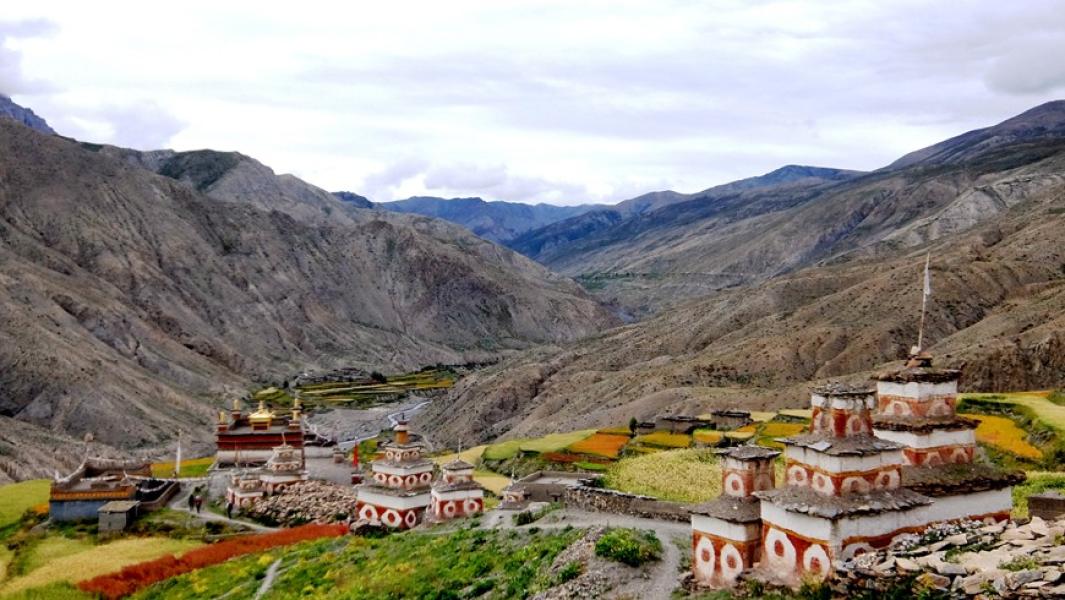
- Visit ancient monasteries, chortens, prayer flags, and mani walls.
- Experience the quiet lifestyle of remote mountain communities.
- Enjoy clear mountain skies and peaceful evenings away from city areas.
- Spot native Himalayan wildlife in less-developed parts of the region.
- Walk through different landscapes, from narrow valleys to open alpine areas.
- Learn about traditional farming and livestock practices followed by local families.
- Experience the limited facilities and simple lifestyle of remote mountain settlements.
- Photograph unique village architecture, mountain trails, and local surroundings.
Best Time for DHO TARAP TREK
Best time for the Dho Tarap Trek is during spring and autumn when the weather is generally stable and the trails are easier to follow. These seasons offer clearer mountain views, comfortable daytime temperatures, and better trekking conditions. Summer and winter are less suitable because of rain, snow, and difficult trail conditions.
1. Spring (March to May)
Spring is one of the best seasons for the Dho Tarap Trek. The weather is usually mild, with clear mornings and comfortable temperatures for walking. The trails become more pleasant as winter ends, and the surrounding hills start to look greener. This season is also suitable for enjoying clear views of the mountains and valleys.
2. Summer/Monsoon (June to August)
Summer and monsoon are generally not recommended for the Dho Tarap Trek. Rain can make lower trails muddy and slippery, while cloudy weather may affect mountain views. Flight delays are also possible due to poor weather. However, some parts of Dolpo lie in a rain-shadow area, so trekking may still be possible with careful planning.
3. Autumn (September to November)
Autumn is another excellent season for the Dho Tarap Trek. The monsoon usually clears the sky, bringing dry trails and good visibility. Days are generally comfortable for trekking, while mornings and nights can be cold at higher elevations. The stable weather makes this season ideal for crossing the high mountain passes.
4. Winter (December to February)
Winter is a difficult time for the Dho Tarap Trek because temperatures can drop significantly at higher elevations. Heavy snowfall may cover the high passes and make some sections difficult or unsafe to cross. Shorter daylight hours and very cold nights also make trekking more challenging. For these reasons, winter is generally avoided.
Accommodation and Meals during DHO TARAP TREK
Accommodation and meals are arranged throughout the Dho Tarap Trek to make your journey more comfortable. You will mainly stay in local teahouses and simple mountain lodges along the trail. Facilities become more basic as you reach the remote and higher areas. Meals are provided during the trek and are prepared to give you enough energy for long walking days.
- Stay in local mountain teahouses with basic rooms and shared facilities.
- Accommodation can be simple in remote sections, with limited facilities and fewer services.
- Rooms are generally arranged on a twin-sharing basis, depending on availability.
- Breakfast, lunch, and dinner are provided throughout the trekking days.
- Common meals include dal bhat, noodles, rice, pasta, soup, potatoes, eggs, vegetables, and other simple local dishes.
- Tea, coffee, and other hot drinks are available at teahouses and are useful during colder days.
- Food choices may be more limited at higher elevations due to the remote location.
- Safe drinking water should be arranged through purification methods or other available options along the route.
- Vegetarian meals are generally available, while special dietary requirements should be informed before the trek.
DHO TARAP TREK: What Makes It Popular?
This trek gives travelers the opportunity to experience a quieter and more traditional side of the Nepal Himalayas. It combines challenging trails, traditional villages, high mountain passes, and the unique culture of the Dolpo region. The trek also takes you through different landscapes, making each part of the journey different from the next.
- Explore one of Nepal’s less-developed trekking regions away from busy tourist trails.
- Learn about the local traditions, lifestyle, and Tibetan-influenced culture of the region.
- Test your trekking skills while crossing high mountain passes along the route.
- See old-style villages and experience how people live in the remote mountain areas.
- Walk through forests, rocky valleys, alpine areas, and dry mountain terrain.
- Visit one of the well-known natural attractions of the Dolpo region and enjoy its peaceful surroundings.
- The remote setting provides opportunities to see Himalayan plants, animals, and natural surroundings.
- Enjoy long trekking days and quiet trails that offer a true sense of adventure.
Culture Experience on the DHO TARAP TREK
You can experience the unique cultural practices and traditional lifestyle found throughout the Dolpo region. The remote location has helped local communities preserve their customs, beliefs, and way of life. During the trek, you can observe their daily activities and see how closely their lives are connected with the mountains.
- Experience the traditional lifestyle of people living in remote mountain villages.
- Learn about the Tibetan-influenced customs and traditions followed by local communities.
- See ancient monasteries, chortens, mani walls, and prayer flags along the route.
- Observe traditional stone houses built to suit the cold mountain climate.
- See how local families depend on farming and livestock for their daily needs.
- Meet local people and learn about their daily routines and mountain lifestyle.
- Observe Buddhist rituals, prayer wheels, and other religious practices in the villages.
- Experience the close community life found in the remote settlements of Dolpo.
- Learn how local people preserve their traditional customs and practices over generations.
- If the timing is right, observe local festivals, ceremonies, or cultural events.
Altitude and Acclimatization for the DHO TARAP TREK
Proper acclimatization is important on the Dho Tarap Trek as the route gradually reaches higher elevations. The route gradually gains altitude before reaching the high passes above 5,000 meters. A planned rest day in Dho Tarap gives your body time to adjust before heading toward the higher sections.
- The trek starts at a lower elevation in Kathmandu and gradually moves toward the highlands of Dolpo.
- Dho Tarap is located at around 4,100 meters, making it an important point for acclimatization.
- An acclimatization day in Dho Tarap allows your body to adjust to the higher elevation.
- The highest point of the trek is Numa La Pass at 5,309 meters.
- Baga La Pass reaches around 5,070 meters and is another demanding high-altitude section.
- Walk at a steady pace and avoid rushing, especially on days when the trail gains significant elevation.
- Drink enough water throughout the day and eat regular, nutritious meals to maintain energy.
- Get enough rest and avoid excessive physical activity during acclimatization days.
- Be aware of symptoms such as headache, dizziness, nausea, unusual tiredness, or difficulty breathing.
- If altitude sickness symptoms become severe or continue to worsen, descend to a lower elevation and seek medical help.
- Proper preparation, a gradual pace, and following your guide’s advice can help make the high-altitude sections safer.
Difficulty Level of DHO TARAP TREK
This Dho Tarap Trek is considered a challenging trek because of its remote trails, long walking days, and high-altitude sections. The route includes two passes above 5,000 meters, which require good stamina and proper preparation. Previous trekking experience is helpful, especially for the demanding sections of the journey.
- Expect around 5 to 8 hours of walking on most trekking days.
- The trail includes steep climbs, rocky paths, narrow sections, and uneven terrain.
- Crossing Numa La Pass at 5,309 meters is one of the most demanding parts of the trek.
- Baga La Pass at 5,070 meters also requires good fitness and endurance.
- The remote location means basic facilities and medical services may be limited.
- Altitude can make walking more difficult, especially above 4,000 meters.
- A proper acclimatization day in Dho Tarap helps your body adjust to the elevation.
- Good cardiovascular fitness and regular walking or hiking practice are recommended before the trek.
- Trekkers should carry suitable clothing and equipment for cold and changing mountain weather.
- Walking at a steady pace, taking enough rest, and following the guide’s advice can make the trek more manageable.
Permits Required for DHO TARAP TREK
As Dho Tarap lies within restricted and protected areas, trekkers must arrange the required permits in advance. These permits help regulate trekking activities and support the safety and management of the region. The main permits required are the Upper Dolpo Restricted Area Permit, Shey-Phoksundo National Park Entry Permit, and TIMS Card. Your registered trekking agency normally arranges these permits before the trek.
1. Upper Dolpo Restricted Area Permit
The Upper Dolpo Restricted Area Permit is required because parts of the Dho Tarap Trek fall within the Upper Dolpo restricted area. The permit costs USD 50 per person per day, which is approximately NPR 7,574 per day based on the Nepal Rastra Bank selling rate of the current date. The permit is issued through the Department of Immigration at Kalikasthan, Kathmandu, and it is normally arranged by your registered trekking agency before the trek.
2. Shey-Phoksundo National Park Entry Permit
The Shey-Phoksundo National Park Entry Permit is required because the Dho Tarap route enters Shey-Phoksundo National Park, including the Phoksundo Lake area. For foreign visitors, the current entry fee is NPR 3,000 per person per entry, which is approximately USD 19.80 at the current exchange rate. The permit can be obtained from the Tourist Service Center at Bhrikutimandap, Kathmandu, or at designated park entry points. Your trekking agency can also arrange it for you.
3. TIMS Card
A TIMS (Trekkers' Information Management System) Card is an important trekking document for the Dho Tarap Trek. For trekkers from non-SAARC countries, the current fee is NPR 2,000 per person, approximately USD 13.20 at the current exchange rate. For SAARC nationals, the fee is NPR 1,000, around USD 6.60. TIMS is issued online through registered trekking agencies, and the agency submits the trekker, guide, and route details before generating the electronic TIMS card.
Insurance for the DHO TARAP TREK
Travel insurance is highly recommended for the Dho Tarap Trek because the route reaches remote and high-altitude areas. The trek includes sections above 5,000 meters, where medical facilities and transportation can be limited. A suitable insurance policy can help cover unexpected medical treatment and emergency evacuation. Nepal Tourism Board also recommends comprehensive travel insurance that covers medical treatment and helicopter rescue.
- Choose an insurance policy that specifically covers high-altitude trekking and check the maximum altitude included in the policy.
- Make sure the policy covers emergency helicopter evacuation, as rescue flights in remote mountain areas can be expensive.
- Medical expenses should be included in the policy in case you become sick or injured during the trek.
- Check whether the insurance covers Acute Mountain Sickness (AMS) and other altitude-related emergencies.
- The policy should cover emergency evacuation to a suitable medical facility or Kathmandu when necessary.
- Read the policy carefully to understand exclusions, claim procedures, and conditions related to trekking at high altitude.
- Carry a digital and printed copy of your insurance details and emergency contact information during the trek.
- Share your insurance information with your trekking agency or guide before starting the journey.
- Make sure your coverage remains valid for the entire Dho Tarap Trek, including travel days before and after the trek.
- Remember that your trekking package may arrange or assist with rescue coordination, but the cost of rescue should be covered by your own travel insurance unless clearly stated otherwise.
Why Choose This Itinerary?
This 18-day itinerary is designed for trekkers who want to explore the remote Dolpo region at a comfortable and well-planned pace. It includes enough time for acclimatization, challenging mountain sections, cultural experiences, and scenic places along the route. The itinerary also combines trekking with convenient domestic flights, making the overall journey more organized.
- The itinerary follows a gradual route that allows you to adjust to increasing altitude.
- A dedicated rest day in Dho Tarap helps prepare your body for the higher sections.
- Explore remote valleys, traditional settlements, high passes, and natural landscapes in one journey.
- The itinerary includes both challenging walking days and shorter days for rest and exploration.
- Experience a less-crowded trekking route away from Nepal’s more popular trails.
- Get opportunities to meet local communities and observe their traditional way of life.
- Spend time exploring the Phoksundo Lake and nearby Ringmo area before returning toward Juphal.
- Domestic flights between Kathmandu, Nepalgunj, and Juphal help reduce long overland travel.
- A licensed guide and porter supports you throughout the trekking section.
- The itinerary is a good choice for trekkers looking for a demanding and less-traveled Himalayan adventure.
Safety on the DHO TARAP TREK
Safety is an important part of the Dho Tarap Trek because the route passes through remote areas and reaches elevations above 5,000 meters. Proper preparation, gradual walking, and following your guide’s advice can help reduce common trekking risks. It is also important to be prepared for changing weather, difficult terrain, and altitude-related problems during the journey.
- Trek with an experienced and licensed guide, especially because the route passes through remote and challenging areas.
- Follow a gradual pace and allow enough time for your body to adjust to increasing altitude.
- Take the planned acclimatization day in Dho Tarap seriously before crossing the higher passes.
- Stay alert for altitude sickness symptoms such as headache, nausea, dizziness, unusual tiredness, or loss of appetite.
- If altitude sickness symptoms become worse, do not continue ascending and descend to a lower elevation as soon as possible.
- Drink enough clean or treated water throughout the trek to stay hydrated.
- Avoid alcohol at high elevations, as it can make altitude-related problems more difficult to manage.
- Carry a basic first-aid kit, headlamp, suitable clothing, and other essential trekking equipment.
- Use trekking poles on steep, rocky, or uneven sections to improve balance.
- Check weather conditions before crossing Numa La and Baga La, as conditions can change quickly in high mountain areas.
- Keep your travel insurance details with you and make sure your policy covers high-altitude trekking and emergency helicopter evacuation.
- Stay with your group and avoid walking alone on remote sections of the trail.
- Carry your required permits and identification documents during the trek, as trekking permits may need to be shown to officials when requested.
- Follow your guide’s instructions and be ready to change the itinerary if weather or trail conditions make a section unsafe.
Responsible Tourism
Responsible tourism is important when trekking through remote areas like Dolpo. The Dho Tarap region is home to local communities, wildlife, forests, and fragile mountain environments that should be treated with care. Small responsible actions during the trek can help protect the area and support local people for the future.
- Respect local customs, traditions, religious places, and community rules.
- Avoid throwing plastic, food wrappers, bottles, or other waste along the trail.
- Carry your waste with you and dispose of it at suitable collection points.
- Use reusable water bottles instead of buying unnecessary plastic bottles.
- Avoid damaging plants, trees, rocks, and other natural surroundings.
- Do not disturb wildlife or feed animals found along the trail.
- Support local teahouses, shops, guides, and other community-based services.
- Ask for permission before taking close-up photographs of local people.
- Avoid wasting food and water, especially in remote areas where resources are limited.
- Use toilets provided by teahouses and follow proper hygiene practices.
- Keep noise levels low around villages, monasteries, and natural areas.
- Follow marked trails and avoid creating new paths that can damage the landscape.
- Carry suitable reusable or eco-friendly trekking supplies whenever possible.
- Respect the local way of life and leave villages and natural areas as you found them.
Group Size
The Dho Tarap Trek can be arranged for different group sizes based on your travel plans and preferences. Whether you are traveling with friends, family, or a small group, the trip can be organized to provide a comfortable trekking experience. Smaller groups also allow easier communication and more flexibility during the trek.
- Travel with a small group for a more comfortable and peaceful experience.
- Join with your friends, family, or other trekkers with similar interests.
- Private group options are available for those who prefer to travel with their own group.
- A licensed trekking guide will accompany the group throughout the trekking route.
- Porters can be arranged based on the number of trekkers and luggage requirements.
- Group arrangements can be adjusted according to your preferred travel style.
- Larger groups can also be organized with additional guides and support staff when required.
Private Departure Available By Deluxe Bus, Private Car, and Flight
Private departures are available for trekkers who want to travel with their own family, friends, or small group. With Nepalaya Treks, you can choose a suitable departure date and select the transportation option that works best for your group. The itinerary can also be adjusted based on your pace, interests, and travel needs.
- Choose your preferred departure date instead of joining a fixed group.
- Travel privately with family, friends, couples, or your own small group.
- Select a deluxe bus, private car, or flight based on your comfort and travel preference.
- Enjoy a more flexible schedule during the journey.
- Adjust the itinerary according to your group’s pace and requirements where possible.
- Get personalized support from an experienced trekking team throughout the trip.
- Ideal for trekkers who prefer more privacy, comfort, and flexibility.
Equipment Rental Information
If you do not own trekking equipment, rental services are available in Kathmandu before starting the Dho Tarap Trek. Renting can be a practical option for trekkers who do not want to purchase expensive gear for one trip. Our team can help you find and arrange the necessary equipment based on the trek duration, altitude, and weather conditions.
- Trekking equipment can be rented from various shops in Kathmandu before the trek.
- Rental equipment is usually charged on a daily or trip basis, depending on the shop and item.
- The rental cost depends on the type, quality, and condition of the equipment.
- You can check and choose the equipment according to your size and comfort before leaving Kathmandu.
- Our trekking team can assist with finding suitable rental equipment when required.
- Rental equipment should be checked carefully for proper fit, working condition, and damage before use.
- If any rented equipment needs replacement during the trek, options may be limited in remote areas.
- Trekkers can return the rented equipment after completing the trek in Kathmandu.
- Renting is a convenient choice for travelers who trek only occasionally and do not want to invest in their own gear.
Trip Highlights
- Experience the traditional lifestyle and culture of local Dolpo communities while traveling through remote villages and settlements.
- Explore Ringmo village and experience its traditional Tibetan-influenced architecture, culture, and simple mountain lifestyle.
- Visit the beautiful Phoksundo Lake, famous for its deep blue waters and dramatic mountain surroundings.
- Cross Baga La Pass at 5,070 meters and experience another demanding section of the trek with impressive views of the remote Himalayan terrain.
- Cross the challenging Numa La Pass at 5,309 meters and enjoy wide views of the surrounding mountains and rugged Dolpo landscape.
- Spend a day in Dho Tarap for rest and acclimatization before continuing toward the challenging high mountain passes.
- Visit Dho Tarap, one of the important settlements in Dolpo, known for its traditional houses, unique culture, and beautiful high-altitude surroundings.
- Enjoy scenic flights from Kathmandu to Nepalgunj and then to Juphal, the main gateway to the remote Dolpo region.
Itinerary
Day 1: Arrival in Kathmandu
Welcome to Nepal, upon your arrival at Kathmandu International Airport, our representative will be there to receive you and assist with your transfer to the hotel. After reaching the hotel, you will check in and have some time to rest after your journey. Later, you can meet your trekking team for a short briefing about the Dho Tarap Trek and check your essential trekking equipment. The rest of the day is free for you to relax or explore the nearby area, such as Thamel, depending on your interest. In the evening, enjoy a welcome dinner with your trekking team and get ready for the exciting journey ahead. Overnight stay at the hotel in Kathmandu and enjoy a comfortable rest before starting the journey tomorrow.
- Max Elevation: 1,320 meters
- Travel Distance: 6 to 8 kilometers
- Travel Hours: 30 to 45 minutes
- Accommodation: 3-star Standard Hotel
- Meal Included: Welcome Dinner
Day 2: Fly from Kathmandu to Nepalgunj
Day 3: Fly from Nepalgunj to Juphal (2,475 meters), trek to Dunai (2,150 meters)
Day 4: Dunai to Tarakot (2,450 meters)
Day 5: Tarakot to Laina Odar (3,350 meters)
Day 6: Laina Odar to Nawarpani (3,650 meters)
Day 7: Nawarpani to Dho Tarap (4,100 meters)
Day 8: Rest and acclimatization day in Dho Tarap
Day 9: Dho Tarap to Numa La Base Camp (4,440 meters)
Day 10: Cross Numa La Pass (5,309 meters) and descend to Danigar / Pelung Tang (4,465 meters)
Day 11: Cross Baga La Pass (5,070 meters) to Dajok Tang / Temche (3,995 meters)
Day 12: Trek to Phoksundo Lake / Ringmo (3,610 meters)
Day 13: Explore Phoksundo Lake and Ringmo Village
Day 14: Phoksundo Lake to Chhepka (2,950 meters)
Day 15: Chhepka to Juphal (2,475 meters)
Day 16: Fly from Juphal to Nepalgunj, Rest day Nepalgunj Stay at Hotel Star Light
Day 17: Fly to Kathmandu from Nepalgunj
Day 18: Final Departure
Route Map
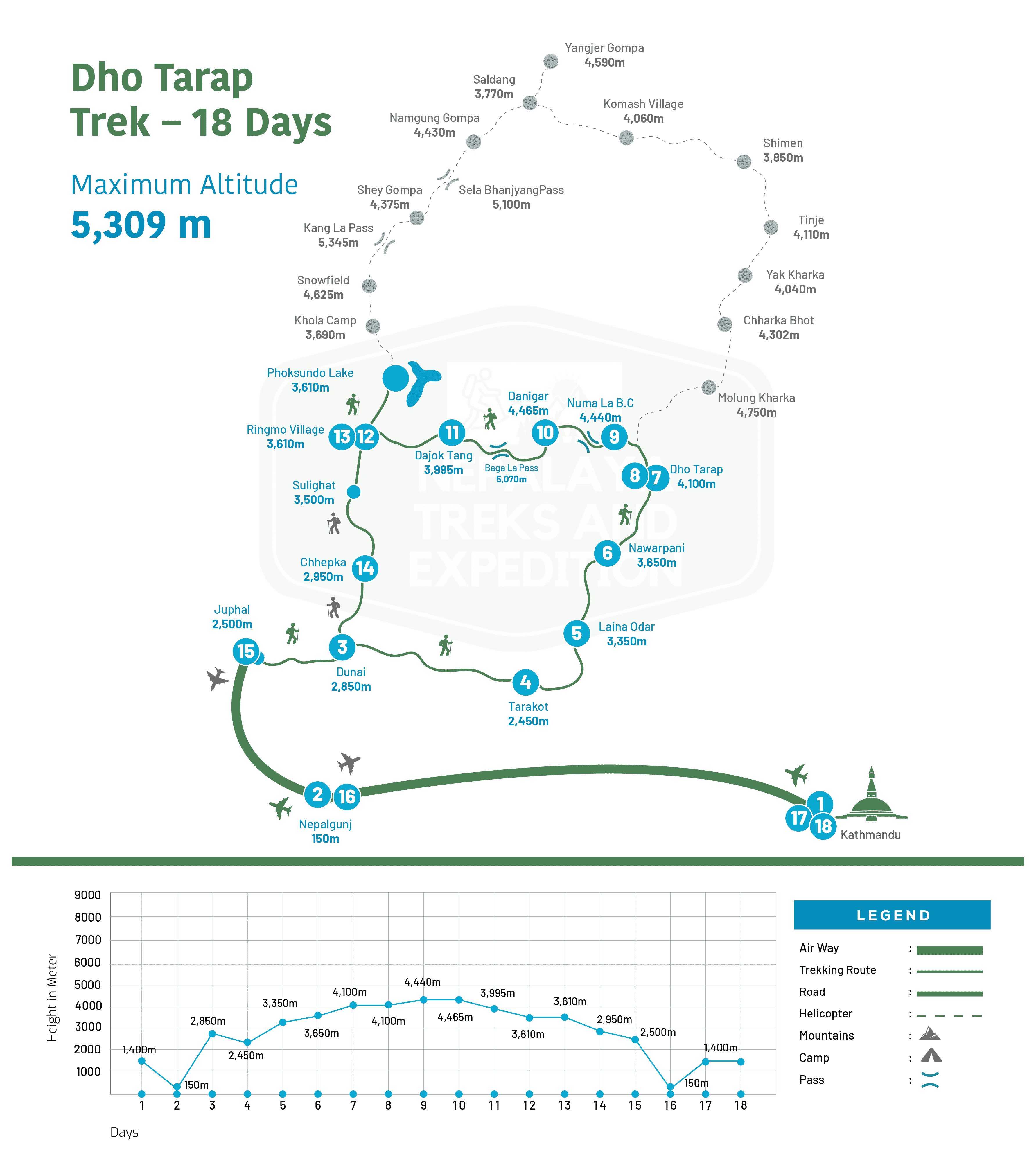
Inclusion / Exclusion
Inclusion
- Airport pick-up on arrival and transfer to your hotel in Kathmandu
- Three Nights’ 3-Star Hotel in Kathmandu with Breakfast
- One Night’s 3-Star Hotel in Nepalgunj with Full-Board Meals
- Kathmandu–Nepalgunj–Juphal–Kathmandu Flights required as per the trekking itinerary
- Breakfast, Lunch, and Dinner During the Trek
- Guided sightseeing in Kathmandu with private transportation and an experienced tour guide
- Required permits for the Dho Tarap Trek
- Preparation and arrangement of required trekking documents and permits
- Overnight stays in local teahouses or camping arrangements where required
- Special permit required to enter and trek through the restricted Dolpo region
- TIMS registration and permit as applicable
- An experienced and friendly guide, with one porter provided for every two clients
- A first-aid kit and basic medical supplies available during the trek
- Applicable government taxes and service charges
- A farewell dinner at an authentic Nepali restaurant with a traditional cultural performance
Exclusion
- Nepal visa fee
- International airfare
- Excess baggage charges on domestic flights
- Travel and rescue insurance
- Extra nights in Kathmandu due to early arrival, late departure, early return from the trek, flight delays, weather conditions, or other unforeseen reasons
- Lunch and dinner in Kathmandu, including meals during any additional hotel nights
- Personal expenses such as phone calls, laundry, bar bills, battery charging, showers, and other personal services
- Bottled or boiled drinking water during the trek
- Extra porter service if required
- Any additional accommodation, meals, transportation, or services not mentioned in the itinerary
- Tips for trek leaders, assistant guides, porters, and drivers
Check List
Packing the right gear is important for a comfortable and safe Dho Tarap Trek. Since the route reaches above 5,000 meters, you need warm clothing and suitable trekking equipment. Pack according to the season and be prepared for changing weather conditions. The following packing list covers the main items you may need throughout the trek.
General
- All-season sleeping bag
- Down jacket
- Duffle bag
- Light windproof and waterproof jacket
Daypack
- Warm hat that covers the ears
- Complimentary sunglasses with UV protection
- Buff or neck warmer
- Sunscreen (SPF 35–60)
- Headlamp with extra batteries
Hands
- Lightweight trekking gloves
- Waterproof winter gloves
- Inner liner gloves (optional but recommended)
Upper Body Clothing
- Long-sleeve T-shirts
- Thermal tops
- Warm fleece or wool jacket
- Sports bra (for women)
- Windproof and waterproof jacket
Lower Body Clothing
- Thermal underwear or trousers
- Waterproof and windproof pants
- Warm trekking pants
- Hiking pants
- Casual sports pants
Footwear
- Waterproof trekking boots (must have)
- Casual sandals for nighttime
- Woollen socks (4–5 pairs)
- Sock liners
- Lightweight shoes or sneakers
First Aid and Medicines
- Adhesive bandages or plasters
- Blister cream
- Anti-itch or insect-repellent cream
- Pain relief medicine, such as ibuprofen
- Bandages and sterile gauze
- Water purification tablets
Important Documents and Personal Items
- Original passport
- Four passport-sized photographs
- Water bottle or hydration bottle
- Water purifier or purification tablets
- Printed copy of flight details
- Toiletries such as toilet paper, soap, wet wipes, towel, toothbrush, and toothpaste
Extra Useful Items
- Trekking poles
- High-energy snacks and dry foods
- Power bank and charging cable
- Extra batteries or memory cards for the camera
- Mobile phone or music player for entertainment
Trip FAQs
-
1. What is the highest point of the Dho Tarap Trek?
The highest point of the trek is Numa La Pass at 5,309 meters. The route also crosses Baga La Pass at 5,070 meters. Both passes are located at high elevations, so proper acclimatization, good fitness, and a steady walking pace are important. -
2. How difficult is the Dho Tarap Trek?
The Dho Tarap Trek is considered a challenging trek due to its high altitude, long walking days, steep sections, and remote trails. Crossing Numa La and Baga La can be physically demanding. Good fitness, stamina, preparation, and some previous trekking experience are recommended. -
3. Is the Dho Tarap Trek suitable for beginners?
The trek is not recommended for complete beginners because of the high altitude and demanding trail conditions. Trekkers with good physical fitness and previous hiking or trekking experience will be better prepared. Proper training before the journey can make the trek more comfortable. -
4. Can I do the Dho Tarap Trek during the monsoon season?
The Dolpo region lies in the rain-shadow area of the Himalayas, so some parts receive less rainfall than other areas of Nepal. However, flights to and from Juphal can still be affected by weather. It is better to plan carefully and check conditions before traveling. -
5. Do I need special permits for the Dho Tarap Trek?
Yes, special permits are required because the trek passes through the restricted Dolpo region. Depending on the route, trekkers may need a Restricted Area Permit, Shey Phoksundo National Park permit, and other required trekking documents. Our team will help arrange the necessary permits. -
6. Do I need travel insurance for the Dho Tarap Trek?
Travel insurance is strongly recommended for this trek. Since the route reaches more than 5,000 meters and passes through remote areas, your policy should cover high-altitude trekking, medical treatment, and emergency evacuation. Check your insurance coverage carefully before starting the trek. -
7. Is there an acclimatization day on the Dho Tarap Trek?
Yes, the itinerary includes a rest and acclimatization day in Dho Tarap at around 4,100 meters. You can rest and take a short walk around the village. This helps your body adjust to the altitude before continuing toward the high mountain passes. -
8. How do I stay safe at high altitude?
Walk slowly, stay hydrated, eat regular meals, and follow your guide's instructions. Avoid pushing yourself when you feel unwell. If you experience severe headache, dizziness, breathing problems, nausea, or unusual tiredness, inform your guide immediately so the situation can be assessed. -
9. What type of accommodation is available during the trek?
Accommodation is mainly provided in local mountain teahouses. Facilities are basic in the remote sections, with simple rooms and shared bathrooms. Kathmandu and Nepalgunj offer more comfortable hotel accommodation. In some remote sections, teahouse availability may depend on the season and local conditions. -
10. What meals are included during the trek?
Breakfast, lunch, and dinner are included during the trekking days. Common meals include dal bhat, noodles, rice, vegetables, potatoes, pasta, soup, eggs, and bread. Food choices may be limited in remote areas, but meals are prepared to provide enough energy for trekking -
11. Can I rent trekking equipment for the Dho Tarap Trek?
Some trekking equipment can be rented or arranged before the trek, depending on availability. Items such as sleeping bags, down jackets, and trekking poles may be available. It is best to contact our team in advance if you need any equipment so it can be arranged before departure. -
12. Can I do the Dho Tarap Trek as a private trip?
Yes, private departures are available for individuals, couples, families, friends, and small groups organized by Nepalaya Treks. A private trek allows you to choose a suitable departure date and enjoy a more flexible trekking experience. The walking pace and arrangements can also be adjusted according to your group's needs.
All Inclusive Cost
BOOK NOW QUICK ENQUIRY- Best Price Guarantee
- Hassle-Free Booking
- Team of highly experienced Experts
You may also like !!
Our Best Selling Packages You May Like.