Manaslu and Tsum Valley Trek
Overview
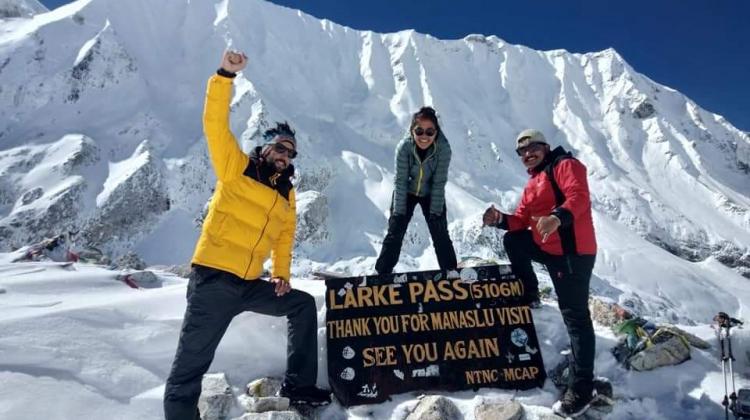
The Manaslu and Tsum Valley trek is a 21-day trekking adventure across the Himalayas that combines the remote cultural landscapes of Tsum Valley along with the dramatic mountain scenery of the Manaslu Circuit. Your journey begins with your arrival in Kathmandu, then a scenic drive from Kathmandu to Machha Khola, which is followed by entering the quieter trails of the Tsum Valley. After that, you explore traditional settlements, Buddhist monasteries, and rugged Himalayan terrain while visiting places such as Chumling, Chhekampar, Nile, and Mu Gompa. After this, you continue along the Manaslu Circuit trail toward Sama Gaon, Samdo, and Dharamsala before crossing the challenging yet rewarding Larkya La Pass at 5,106 meters. After that, the last part of your journey includes descending into Dharapani and then driving to Kathmandu.
The following are some of the cultural activities you may undertake while on a Manaslu Trekking journey:
Extra Highlights of the Manaslu and Tsum Valley Trek
The Manaslu and Tsum Valley Trek offers travelers the opportunity to experience the cultural richness of Tsum Valley alongside the breathtaking landscapes of the Manaslu Circuit. This trip is designed to take the visitors through traditional Himalayan villages, ancient Buddhist monasteries, river valleys, Alpine landscapes, and mountain passes. In contrast to the usual Manaslu Circuit Trek, this trip starts with the exploration of the isolated Tsum Valley and then returns to the main Manaslu trekking trail. The major attractions of this tour include:- Explore the isolated and culturally rich Tsum Valley and its traditional Himalayan villages.
- Check out Buddhist monasteries such as Mu Gompa, Rachen Gompa and Dhephu Doma Gompa.
- Explore the cave where the renowned Buddhist Saint Milarepa lived.
- Experience Tibetan culture, architecture and traditions of Tsum Valley.
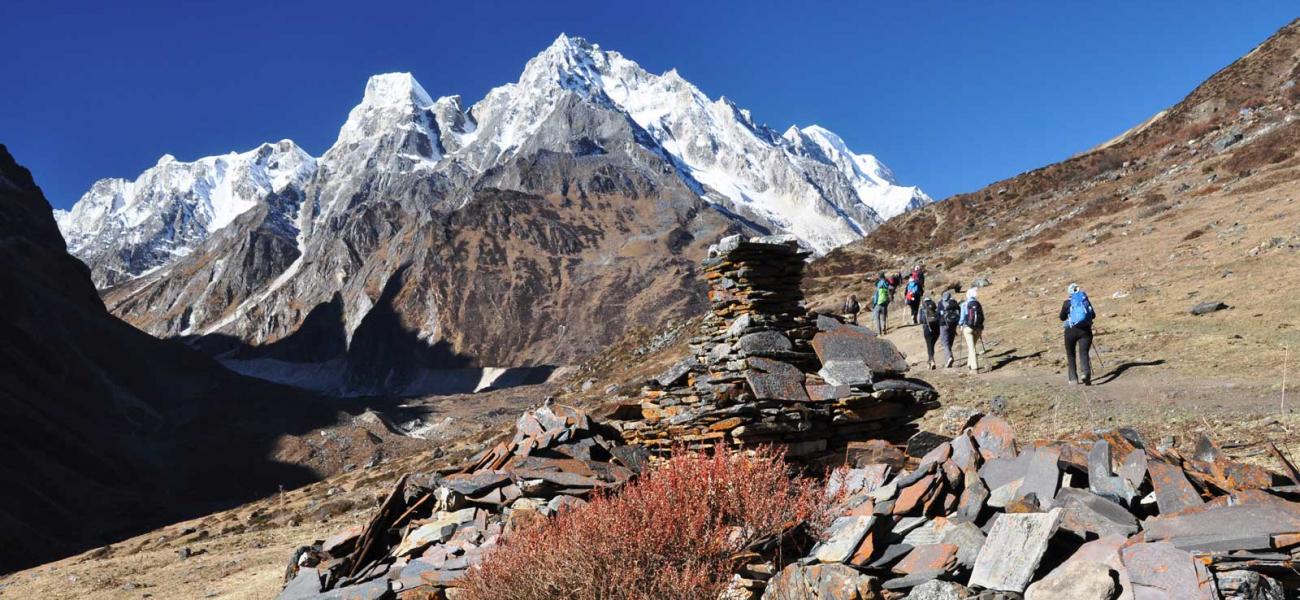
- Stroll through the impressive Budhi Gandaki Valley, passing through forested areas, canyon and mountain terrain.
- Take a rest day in Sama Gaon with a trip either to Birendra Lake or Manaslu Base Camp.
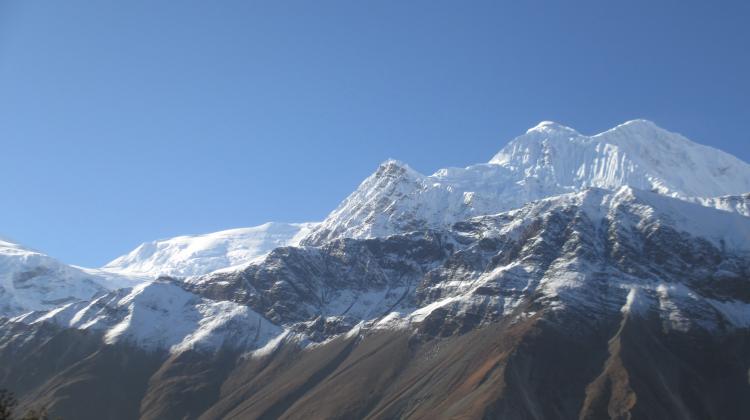
- Enjoy spectacular views of Manaslu and the surrounding Himalayan peaks throughout the trek.
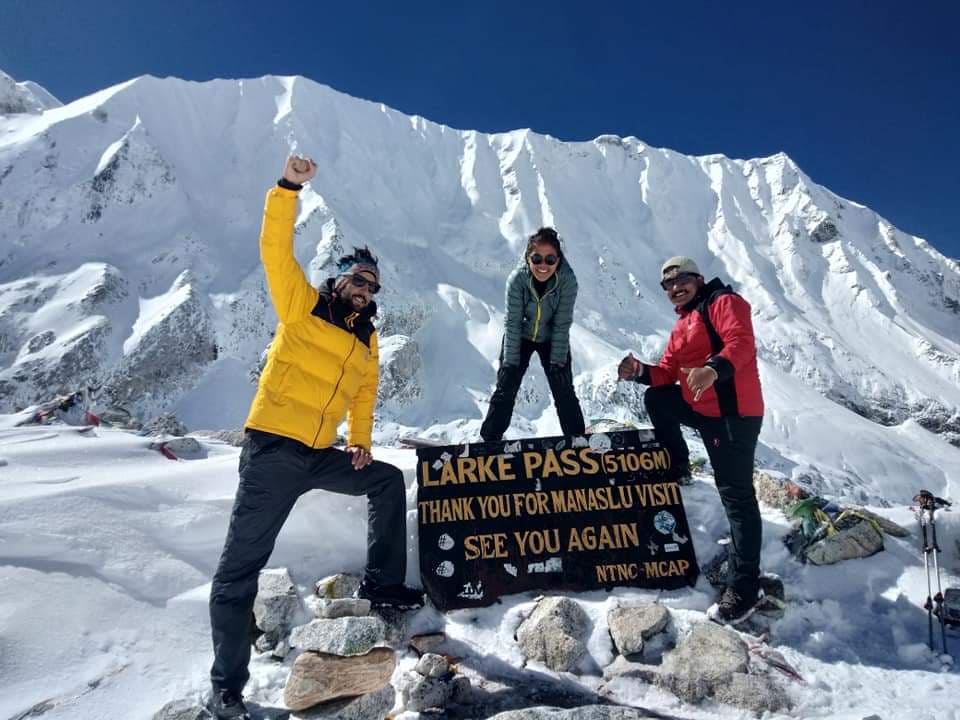
- Pass the challenging and impressive pass called Larkya La Pass that is 5,106 meters high.
- Feel the changing terrain, starting from lush forests and hilly terrains up to alpine terrain.
- Visit traditional villages Chumling, Chhekampar, Nile, Sama Gaon, and Samdo.
- See Buddhist prayer flags, chortens, mani walls, and monasteries along the whole trekking path.
- Discover traditional agriculture, livestock herding and mountain village life.
- Combine the cultural tour of Tsum Valley with an adventure on Manaslu Circuit.
- Return to Dharapani and Kathmandu passing through changing landscapes.
Best Time for the Manaslu and Tsum Valley Trek
Generally, the best time to trek the Manaslu and Tsum Valley route is during spring and autumn, when the weather is more stable and mountain visibility is generally good. These seasons generally provide favorable conditions for trekking through Tsum Valley and crossing the high-altitude Larkya La Pass. Winter is characterized by low temperatures and snowfall at high altitudes, while the monsoon season brings rainfall, muddy trails, and occasional landslides in the lower-altitude sections of the route.1. Spring (March – May)
This season is considered to be the most convenient period for the Manaslu and Tsum Valley Trekking Route. In spring, the weather gets warm, and the skies are mostly sunny. Besides, the lower part of the route becomes green, and flowers such as rhododendrons start blooming along the route. It should be noted that the higher altitude remains cold, but conditions are favorable for treks and passage through the Larkya La Pass.2. Autumn (September – November)
Autumn season is regarded as one of the best periods for the route because of good weather and mountain visibility. By autumn, the skies generally become clearer, the landscapes appear fresh after the monsoon, and trail conditions are usually favorable. October and November are especially preferred months to travel through the Manaslu and Tsum Valley regions.3. Winter (December – February)
The cold weather and snowfalls characterize this period, especially at higher altitudes of the route. It should be noted that in the Tsum Valley and Manaslu region, the weather becomes quite cold, while snowfall may occur around Dharamsala and Larkya La Pass. Those who undertake this trek in winter should be well prepared for cold conditions and possible itinerary changes.4. Monsoon (June – August)
This period is characterized by frequent precipitation and cloudy weather with mud on the trails, and landslides may occur in the lower altitude parts of the route. Transportation to and from the trailhead may become problematic because of weather conditions. It is notable that the rainfalls become less intense while moving towards higher altitudes.Accommodation and Meals during the Manaslu and Tsum Valley Trek
Accommodation during the Manaslu and Tsum Valley Trek is mainly provided by local teahouses and lodges. These accommodations tend to be modest, with most rooms set up on a twin-sharing basis. Facilities become more limited in remote areas of Tsum Valley and at higher elevations. Accommodation prior to the trek in Kathmandu is usually available in better tourist hotels.- Meals are usually offered in teahouses along the trekking route and include the following:
- Breakfast: Eggs, bread, pancakes, porridge, Tibetan bread, tea, and coffee.
- Lunch and dinner: Dal bhat, noodles, rice, pasta, soup, vegetables, potatoes, and other simple local foods.
- Water: It is available along the trekking route. It is important to have water purification tablets or a filter in a reusable bottle.
- These meals are generally available throughout the trekking section, although options may vary depending on the location and facilities available at the teahouses.
- Food options become more basic in remote areas of Tsum Valley and at higher altitudes due to the difficulty of transporting supplies.
Manaslu and Tsum Valley Trek: What Makes It Popular?
The popularity of the Manaslu and Tsum Valley Trek lies in its unique combination of the secluded culture of Tsum Valley and the stunning mountain scenery of the Manaslu Circuit. Trekkers can explore secluded villages, ancient monasteries, and Tibetan-influenced culture before reaching Sama Gaon, Samdo, and crossing the challenging Larkya La Pass. The combination of cultural experiences, wilderness, and high-altitude trekking makes this itinerary an attractive option for those with some high-altitude trekking experience.This itinerary will include:- Excursion to the remote Tsum Valley followed by joining the Manaslu Circuit.
- Visit to traditional villages, such as Chumling, Chhekampar, Nile, and Mu Gompa.
- Exploration of Mu Gompa, Rachen Gompa and Dhephu Doma Gompa.
- Visit to Milarepa's Cave and other cultural sites.
- Experience of Tibetan-inspired Buddhist culture and architecture.
- Passage of the challenging Larkya La Pass (5,106 meters).
- Acclimatization and exploration of the area around Sama Gaon.
- Changing landscapes – from river valleys to high-altitude alpine areas.
- Views of Manaslu and the surrounding Himalayan peaks.
- Experiencing traditional mountain life, farming and animal grazing.
- Completion of the trek in Dharapani, followed by a drive back to Kathmandu.
Culture Experience on the Manaslu and Tsum Valley Trek
The Manaslu and Tsum Valley Trek offers an opportunity to experience the traditional Tibetan-influenced culture of the northern Himalayan communities. Tsum Valley itself is well known for its old Buddhist culture, traditional stone architecture of villages, monasteries, prayer flags, chortens, mani walls, and other features. As you continue toward the Manaslu Circuit, you encounter diverse communities and cultural traditions as you move into higher and more remote areas.The following are some of the cultural activities you may undertake while on a Manaslu Trekking journey:
- Explore the traditional stone architecture of the villages of Tsum Valley.
- Visit significant Buddhist monasteries, such as Mu Gompa and Rachen Gompa.
- Explore the Dhephu Doma Gompa and its surroundings.
- Visit the cave of Milarepa associated with Tibetan Buddhist culture.
- See the prayer flags, chortens, mani walls, and Buddhist prayer areas.
- Gain an understanding of the Tibetan culture in Tsum Valley.
- Meet the locals, the villagers, and tea house owners.
- Engage in farming and animal grazing practices.
- Discover the cultural lifestyle of the people of Sama Gaon and Samdo villages.
- Discover the Buddhist culture and mountain culture in the Manaslu region.
Altitude and Acclimatization for the Manaslu and Tsum Valley Trek
Altitude is an essential element for the Manaslu and Tsum Valley Trek because the path takes you up to Larkya La Pass, which stands at 5,106 meters above sea level. Therefore, it is necessary to have an acclimatization day at Sama Gaon before proceeding with trekking towards Samdo, Dharamsala, and Larkya La Pass. Maintaining a steady pace and allowing enough time to adapt to the changing altitude are important when tackling the higher sections of the trail.- The Manaslu and Tsum Valley Trek begins at the relatively low elevation of Machha Khola and gradually ascends toward Larkya La Pass at 5,106 meters.
- You will go up through such places as Jagat, Lokpa, Chumling, Chhekampar, Nile, Mu Gompa, Namrung, Lho, Sama Gaon, Samdo, and Dharamsala.
- The acclimatization day at Sama Gaon will give your body enough time to adjust.
- On the acclimatization day, you can go for a hike either to Birendra Lake or Manaslu Base Camp and then return to Sama Gaon.
- Maintain a slow pace especially when ascending above 3,000 meters.
- Ensure that you consume adequate amounts of water and food during the trek.
- Some of the signs of altitude sickness include headaches, dizziness, nausea, fatigue and lack of sleep.
- Should you develop any symptoms of altitude sickness, please inform your guide immediately.
- Make sure you ascend at an appropriate pace and follow the acclimatization schedule.
Difficulty Level of the Manaslu and Tsum Valley Trek
The Manaslu and Tsum Valley Trek is considered moderate to strenuous due to its long duration, diverse terrain, remote location, gradual ascent, and challenging pass crossing. The majority of the trekking days will consist of 3 to 9 hours of walking, while trekking from Dharamsala to Bimthang will be considered one of the most challenging trekking days.- The hiking trail includes climbs, descents, rocky trails, stone stairs, forested areas, valleys, and alpine terrains.
- Trekking days usually last 3 to 9 hours, depending on the route and trail conditions.
- The increasing altitude makes sections around Chhekampar, Nile, Mu Gompa, Sama Gaon, Samdo, and Dharamsala more demanding.
- The trek will include an ascent to Larkya La Pass that stands at an altitude of 5,106 meters, which is the highest point of the itinerary.
- Trekking from Dharamsala to Bimthang will be one of the most challenging sections.
- The acclimatization day in Sama Gaon allows your body to get accustomed to the increasing altitude.
- Good cardiovascular fitness and prior trekking experience are recommended.
- Maintaining a steady pace and taking adequate rest can help reduce excessive fatigue.
- Water intake, healthy food, and proper trekking gear will become increasingly important as you climb higher.
- Prior high altitude trekking experience will be helpful but not required for adequately prepared trekkers.
Permits Required for the Manaslu and Tsum Valley Trek
Because the trekking route passes through restricted regions and conservation areas, several permits are required before undertaking the trek. Some of these permits may include the Manaslu Restricted Area Permit (RAP), Tsum Valley Restricted Area Permit, Manaslu Conservation Area Permit (MCAP), Annapurna Conservation Area Permit (ACAP), and TIMS card.1. Manaslu Restricted Area Permit (RAP)
The Manaslu Restricted Area Permit is required for trekking through the restricted section of the Manaslu region. The permit applies to the route between the designated restricted-area checkpoints and is issued through a registered trekking agency. Fee varies depending on the season and number of days spent within the restricted area.2. Tsum Valley Restricted Area Permit
The Tsum Valley Restricted Area Permit is required because the trek enters the restricted Tsum Valley. The permit enables trekkers to discover the distant places within the valley, such as Chumling, Chhekampar, Nile, and Mu Gompa. This Permit must be arranged through a registered trekking agency. Trekkers are also required to have a licensed guide within the restricted area.3. Manaslu Conservation Area Permit (MCAP)
The Manaslu Conservation Area Permit is issued for the purpose of trekking in the Manaslu Conservation Area. It helps manage the conservation and management activities in the area.4. Annapurna Conservation Area Permit (ACAP)
ACAP is required for the section of the itinerary that enters the Annapurna Conservation Area after crossing Larkya La and reaching Dharapani. Since the trek concludes at Dharapani, trekkers need to comply with the current ACAP entry requirements.5. TIMS Card
The Trekkers' Information Management System (TIMS) Card is used to maintain trekking information and support safety and emergency management. For organized treks, the registered trekking agency generally handles the TIMS arrangements and related documentation.Insurance for the Manaslu and Tsum Valley Trek
Travel insurance is highly recommended for the Manaslu and Tsum Valley Trek because the route reaches 5,106 meters at Larkya La Pass and passes through remote mountain areas where access to medical facilities can be limited. Good travel insurance should cover medical expenses, accidents, emergency evacuation, and eligible costs related to changes to the trek. You should make sure that the insurance you purchase for the trek includes high altitude trekking. Make sure that the insurance will include trekking to at least 5,106 meters altitude. Also make sure that the insurance covers emergency helicopter evacuation. The insurance should cover all kinds of medical emergencies and injuries.- Good insurance will not only take care of your health needs, but also accidental expenses, emergency transportation, as well as any changes in the trek plan.
- You should make sure that the insurance you purchase for the trek includes high altitude trekking.
- Make sure that the insurance will include trekking to at least 5,106 meters altitude.
- Also make sure that the insurance includes the use of helicopters in case of an emergency.
- The insurance should cover all kinds of medical emergencies and injuries.
- Ensure that it also includes any kind of coverage for Acute Mountain Sickness (AMS).
- Trip cancellation and interruption are also covered under insurance.
- Keep the information regarding the insurance with you during the entire trek and give a copy of it to your trekking agency.
- Never assume that a standard travel insurance policy automatically covers high-altitude trekking.
- Always ensure that the insurance taken by you is appropriate enough for you in terms of altitude limits, evacuation conditions, trekking activities, exclusions, and claims.
Why Choose This Itinerary?
This 21-day Manaslu and Tsum Valley Trek is best suited for trekking enthusiasts who want to combine the cultural remoteness of Tsum Valley with the high-altitude challenges and mountain scenery of the Manaslu Circuit.- Explore Tsum Valley before continuing to the Manaslu Circuit.
- Visit the cultural heritage sites like Mu Gompa, Rachen Gompa, and Dhephu Doma Gompa.
- Visit the cave where Milarepa stayed and discover the importance of this cave in Tibetan Buddhism.
- Understand the influence of Tibetan culture on the region’s architecture, traditions, and way of life.
- See the great views of Manaslu along with many other mountains of the Himalaya.
- Have an acclimatization day in Sama Gaon and do the excursion either towards Birendra Lake or Manaslu Base Camp.
- Cross Larkya La Pass at an altitude of 5,106 meters, the highest point of the trek.
- Experience the diverse landscape ranging from dense forest and river valleys to bare alpine zones.
- Visit the traditional settlements like Chumling, Chhekampar, Nile, Lho, Sama Gaon, and Samdo.
- Visit monasteries, chortens, prayer flags, mani walls, and other important elements of Buddhist culture.
- Gain insight into traditional farming, livestock herding, and mountain village life.
- Combine the cultural remoteness of Tsum Valley with the adventure of the Manaslu Circuit.
- End trekking at Dharapani before getting back to Kathmandu by road transport.
Safety on the Manaslu and Tsum Valley Trek
Safety is an important consideration on the Manaslu and Tsum Valley Trek because the route passes through remote areas and reaches 5,106 meters at Larkya La Pass. Proper acclimatization, appropriate gear, a steady pace, and following your guide’s instructions can help make the journey safer.- The weather conditions and the condition of the trails may change very fast, particularly at high altitudes.
- Follow the acclimatization program and do not go up too fast.
- Let your guide know if you experience headache, nausea, dizziness, tiredness, difficulty breathing, or insomnia.
- Rest and walk calmly.
- Wear proper warm and windproof clothing as the weather changes in the mountains.
- Stick to your team and listen to your guide while trekking in isolated areas.
- Follow the permit requirements and regulations for the Tsum Valley and Manaslu regions.
- Carry your insurance details and make sure that it covers your trekking and evacuation.
Responsible Tourism
Responsible tourism is highly applicable to the Manaslu and Tsum Valley Trek because the route passes through various conservation sites and also through many culturally important places and rural communities. Responsible behavior helps protect the environment and supports local communities that rely on tourism.- Do not litter; dispose of your trash properly.
- Do not buy water in disposable plastic bottles; use your reusable water bottle.
- Walk on the marked trekking paths.
- It is important to be respectful of the local customs, traditions, monasteries, religious places and privacy.
- Never take photos of the local population or religious ceremonies without permission.
- Help the local community by using local teahouses and buying their services.
- Behave decently and respectfully towards the local guides and other helpers.
- Do not waste water in remote mountain villages.
- Do not harm any plants, wildlife, stone constructions, monasteries, or any other natural or cultural heritage.
Group Size
The Manaslu and Tsum Valley Trek with Nepalaya Treks can be arranged for small or large groups according to travelers’ preferences. This trek is ideal for solo travelers joining an organized group, couples, families, friends, and private groups of travelers. Groups of friends, colleagues, families, and other travelers can undertake the trek with the support of experienced guides and porters.- An experienced guide will lead the group and assist with navigation, acclimatization, and safety throughout the trek.
- Porters will carry the main luggage, allowing trekkers to carry only a light backpack.
- Small groups can maintain a comfortable walking pace according to the fitness level of group members.
- Private groups can arrange the walking pace and other things according to their convenience.
- Travelers preferring greater privacy can opt for the private departure with their own group of travelers.
Private Departure Options: Tourist Bus, Private Vehicle, or Flight
Private departure is possible for those trekkers who wish to travel with their family, friends, partner, or private group of travelers. Private departure gives travelers more flexibility in choosing travel dates, walking pace, accommodation preferences, and transportation. The itinerary can be customized to some extent according to the preferences of the group of travelers and trekking conditions.- Select your own departure date.
- Travel by deluxe tourist bus, private vehicle, or flight where applicable.
- Adjust the walking pace according to the fitness level of group members.
- Trekking with your own family, friends, partner, or private group of travelers.
- Arranging transportation and accommodation as per the requirements of group members where possible.
- Private departure is ideal for travelers wishing for a more flexible Manaslu and Tsum Valley Trek experience.
Equipment Rental Information
If you do not own all the required trekking equipment, many basic items can be rented in Kathmandu before starting the Manaslu and Tsum Valley Trek. Renting equipment can be a practical option for occasional trekkers, particularly for items mainly needed during the colder and higher sections around Mu Gompa, Sama Gaon, Samdo, Dharamsala, and Larkya La Pass.- Down jackets, trekking poles, duffel bags, warm jackets, and other basic trekking gear can be rented in Kathmandu.
- Renting such equipment can help reduce the cost of buying items that you might not need regularly.
- Ensure that the equipment that you hire is comfortable, working properly, and in excellent condition.
- A suitable sleeping bag and cold-weather gear are essential for the high-altitude sections of the trek.
- Trekking poles provide extra support during climbs, descents, and difficult sections of the trail.
- At Sama Gaon, Samdo, Dharamsala, and Larkya La, warm clothes and sleeping arrangements become essential.
- Trekking professionals can advise about the necessary equipment for the route.
- The hired equipment needs to be returned to the hiring agency within the stipulated time frame.
Trip Highlights
- Combine both the culture of Tsum Valley and adventure of Manaslu Circuit Trek on one trekking tour.
- Witness the varied landscapes ranging from lush green valleys to high altitude Himalayan region.
- Conquer the challenging Larkya La Pass at an elevation of 5,106 meters, which is one of the main attractions of the trek.
- Take an acclimatization day at Sama Gaon with a visit to either Birendra Lake or Manaslu Base Camp.
- Experience breathtaking scenery of the mountains along the Manaslu Circuit Trek route.
- Learn about the unique culture, architecture, and traditions of the Tsum Valley, which is influenced by Tibet.
- Visit Milarepa’s cave, which is related to the great Buddhist saint of Tibet.
- Visit religious Buddhist places including Mu Gompa, Rachen Gompa, and Dhephu Doma Gompa.
- See the unexplored yet rich in culture Tsum Valley and its Himalayan villages.
Itinerary
Day 1: Arrival in Kathmandu
Once you have arrived in Kathmandu, a representative from our team will pick you up and take you to your hotel. After checking into the hotel, you can take some time to relax and recover from your journey. You can either explore the surrounding areas of Kathmandu or relax at the hotel, depending on your preference. Later on, you will meet your guide and get a briefing about the Manaslu and Tsum Valley Trek. During this briefing, your guide will provide important information about the trekking route, walking schedule, safety measures, and necessary preparations. You can use the chance to inspect your trekking gear. You will spend the first night in the hotel.
- Travel Distance: Airport to hotel transfer (approx. 6–10 km)
- Travel Hours: 30–45 minutes
- Accommodation: Hotel in Kathmandu
- Meals Included: Dinner
Day 2: Drive from Kathmandu to Machha Khola
Day 3: Trek from Machha Khola to Jagat
Day 4: Trek from Jagat to Lokpa
Day 5: Trek from Lokpa to Chumling
Day 6: Trek from Chumling to Chhekampar
Day 7: Trek from Chhekampar to Nile/Chule
Day 8: Trek from Nile to Mu Gompa
Day 9: Exploration Day Around Mu Gompa
Day 10: Trek from Mu Gompa to Rachen Gompa or Chumling
Day 11: Trek from Chumling to Deng
Day 12: Trek from Deng to Namrung
Day 13: Trek from Namrung to Lho
Day 14: Trek from Lho to Sama Gaon
Day 15: Acclimatization Day in Sama Gaon
Day 16: Trek from Sama Gaon to Samdo
Day 17: Trek from Samdo to Dharamsala
Day 18: Cross Larkya La Pass to Bimthang
Day 19: Trek from Bimthang to Dharapani
Day 20: Drive from Dharapani to Kathmandu
Day 21: Final Departure
Inclusion / Exclusion
Inclusion
- Airport transfers by private vehicle as per the itinerary.
- Transportation from Kathmandu to Machha Khola by public or private vehicle, as specified in the package.
- Transportation from Dharapani to Kathmandu by road.
- Accommodation in local teahouses/lodges throughout the trekking period on a twin-sharing basis.
- Breakfast, lunch, and dinner during the trekking portion of the journey.
- Experienced, licensed, English-speaking trekking guide.
- Porters to carry the main luggage, with an appropriate porter-to-trekker ratio.
- Guide and porter salaries, meals, accommodation, insurance, and necessary equipment.
- Manaslu Restricted Area Permit.
- Tsum Valley Restricted Area Permit.
- Manaslu Conservation Area Permit (MCAP).
- Annapurna Conservation Area Permit (ACAP).
- TIMS Card and other required trekking documentation.
- Accommodation, meals, and necessary expenses for the guide and porters.
- Government and local trekking taxes and service charges where applicable.
- First-aid medical kit carried by the trekking team.
- Necessary trekking and route arrangements by the trekking agency.
- One acclimatization day in Sama Gaon as included in the itinerary.
- Farewell dinner or cultural program, if included by the trekking company.
Exclusion
- International airfare to and from Nepal.
- Nepal entry visa and visa extension fees.
- Travel insurance covering high-altitude trekking and emergency evacuation.
- Personal expenses such as laundry, telephone calls, internet, and charging fees.
- Personal trekking equipment, clothing, and gear.
- Equipment rental charges, if required.
- Snacks, bottled drinks, alcoholic beverages, and beverages other than those included with meals.
- Extra food or accommodation costs caused by itinerary changes beyond the standard itinerary.
- Hot showers and other optional teahouse services.
- Tips for trekking guides, porters, and other support staff.
- Emergency evacuation and rescue costs.
- Medical treatment, medicines, or hospitalization expenses.
- Additional accommodation or transportation caused by flight delays, road blockages, bad weather, natural disasters, strikes, or other unforeseen circumstances.
- Any costs arising from an early departure from the trek for personal reasons.
- Expenses resulting from changes to the itinerary requested by the trekker.
- Personal expenses incurred in Kathmandu before or after the included services.
- Any services or expenses not specifically mentioned under the Cost Inclusion section.
Check List
As the Manaslu and Tsum Valley Trek requires passage through different climatic regions ranging from the relatively warmer regions of lower valleys to the colder high-altitude regions of Samdo, Dharamsala, and Larkya La Pass, it is necessary to pack accordingly.
General
- Sleeping bag and down jacket
- Duffle bag
- Lightweight windproof and waterproof jacket
- Comfortable daypack for carrying daily essentials
Head, Ears, and Eyewear
- Warm hat that covers the ears
- Sunglasses with UV protection
- Neck warmer or buff
- Sunscreen with SPF 35–60
- Headlamp with extra batteries
Hands
- Lightweight trekking gloves
- Warm shell gloves with inner liners
Upper Body
- Long-sleeve T-shirts
- Thermal tops
- Fleece or wool jacket
- Sports bras for women
- Windproof and waterproof shell jacket
Lower Body
- Thermal trousers
- Waterproof and windproof trousers
- Warm trekking trousers
- Comfortable trekking pants
- Extra casual or sports pants
Footwear
- Good-quality waterproof trekking boots
- Comfortable sandals
- 4–5 pairs of warm woolen socks
- Sock liners
- Light shoes or sneakers
First Aid and Medicines
- Adhesive bandages
- Blister treatment
- Personal pain-relief medicine
- Altitude sickness medicine
- Basic wound dressings and bandages
- Water purification tablets
- Personal prescription medicines, if required
Miscellaneous
- Original passport and passport-size photos
- Reusable water bottle and water filter or purification method
- Flight details and copies of important travel documents
- Personal bathroom kit, including toilet paper, hand wipes, towel, soap, and small plastic bags
Extra Useful Items
- Comfortable trekking poles
- Energy bars, dry fruits, or other lightweight snacks
- Power bank and charging accessories
- Camera with memory card, charger, and extra batteries
Trip FAQs
-
1. Is the Manaslu and Tsum Valley Trek Suitable for Beginners?
The trek can be suitable for well-prepared and physically fit beginners, although prior high-altitude trekking experience is an advantage. -
2. How Do I Prepare for This Trek?
You should regularly practice walking, hiking, stair climbing, running, or cycling to build endurance. You can try walking with a backpack and go for a long walk to get used to walking for several days in a row. -
3. What Is the Highest Point of the Trek?
The highest point of the trek is Larkya La Pass with an elevation of 5,106 meters. The route also goes through some other high-altitude locations like Dharamsala (4,460 m) and Mu Gompa (3,700 m). -
4. How Difficult Is This Trek?
This is a moderate to strenuous trek that requires good physical fitness and preparation. You should be prepared for long walking days, steep ascents and descents, rough terrain, high altitude, and the challenging crossing of Larkya La Pass. -
5. Do I Need Technical Mountaineering Skills?
Technical mountaineering skills are not required since it is not mountaineering. Physical fitness, proper equipment, acclimatization, and a steady pace are important for managing the high altitude successfully. -
6. What Can I See Along the Trek?
There are plenty of opportunities to see traditional Himalayan villages, Buddhist monasteries, prayer flags, mani walls, forests, river valleys, alpine regions, and magnificent mountain scenery. One can also visit places like Mu Gompa, Rachen Gompa, Cave of Milarepa, Sama Gaon, and Larkya La Pass. -
7. What Kind of Accommodation Is Available?
In Kathmandu, you will stay in hotels; on the trekking route, you will stay in teahouses or lodges. Accommodation will be relatively modest in the remote Tsum Valley and at high altitudes where there are twin-sharing rooms. -
8. What food is available during the trek?
There is typically a menu in teahouses with such foods as dal bhat, noodles, fried rice, pasta, soup, vegetables, momos, eggs, bread, and pancakes. Also, there are tea, coffee, and other hot beverages on the menu. Safety and Acclimatization -
9. Can Altitude Sickness Be a Problem?
Yes, altitude sickness can be a concern because the trek reaches 5,106 meters at Larkya La Pass. Measures such as acclimatization in Sama Gaon, gradual ascent, proper hydration, adequate rest, and maintaining a steady pace can help reduce the risk. -
10. What Are the Symptoms of Altitude Sickness?
Common symptoms include headaches, dizziness, nausea or vomiting, fatigue, loss of appetite, difficulty sleeping, and breathing problems. It is essential to inform your guide if you experience any unusual symptoms. -
11. Is Technical Equipment Required?
No technical climbing equipment is required. However, warm clothing, a suitable sleeping bag, waterproof outerwear, trekking boots, and trekking poles are especially useful at high altitudes and around Larkya La Pass. -
12. Will I Have a Guide and Porters?
Yes, a licensed trekking guide will accompany you throughout the trek. Porters will carry your main luggage, allowing you to trek with a lighter daypack. -
13. Why Do I Need a Guide?
The guide will assist with navigation, accommodation, acclimatization, weather conditions, and safety throughout the trek. Your guide will play an important role while you visit Tsum Valley and while crossing Larkya La Pass.
All Inclusive Cost
USD 1899
Per Person
BOOK NOW QUICK ENQUIRY- Best Price Guarantee
- Hassle-Free Booking
- Team of highly experienced Experts
You may also like !!
Our Best Selling Packages You May Like.