Tilicho Base Camp via Annapurna Circuit Trek
Overview
The Tilicho Base Camp via Annapurna Circuit Trek is a 16-day journey through the diverse landscapes of the Annapurna region. You begin your journey by arriving in Kathmandu and then traveling to Chame from Kathmandu by road, passing through Besisahar. After reaching Chame, you begin trekking through Pisang and follow the upper route via Ghyaru and Ngawal to Manang, where you spend a day acclimatizing. After acclimatizing at Manang, you move on to Siri Kharka and Tilicho Base Camp through rocky and arid terrain. The trek continues through Yak Kharka and Thorong Phedi before ascending to Thorong High Camp. You then cross Thorong La Pass at 5,416 meters and then descend to Muktinath, then take a journey through Jomsom to Pokhara. You then return to Kathmandu by road or flight before departing from Nepal.
Extra Highlights of the Tilicho Base Camp via Annapurna Circuit Trek
The Tilicho Base Camp via Annapurna Circuit Trek allows you to explore diverse mountain landscapes, traditional villages, high-altitude terrain, Tilicho Lake, and the challenging Thorong La Pass. Your journey takes you from Kathmandu through Chame, Pisang, Ghyaru, Ngawal, Manang, Siri Kharka, Tilicho Base Camp, Yak Kharka, Thorong Phedi, Muktinath, and Jomsom before reaching Pokhara and returning to Kathmandu. Some of the key highlights of this trekking include:
- Drive through Besisahar and the Marsyangdi Valley toward Chame.
- Trek into the old settlements of Chame and Pisang. Follow the higher route via Ghyaru and Ngawal from Pisang.
- Discover the mountainous regions surrounding Manang.
- Spend a day acclimatizing in Manang.
- Walk to Ice Lake or Gangapurna Lake during the acclimatization day.
- Trek into the dry and rocky regions towards Siri Kharka.
- Arrive at the Tilicho Base Camp at 4,150 meters.
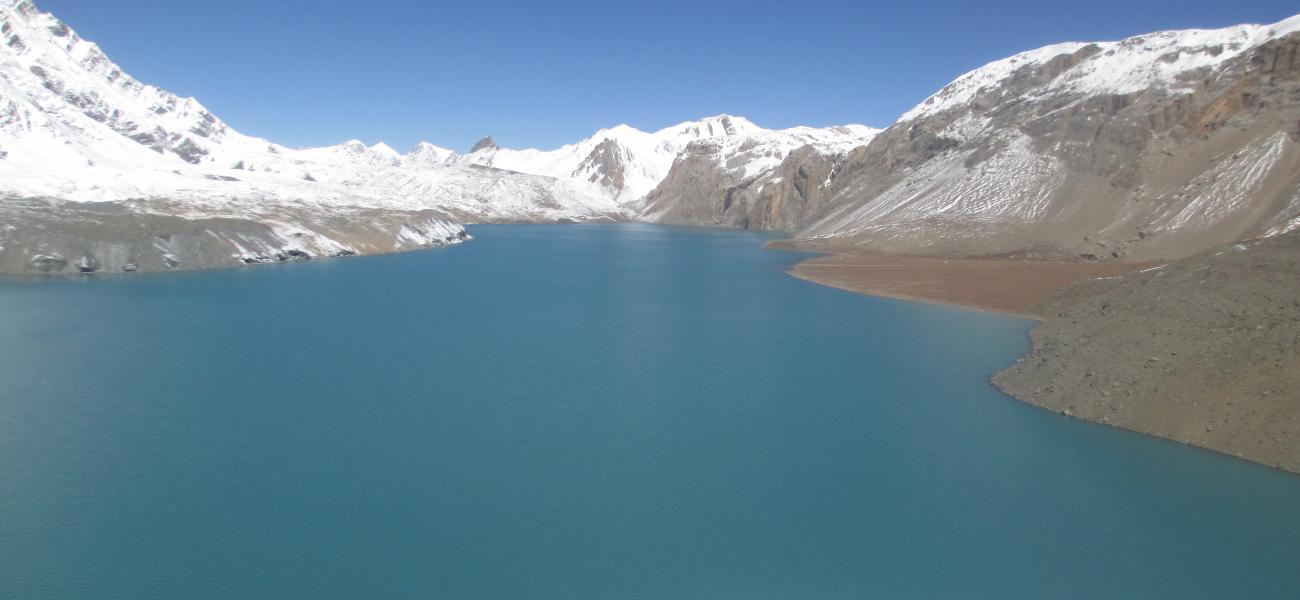
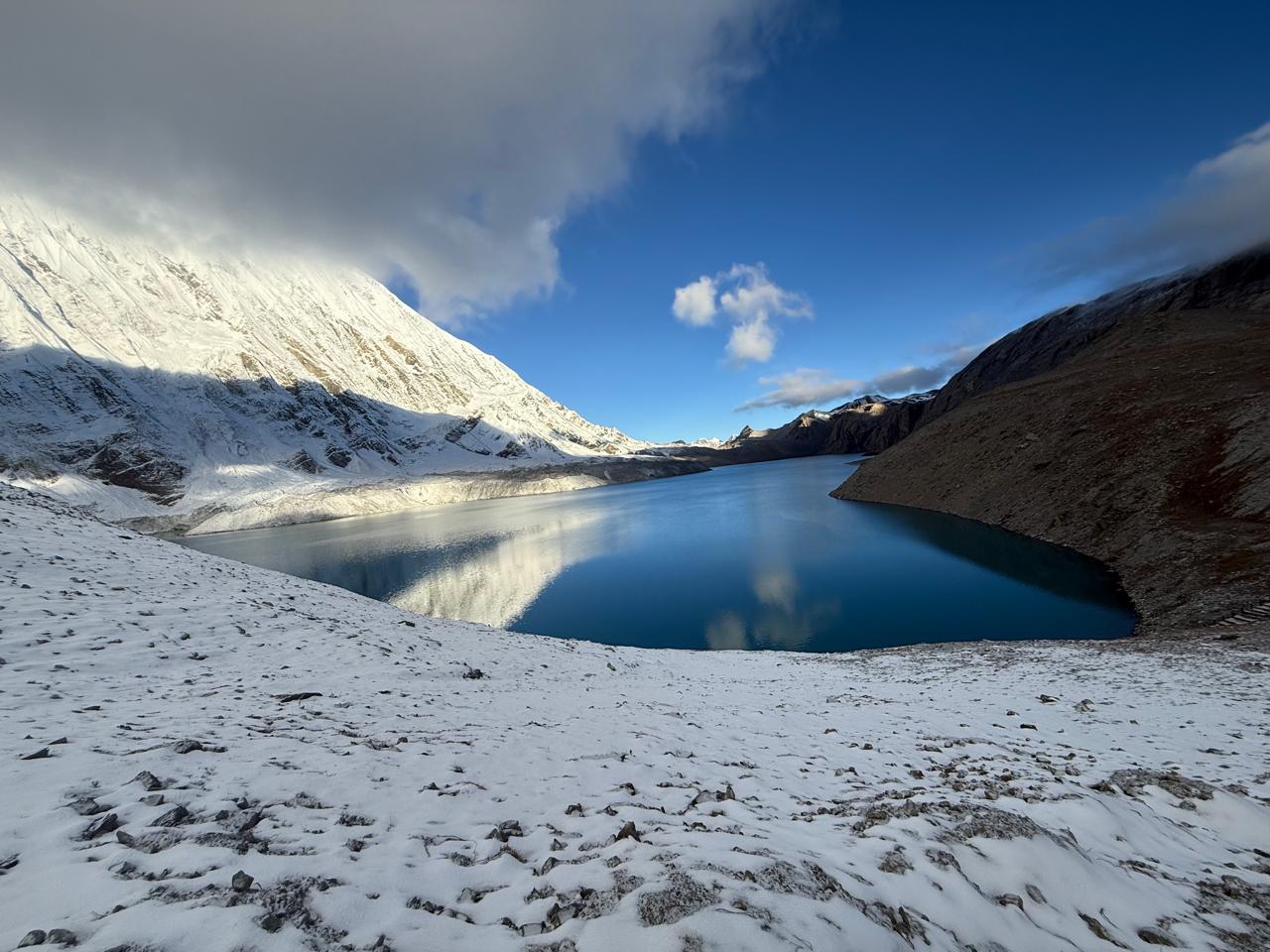
- Hike up to Tilicho Lake, which lies at 4,919 meters.
- Discover the barren and rocky regions surrounding the Tilicho Valley. Walk through high-altitude regions towards Yak Kharka and Thorong Phedi.
- Overnight stay at Thorong High Camp at 4,800 meters.
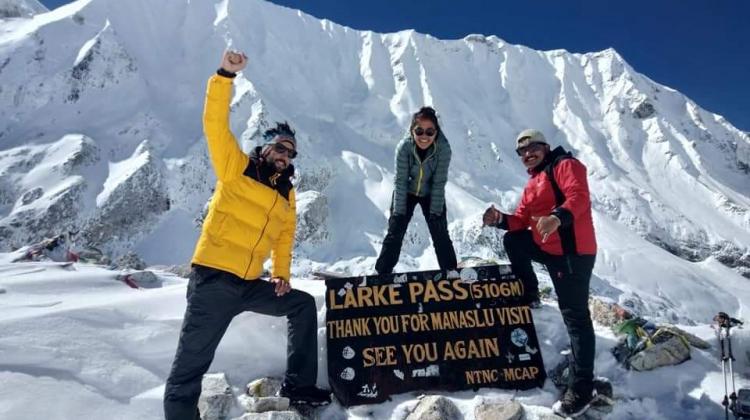
- Cross Thorong La Pass at 5,416 meters.
- Descend from Thorong La Pass to Muktinath at 3,760 meters.
- Muktinath, an important pilgrim destination.
- Trek through dry regions between Muktinath and Jomsom.
- Travel from Jomsom to Pokhara by air, bus, or jeep.
- Return from Pokhara to Kathmandu by scenic drive or flight.
Best Time for the Tilicho Base Camp via Annapurna Circuit Trek
Spring and autumn are generally considered the best seasons for the Tilicho Base Camp via Annapurna Circuit Trek because they usually offer favorable weather and mountain visibility. Winter comes with lower temperatures and snowfall at the high altitudes, including Tilicho Lake and Thorong La Pass. The monsoon season brings rain mainly to the lower sections of the route and can also affect road and flight transportation. Climatic conditions in the high altitudes are usually changeable, and so trekkers must be ready to adapt to different conditions along the trek.
1. Spring (March-May)
The spring season is ideal for the Tilicho Base Camp via Annapurna Circuit Trek. During spring, temperatures gradually rise, making conditions more comfortable in the lower and middle sections of the trek. But the higher parts of the trek route, which include Tilicho Base Camp, Tilicho Lake, Thorong High Camp, and Thorong La Pass, still have cold climatic conditions. There may also be good views of the surrounding mountain ranges as you pass through different landscapes along the way.
2. Autumn (September–November)
Autumn is another suitable season for the trek. After the monsoon, skies are generally clearer and many sections of the trail become drier. October and November generally provide favorable conditions for trekking through Manang, the Tilicho Valley, and the Thorong La Pass area. Stable weather will also enable trekkers to see the mountain surroundings clearly. It is possible that the weather will change in higher areas.
3. Winter (December–February)
During winter, cold temperatures and snowfall can affect the higher sections of the trail. These are areas like Tilicho Base Camp, Tilicho Lake, Thorong High Camp, and Thorong La Pass. Snow and tricky terrain conditions make it harder for trekkers in the higher parts. Those who go for the trek during the winter season need to have proper clothes and equipment.
4. Monsoon (June-August)
The monsoon brings rain to the lower sections of the route and can make road travel toward Chame more difficult. Road conditions will be difficult due to rain, and flights between Jomsom and Pokhara may also be affected by the weather. Higher elevations near Manang and Tilicho are in dry mountain conditions; however, weather changes might occur at any time. It is recommended to maintain some flexibility in the itinerary during this period.
Accommodation and Food during the Tilicho Base Camp via Annapurna Circuit Trek
Accommodation on the Tilicho Base Camp via Annapurna Circuit Trek includes hotels, teahouses, and lodges along the route. They become simpler as you move toward the higher and more remote sections. Kathmandu and Pokhara offer a wider range of hotel accommodation, while mountain settlements provide basic teahouse and lodge facilities.
- Accommodation includes hotels, teahouses, and local lodges.
- Rooms in mountain lodges are generally simple and may be arranged on a twin-sharing basis.
- Accommodation becomes more basic in higher mountain settlements.
- Teahouses provide basic rooms and common dining areas.
- Hotel accommodation is available in Kathmandu and Pokhara.
- Meals are generally available at the teahouses and lodges along the route.
- Breakfast options may include porridge, eggs, Tibetan bread, pancakes, tea, and coffee.
- Lunch and dinner could comprise dal bhat, noodles, rice, pasta, potatoes, vegetables, soup, and other light meals.
- Food options may become more limited in higher and more remote settlements.
- Bring along a water bottle that is reusable during the entire walk.
- Bring along water purification pills or a water filtration method.
- Snacks like energy bars, chocolates, and nuts may come in handy while on longer treks.
Why is the Tilicho Base Camp via Annapurna Circuit Trek so popular?
Tilicho Base Camp Annapurna Circuit Trek is one of the most favorable treks for those who want to experience both high mountains and traditional villages along with Tilicho Lake and a difficult Thorong La Pass. It involves a blend of the Tilicho Lake trekking route and the Annapurna Circuit trek route, followed by a descent to Muktinath and Jomsom.
- Drive from Kathmandu to Chame via Besisahar.
- Trek from Chame through Pisang, Ghyaru, Ngawal, and Manang.
- Follow the upper trekking route from Pisang to Manang via Ghyaru and Ngawal.
- Spend an acclimatization day in Manang.
- Hike toward Ice Lake or Gangapurna Lake.
- Trek from Manang toward Siri Kharka.
- Continue to Tilicho Base Camp.
- Hike to Tilicho Lake at 4,919 meters.
- Return to Siri Kharka after visiting Tilicho Lake.
- Continue toward Yak Kharka and Thorong Phedi.
- Trek to Thorong High Camp at 4,800 meters.
- Cross Thorong La Pass at 5,416 meters.
- Descend to Muktinath.
- Proceed through the landscapes from Muktinath to Jomsom.
- Travel from Jomsom to Pokhara by flight, bus, or jeep.
- Return from Pokhara to Kathmandu by scenic flight or drive.
Culture Experience at Tilicho Base Camp via Annapurna Circuit Trek
On the Tilicho Base Camp via Annapurna Circuit Trek, you have an opportunity to explore the traditional settlement and way of life of the people in the Annapurna range. The route passes through villages and settlements such as Pisang, Ghyaru, Ngawal, Manang, and Muktinath, offering opportunities to observe traditional houses, customs, and mountain communities.
The cultural experiences from the Tilicho Base Camp through the Annapurna Circuit Trek can be summarized as follows:
The cultural experiences from the Tilicho Base Camp through the Annapurna Circuit Trek can be summarized as follows:
- Visit traditional settlements such as Pisang, Ghyaru, Ngawal, and Manang.
- Observe traditional stone houses and experience the distinctive mountain culture of the region.
- Experience the traditional way of life of people in the Manang area.
- Experience the cultural setting of Manang.
- Observe the influence of Buddhist traditions on the local mountain communities.
- Visit Muktinath, an important pilgrimage site for Hindus and Buddhists.
- See for yourself how the mountain cultures practice agriculture and animal husbandry for their livelihood.
- Notice the lifestyle adaptations of the local communities in the mountainous area.
- Notice the pattern change in the settlements from valley to mountain.
- Interact with the local communities on the trekking route.
- Experience the traditional mountain culture away from the urban areas of Nepal.
Altitude and Acclimatization for the Tilicho Base Camp via Annapurna Circuit Trek
Altitude is an important consideration during the Tilicho Base Camp via Annapurna Circuit Trek because the route gradually climbs from Kathmandu and the lower valleys to Tilicho Lake at 4,919 meters and Thorong La Pass at 5,416 meters. An acclimatization day in Manang allows you to adjust to the increasing altitude before continuing toward the higher sections of the trek.
- The journey begins in Kathmandu at approximately 1,400 meters before you travel toward the Annapurna region.
- An acclimatization day is included in Manang.
- You can hike to Ice Lake or Gangapurna Lake during the acclimatization day.
- Make sure you have enough water during the trek.
- Rest adequately during high-altitude trekking days.
- Avoid ascending too quickly and maintain a steady pace.
- Symptoms of altitude sickness can include headache, dizziness, nausea, fatigue, loss of appetite, and difficulty sleeping.
- Inform your guide about altitude sickness symptoms immediately.
- Inform your guide immediately if you experience symptoms of altitude sickness so appropriate action can be taken.
Difficulty Level of the Tilicho Base Camp via Annapurna Circuit Trek
The Annapurna Circuit Trek to Tilicho Base Camp is one of the more difficult treks because of its high altitude, long days of trekking, tough ascents and descents, difficult terrain, and Thorong La Pass at 5,416 meters.
- This trek covers a wide variety of terrains like river valleys, forests, deserts in mountains, tough narrow paths, scree trails, and passes at high altitude.
- This trek includes many ascents and descents in difficult mountain terrain.
- A day of trekking generally takes between 3 and 9 hours of trekking time.
- The sections toward Tilicho Base Camp and Tilicho Lake are particularly demanding because of the high altitude and rugged terrain.
- The highest altitude is Thorong La Pass at 5,416 meters.
- Tilicho Lake lies at 4,919 meters.
- Thorong High Camp lies at 4,800 meters.
- The acclimatization day in Manang helps with adjusting to increasing altitude.
- Good cardiovascular condition and physical stamina are strongly advised.
- High-altitude trekking experience is an advantage but not a necessity for prepared trekkers.
- Keeping up a steady pace when walking may help conserve energy during ascent and descent.
- Water, diet, rest, and trekking gear are essential.
- Trekking sticks are helpful in rocky and steep terrain.
- Proper psychological preparation is necessary owing to the extended duration of the trekking days and high altitudes.
Permits Required for the Tilicho Base Camp via Annapurna Circuit Trek
Tilicho Base Camp via Annapurna Circuit Trek requires a number of trekking permits in the Annapurna region. The mentioned permits are necessary to obtain before starting the trek.
- Annapurna Conservation Area Permit (ACAP): This is a compulsory permit for those planning to trek in the Annapurna Conservation Area.
- TIMS (Trekkers' Information Management System) Permit: The applicable TIMS requirements must be confirmed before commencing the trek.
- Valid Passport: A valid passport is a requirement for the acquisition of the permit.
- Photocopies of Permits and Travel Documents: These must be brought during the whole trek.
The permit and price requirements can differ; hence, you must check them prior to the beginning of the trek.
Tilicho Base Camp via Annapurna Circuit Trek Insurance
It is advisable to acquire insurance because the trek involves altitude above 5,000 meters, and some places are remote and high-altitude zones.Insurance can provide coverage for eligible emergencies, accidents, medical treatment, and evacuation costs, depending on the policy.
- Check if your insurance includes high-altitude trekking, in particular trekking at the altitude of 5,416 meters.
- Your insurance policy should include helicopter evacuation coverage if required.
- Check what your insurance includes (emergencies, medical costs, injuries, accidents, cancellation, and trip interruption).
- Keep the insurance information available throughout the trek.
- Provide the information about your insurance to the trekking agency.
- Do not assume that the regular travel insurance automatically covers high-altitude trekking.
- Check the altitude limitation, evacuation conditions, exclusions, and the procedure for filing a claim before the trek starts.
Why Choose This Itinerary?
The Annapurna Circuit-Tilicho Base Camp is meant for those interested in a unique combination of the Annapurna Circuit and the Tilicho Lake trail. As part of your trip, you will get acquainted with different mountain landscapes: from traditional villages to dry alpine terrain, high passes to Tilicho Lake at 4,919 meters and Thorong La Pass at 5,416 meters, and then descend to Muktinath and Jomsom. Your itinerary will offer you both opportunities to acclimatize, enjoy the beautiful scenery of the mountains, interact with the local culture, and face some challenging treks in the Annapurna range.
- Explore the Annapurna region starting with Chame to Manang.
- Go up the route from Ghyaru to Ngawal.
- Spend an acclimatization day in Manang.
- Visit either Ice Lake or Gangapurna Lake.
- Travel through the Tilicho Valley.
- Reach the Tilicho Base Camp, which is at 4,150 meters.
- Head towards Tilicho Lake, which is at 4,919 meters.
- Experience the alpine environment of Yak Kharka and Thorong Phedi.
- Cross the Thorong La Pass, which is at 5,416 meters.
- After crossing the pass, descend to Muktinath.
- Enjoy the arid environment around Muktinath and Jomsom.
- Travel from Jomsom to Pokhara by flight, bus, or jeep.
- Experience traditional mountain settlements and lifestyles.
- See the change of terrains from green valleys to dry alpine terrains.
Responsible Tourism
Responsible tourism is essential when trekking from the Tilicho Base Camp through the Annapurna Circuit Trek. The trek crosses through mountain communities, natural landscapes, and culturally significant towns. The trek passes through mountain communities and fragile ecosystems, which should be treated with respect. Adherence to local culture, avoidance of wastage, and not creating any disturbance to the natural environment ensures that the trekking path will remain available for other trekkers in the future. Promotion of the tea houses, guides, and lodges of the locals is therefore very important.
- Do not litter the trail of your trekking route.
- Ensure that you remove the non-biodegradable waste from the mountain regions when possible.
- Stay on the marked trails and use only approved campsites when required.
- Respect local cultures, religion, and customs.
- Seek permission prior to photographing locals.
- Do not tamper with local monasteries, prayer flags, Chortens, and other local landmarks.
- Do not interfere with flora and fauna in the natural environment.
- Conserve water in mountain settlements.
- Do not use firewood where alternative sources of fuel are available.
- Support local businesses such as local tea houses, lodges, guides, and porters.
- Observe the rules of the Annapurna Conservation Area.
- Preserve mountain landscapes and local communities as much as possible.
Group Size
The Tilicho Base Camp via Annapurna Circuit Trek can be organized for couples, family groups, friends, colleagues, and also private groups. As the trip includes some of the high altitude areas and difficult trails, trekking with the guide and support team can be advantageous. The appropriate group size makes it possible for trekkers to trek in company at their own pace throughout. Private groups can be provided with support according to the fitness level, trekking experience, and other needs.
- Porters can take the burden of carrying the heavy bags while trekkers can carry the daypacks.
- Small groups can maintain the pace of the trekking according to their fitness level.
- Private groups can choose the dates of departure according to their convenience.
- The pace of the trekking can be adjusted according to the condition of the group wherever possible.
- Group size can be arranged according to the requirements of the travelers.
- Private groups can trek together in the Tilicho Lake and Thorong La areas.
- The appropriate support team can be arranged according to the requirements of the group.
- Families and friends can trek together according to the suitability of their group.
- Guides can help in coordinating the group in case of trekking for a longer period of time.
- The group can have appropriate rest in case of demanding parts of the trekking trail.
- The transportation and accommodation arrangements can be coordinated according to the group size.
Private Departure Options: Private Vehicle or Flight
Personal departures may be arranged for the travelers who want to make the trekking journey with their family members, friends, partners, or other private groups, depending upon the availability and logistical planning. Nepalaya Treks offers more flexibility regarding the selection of departure dates and other transportation, accommodations, and trekking arrangements. The route remains the same, including the Tilicho Lake and Thorong La sections, but some arrangements may be made according to the needs and conditions of the travelers.
- The mode of transportation depends upon the selected part of the itinerary.
- Drive to Chame from Kathmandu as per the planned transportation arrangement.
- Travel to Pokhara from Jomsom by plane, bus, or jeep.
- Travel back from Pokhara to Kathmandu by scenic drive or plane.
- Select an appropriate date of departure as per your schedule.
- Set a suitable trekking pace as per the capacity of the group.
- Trek along with the selected private group, including family members, friends, or other colleagues.
- Arrange accommodations and transportation as per the needs of the group.
- Make provision for possible delays and changes in flights due to weather conditions.
- Schedule resting time as per the condition of the group while passing through difficult trekking routes.
- Arrange guide and porter services as per the requirement of the private group. Plan the trek with suitable logistical arrangements for the Tilicho Lake and Thorong La sections.
- Private departures are suitable for travelers seeking a more flexible and personalized trekking experience.
Equipment Rental Information
Travelers who do not own all the necessary trekking equipment can rent or purchase many basic trekking items in Kathmandu before beginning the Tilicho Base Camp via Annapurna Circuit Trek. Because the route reaches Tilicho Lake and Thorong La Pass at high elevations, appropriate equipment should be checked carefully before departure.
- Sleeping bags, down jackets, trekking poles, duffle bags, and other trekking equipment can be rented in Kathmandu.
- Renting equipment can reduce the cost of purchasing items used only occasionally.
- A suitable sleeping bag is necessary for overnight stays at high altitudes.
- Good-quality waterproof trekking boots are recommended for the rugged terrain.
- Trekking poles would offer some support during the climb and the descent.
- Carry sufficient warm clothing for Tilicho Base Camp, Tilicho Lake, Thorong High Camp, and Thorong La Pass.
- Take stock of all rented equipment before leaving Kathmandu.
- Take recommendations from your trekking company for specialized equipment that would be required for high altitudes.
- Wear rain-proof clothing as per different weather conditions.
- Make sure that your shoes have been sufficiently broken in before beginning your trekking adventure.
Trip Highlights
- Return from Pokhara to Kathmandu either by road or by air.
- Travel from Jomsom to Pokhara by flight, bus, or jeep.
- Trek through the dry and rugged landscapes between Muktinath and Jomsom.
- Descend from the Thorong La Pass and reach Muktinath, which lies at an elevation of 3,760 meters.
- Reach the top of the Thorong La Pass, which is at 5,416 meters in elevation.
- Spend a night at Thorong High Camp at 4,800 meters.
- Trek through Yak Kharka and Thorong Phedi before crossing Thorong La Pass.
- Explore the rugged landscapes of the Tilicho Valley and its surroundings.
- Hike to Tilicho Lake at 4,919 meters early in the morning.
- Stay overnight at Tilicho Base Camp at an elevation of 4,150 meters.
- Take a trek across the tough and dry landscapes to Siri Kharka and Tilicho Base Camp.
- Have a day for acclimatization at Manang with a possible trek to Ice Lake or Gangapurna Lake.
- Follow the upper route from Pisang to Manang via Ghyaru and Ngawal.
- Trek through traditional mountain villages such as Chame, Pisang, Ghyaru, Ngawal, and Manang.
- Enjoy a scenic drive from Kathmandu to Chame via Besisahar and the Marsyangdi Valley.
Itinerary
Day 1: Arrival in Kathmandu
Upon landing at Tribhuvan International Airport in Kathmandu, you will be greeted by your trekking crew and transferred to your hotel. Once you arrive at the hotel, you can rest and recover after your journey. Depending on your arrival time, you may have an opportunity to explore the areas around your hotel. Our trekking team will give a briefing regarding the Tilicho Base Camp via Annapurna Circuit Trek. In this briefing, you will receive a briefing about the trekking equipment, itinerary, and necessary preparations. You will stay overnight at the hotel in Kathmandu.
- Travel Distance: Approximately 6 km
- Travel Hours: 20–30 minutes
- Accommodation: Hotel in Kathmandu
- Meals Included: Breakfast
Day 2: Drive from Kathmandu to Chame via Besisahar
Day 3: Trek from Chame to Pisang
Day 4: Trek from Pisang to Manang via Ghyaru and Ngawal
Day 5: Acclimatization Day in Manang
Day 6: Trek from Manang to Siri Kharka
Day 7: Trek from Siri Kharka to Tilicho Base Camp
Day 8: Hike to Tilicho Lake and Trek Back to Siri Kharka
Day 9: Trek from Siri Kharka to Yak Kharka
Day 10: Trek from Yak Kharka to Thorong Phedi
Day 11: Trek from Thorong Phedi to Thorong High Camp
Day 12: Cross Thorong La Pass and Trek to Muktinath
Day 13: Trek from Muktinath to Jomsom
Day 14: Travel from Jomsom to Pokhara
Day 15: Travel from Pokhara to Kathmandu
Day 16: Departure from Kathmandu
Inclusion / Exclusion
Inclusion
- Airport transfers in Kathmandu according to the itinerary.
- Accommodation in Kathmandu, Pokhara, and trekking areas as per the itinerary.
- Breakfast in Kathmandu and Pokhara, and meals during the trekking days as specified in the package.
- Accommodation in teahouses or lodges during the trek.
- Experienced English-speaking trekking guide.
- Porters to carry trekking equipment and luggage.
- Guide and porter food, accommodation, salary, and insurance.
- Kathmandu to Chame transportation via Besisahar.
- Jomsom to Pokhara transportation by flight, bus, or jeep according to the selected option.
- Pokhara to Kathmandu transportation by scenic drive or flight according to the selected option.
- Annapurna Conservation Area and other required trekking permits.
- TIMS card or applicable trekking registration.
- Trekking staff equipment and necessary transportation.
- First aid kit carried by the trekking team.
- Government taxes and applicable service charges.
Exclusion
- International airfare to and from Nepal.
- Nepal entry visa fees.
- Travel insurance covering high-altitude trekking and emergency evacuation.
- Personal expenses such as laundry, telephone calls, internet, and charging.
- Personal trekking equipment and clothing.
- Sleeping bag and down jacket rental, if required.
- Snacks, bottled drinks, and beverages such as tea, coffee, and soft drinks outside included meals.
- Hot showers and other personal services at teahouses.
- Meals and accommodation outside the itinerary.
- Additional accommodation or transportation caused by flight delays, cancellations, weather, or unforeseen circumstances.
- Emergency evacuation or helicopter rescue costs.
- Personal medical expenses and medications.
- Tips for guides, porters, and drivers.
- Any expenses not specifically mentioned under the cost inclusion section.
Check List
Tilicho Base Camp via Annapurna Circuit Trek involves passing through various climatic zones – from the lowland valleys around Chame and Manang to the cold terrain around Tilicho Lake and Thorong La Pass.
General
- Sleeping bag suitable for cold temperatures
- Warm down jacket
- Duffle bag
- Lightweight waterproof and windproof jacket
- Comfortable daypack
- Trekking poles
Head, Ears, and Eyewear
- Warm hat
- Sunglasses with UV protection
- Neck warmer or buff
- Sunscreen with suitable SPF
- Headlamp with extra batteries
Hands
- Lightweight trekking gloves
- Warm insulated gloves
- Inner glove liners
Upper Body
- Long-sleeve T-shirts
- Thermal tops
- Fleece or wool jacket
- Warm insulating layer
- Waterproof and windproof shell jacket
Lower Body
- Comfortable trekking pants
- Warm trekking trousers
- Thermal trousers
- Waterproof and windproof trousers
- Extra casual or sports pants
Footwear
- Good-quality waterproof trekking boots
- Comfortable sandals
- 4–5 pairs of warm trekking socks
- Sock liners
- Lightweight camp shoes
First Aid and Medicines
- Adhesive bandages
- Blister treatment
- Basic wound dressings
- Personal pain-relief medicine
- Altitude sickness medicine
- Personal prescription medicines, if required
- Water purification tablets
Miscellaneous
- Original passport and passport-size photos
- Reusable water bottles
- Water filter or purification method
- Flight details and copies of important travel documents
- Personal toiletries
- Toilet paper and wet wipes
- Small towel
- Hand sanitizer
- Small plastic or dry bags
Extra Useful Items
- Energy bars and dried fruits
- Power bank and charging accessories
- Camera with extra batteries
- Lightweight repair kit
- Extra batteries
- Portable snacks for long trekking days
Trip FAQs
-
1. Is the Tilicho Base Camp via Annapurna Circuit Trek suitable for beginners?
Fit and prepared beginners are able to join the Tilicho Base Camp via Annapurna Circuit Trek; however, it is a difficult trek due to the presence of long trekking days, high altitude, steep climbing and descending, difficult terrain, and high mountain passes. The trek includes a climb to Tilicho Lake at 4,919 meters and crossing of Thorong La Pass at 5,416 meters. -
2. Which is the highest point of the Tilicho Base Camp via Annapurna Circuit Trek?
Thorong La Pass is the highest point of the trek at 5,416 meters above sea level. Another high-altitude point is Tilicho Lake at 4,919 meters, and Thorong High Camp climbs to 4,800 meters. -
3. How many days are required for the Tilicho Base Camp via Annapurna Circuit Trek?
It requires 16 days for the Tilicho Base Camp via Annapurna Circuit Trek according to the itinerary. It starts from Kathmandu and goes through Chame, Pisang, Manang, Siri Kharka, Tilicho Base Camp, Tilicho Lake, Yak Kharka, Thorong Phedi, Thorong High Camp, Muktinath, Jomsom, Pokhara, and comes back to Kathmandu. -
4. How difficult is the Tilicho Base Camp via Annapurna Circuit Trek?
This trek is considered to be difficult due to the presence of the following factors: high altitude, long trekking days, steep parts of the trail, narrow scree trail, and crossing of Thorong La Pass at 5,416 meters. Moreover, this trek includes some demanding areas such as Tilicho Base Camp and Tilicho Lake. -
5. What are the main attractions of the Tilicho Base Camp via Annapurna Circuit Trek?
The trek combines the Tilicho Lake trek with the Annapurna Circuit route. The main attractions of the Tilicho Base Camp via Annapurna Circuit Trek are: traditional settlements of Pisang, Ghyaru, Ngawal, Manang, a hike to Tilicho Lake at 4,919 meters, high-altitude landscapes of Thorong Phedi and Thorong High Camp, and crossing of Thorong La Pass at 5,416 meters. -
6. Is there an acclimatization day in the trek?
Of course, there will be an acclimatization day on the 5th day in Manang. Climb up to Ice Lake or Gangapurna Lake and head back to Manang for accommodation and high-altitude acclimatization. -
7. Is high-altitude trekking experience necessary?
Though some experience with high-altitude trekking can definitely be an advantage, it is not mandatory for trekkers who are properly prepared for the trek. Acclimatization, fitness, good gear, and walks are some important elements for the successful completion of this trek. -
8. When are the ideal seasons to do Tilicho Lake Base Camp through Annapurna Circuit Trek?
Spring (March-May) and autumn season (September-November) are regarded as the best for the trek. Though the weather conditions may suddenly change at high altitude, these seasons are generally good for trekking and mountain viewing. -
9. Is it possible for me to reach Tilicho Base Camp through Annapurna Circuit Trek in the winter season?
It is possible, but the winter season may create difficulties due to extreme cold conditions and snowfall. Tilicho Base Camp, Tilicho Lake, Thorong High Camp, and Thorong La are some of the destinations that experience very cold temperatures in winter. -
10. Does weather affect transportation during the trek?
Yes, it is possible. The weather can influence transportation; for example, the flight from Jomsom to Pokhara. If the flights are delayed or cancelled, transportation by bus and jeep is also possible under the circumstances. -
11. What kind of accommodation can be found on the route?
You will stay in hotels, teahouses, or lodges in the villages. Accommodation facilities will become simpler in Siri Kharka and Tilicho Base Camp, which are at higher altitudes. You will have more choices in Kathmandu and Pokhara. -
12. What food is served during the trek?
Food can be served at teahouses and lodges found along the trekking trail. Common food options include dal bhat, noodles, rice, pasta, potatoes, vegetables, soup, eggs, bread, and porridge. -
13. Does altitude sickness become a problem when trekking the Tilicho Base Camp via Annapurna Circuit Trek?
Yes. There is a possibility of experiencing altitude sickness when trekking through the trekking route because there will be an ascent above 3,000 meters. The places where this may happen are Manang, Siri Kharka, Tilicho Base Camp, Tilicho Lake, Thorong Phedi, and Thorong High Camp. The acclimatization done at Manang gives time for your body to adapt before ascending to the higher elevations. -
14. What are the symptoms of altitude sickness?
The symptoms of altitude sickness include headache, dizziness, nausea, vomiting, exhaustion, lack of appetite, trouble sleeping, and trouble breathing. If you feel that you have altitude sickness, let your guide know immediately and avoid going to high altitudes without first visiting your doctor. -
15. How can I prevent altitude sickness?
The best way is to climb gradually, acclimatize well, keep yourself hydrated, take sufficient rest, and walk slowly. Never hide the symptoms of altitude sickness from your guide or the trekking group members. -
16. Is the trail to Tilicho Lake hard?
The trail to Tilicho Lake is challenging because of the high altitude, rugged terrain, and scree sections. Proper walking skills, trekking boots, trekking poles, and following instructions of your guide will enable you to go to the place easily. -
17. Which permits do I need for the Tilicho Base Camp via Annapurna Circuit Trek?
There are trekking permits and registration requirements in the Annapurna region for this trek, which can be organized by the trekking agency beforehand as per the present regulations. -
18. Do you need travel insurance during your hiking to the Tilicho Base Camp through the Annapurna Circuit Trek?
Yes, travel insurance is needed for this trek.Travel insurance with high-altitude trekking and emergency evacuation coverage is strongly recommended. Check that your policy covers trekking up to at least 5,416 meters and helicopter evacuation, if required. -
19. Will I require any technical equipment for the trek?
There is no requirement for any technical equipment for this trek. However, you would need some high altitude trekking equipment including warm clothing, waterproof rain jacket, trekking shoes, sleeping bag, gloves, sunglasses, sunscreen and trekking poles. -
20. What do I need for the high altitude sections of the trek?
Warm thermal clothing, insulated jacket, waterproof and windproof jackets, warm gloves, hat, trekking shoes, sleeping bag, sunglasses, sunscreen, and trekking poles are required. This is especially needed around Tilicho Lake, Thorong High Camp, and Thorong La Pass


All Inclusive Cost
USD 1790
Per Person
BOOK NOW QUICK ENQUIRY- Best Price Guarantee
- Hassle-Free Booking
- Team of highly experienced Experts
You may also like !!
Our Best Selling Packages You May Like.