Poonhill via ABC
Overview
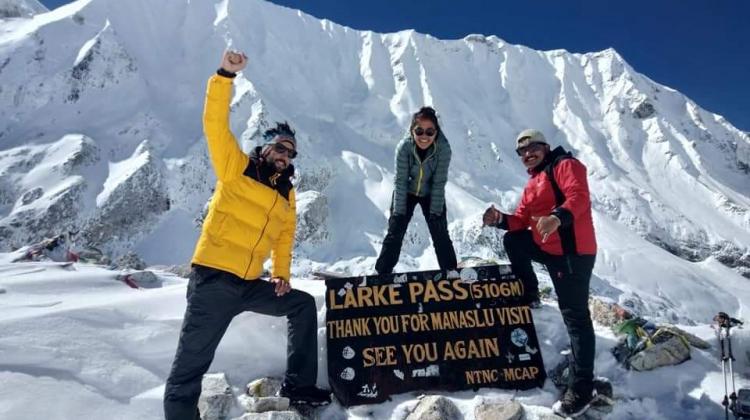
The Poonhill via Annapurna Base Camp Trek takes you into the Annapurna region, one of the most famous trekking destinations in Nepal. This beautiful area lies within the Annapurna Conservation Area, the country's first and largest protected conservation area, established in 1986. Covering more than 7,600 square kilometers, it protects diverse landscapes, forests, rivers, wildlife, and traditional mountain villages. The region is also home to the Gurung and Magar communities, who have preserved their unique culture, traditions, and warm hospitality for generations. At the heart of this region is Annapurna Base Camp, located at an altitude of 4,130 meters and surrounded by towering Himalayan peaks. The highest among them is Annapurna I, standing at 8,091 meters, making it the tenth-highest mountain in the world. Another famous highlight is Poon Hill, one of Nepal's most visited viewpoints, known for its spectacular sunrise over the Himalayas. From here, visitors can enjoy wide views of Annapurna, Dhaulagiri, Machhapuchhre, Nilgiri, and several other snow-capped peaks. Together, the rich natural beauty, cultural heritage, and world-famous mountain scenery have made the Poonhill via Annapurna Base Camp Trek one of Nepal's most popular and rewarding trekking experiences.
What to Expect on the Poonhill Via Annapurna Base Camp Trek
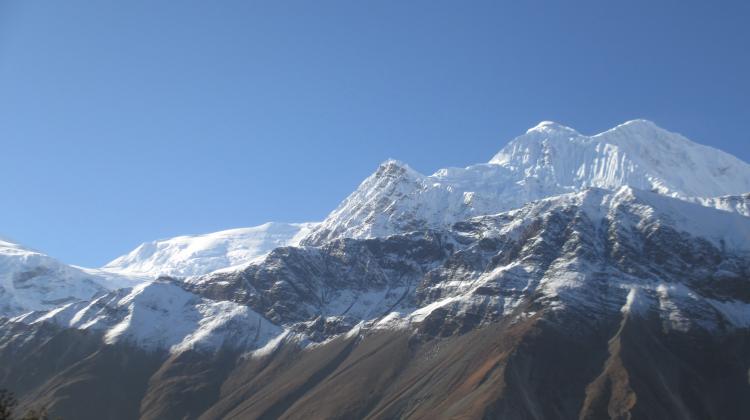
The Poonhill via Annapurna Base Camp Trek offers a perfect combination of natural beauty, cultural experiences, and mountain adventure. Over 12 days, you will travel through traditional villages, peaceful forests, and high Himalayan landscapes while enjoying some of Nepal's most famous viewpoints. The trek also provides opportunities to witness spectacular sunrises, explore the Annapurna Sanctuary, and relax in natural hot springs. Here are some of the experiences you can look forward to during this unforgettable adventure.- Spectacular Mountain Views: Enjoy panoramic views of Annapurna I, Annapurna South, Machhapuchhre, Dhaulagiri, Hiunchuli, Nilgiri, and many other Himalayan peaks. The mountain scenery changes throughout the trek, offering incredible photo opportunities every day.
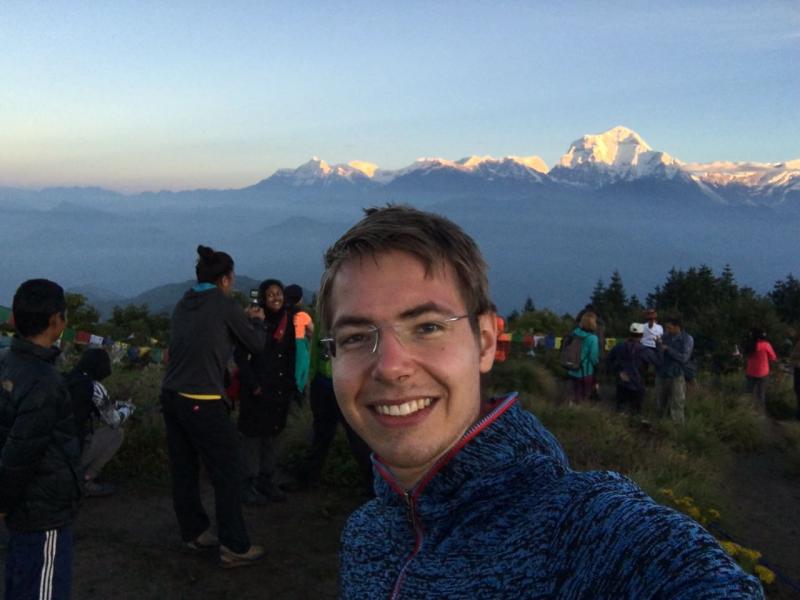
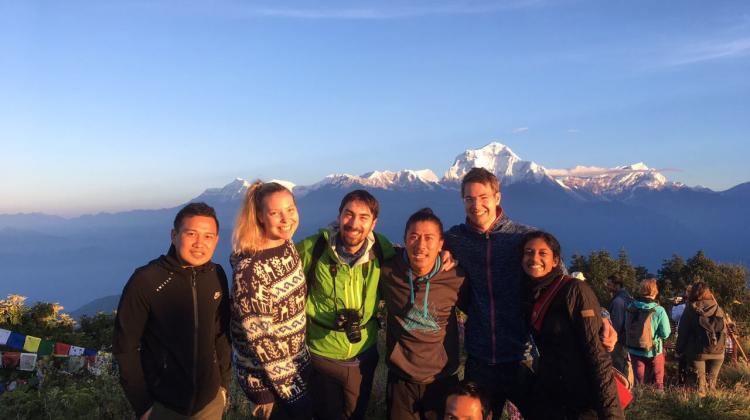
- Sunrise from Poon Hill: Watch a breathtaking sunrise from Poon Hill as the first rays of sunlight illuminate the snow-covered mountains. It is one of the most popular viewpoints in Nepal and a highlight of this trekking adventure.
- Traditional Mountain Villages: Pass through traditional Gurung and Magar villages where you can experience the local culture and lifestyle. The warm hospitality of the local people adds a special touch to the trekking experience.
- Comfortable Teahouse Stay: Stay in comfortable mountain teahouses that provide simple rooms and freshly prepared meals. These teahouses also offer a great opportunity to relax and meet fellow trekkers.
- Natural Hot Springs: Relax in the natural hot springs at Jhinu Danda after completing the trekking section. The warm mineral water is a perfect way to soothe tired muscles before returning to Pokhara.
- Wildlife and Nature: Trek through the Annapurna Conservation Area, which is home to many birds, butterflies, monkeys, and other wildlife. If you are fortunate, you may also spot Himalayan langurs or barking deer along the trail.
- Local Food and Hospitality: Enjoy a variety of freshly prepared Nepali and international dishes served at local teahouses throughout the trek. Friendly hosts and welcoming hospitality make every overnight stay comfortable and enjoyable.
Extra Highlights of the Poonhill Via Annapurna Base Camp Trek
The Poonhill via Annapurna Base Camp Trek offers much more than beautiful mountain views and a rewarding trekking experience. Whether you are visiting Nepal for the first time or returning for another Himalayan journey, this trek provides unforgettable memories from beginning to end. Here are some extra highlights that make the Poonhill via Annapurna Base Camp Trek even more rewarding.- Walk Through the Annapurna Conservation Area: Trek through Nepal's largest protected conservation area, home to rich biodiversity, beautiful forests, and diverse landscapes. The well-preserved environment allows you to experience the region's natural beauty up close.
- Experience Gurung and Magar Culture: Visit traditional Gurung and Magar villages where you can observe local customs, architecture, and daily life. Friendly locals and their warm hospitality make the cultural experience even more enjoyable.
- Enjoy the Natural Hot Springs: Take a relaxing dip in the natural hot springs at Jhinu Danda after completing the trekking section. The warm mineral water helps soothe tired muscles and is a perfect way to celebrate your achievement.
- Taste Authentic Nepali Cuisine: Enjoy traditional Nepali meals along with a variety of international dishes served in local teahouses. Freshly prepared food helps keep your energy levels high throughout the trek.
- Excellent Photography Opportunities: Capture stunning photographs of mountain peaks, colorful forests, local villages, rivers, and beautiful sunrises. Every stage of the trek offers countless opportunities for memorable travel photography.
- Reach Two Famous Destinations: Experience both the spectacular sunrise at Poon Hill and the unforgettable mountain amphitheater of Annapurna Base Camp in one adventure. Visiting these two iconic locations makes this trek one of the most complete trekking experiences in Nepal.
Best Time for Poonhill Via Annapurna Base Camp Trek
The Poonhill via Annapurna Base Camp Trek can be enjoyed throughout the year, but each season offers a different trekking experience. Weather conditions, mountain views, trail conditions, and temperatures vary from season to season. Choosing the right time depends on whether you prefer clear skies, blooming forests, fewer crowds, or snowy landscapes.1. Spring (March – May)
Spring is one of the most popular seasons for the Poonhill via Annapurna Base Camp Trek. The weather is generally stable, temperatures are comfortable, and the trails are filled with blooming rhododendron forests. Clear skies provide outstanding views of Annapurna, Machhapuchhre, Dhaulagiri, and other surrounding peaks. This is an excellent time for photography, nature lovers, and first-time trekkers.2. Summer/Monsoon (June – August)
Summer brings warmer temperatures along with the monsoon season, resulting in regular rainfall, especially at lower elevations. The hills and forests become lush and green, creating beautiful natural scenery, but trails can be muddy and slippery. Mountain views may be hidden by clouds, and leeches are common in forested areas, so proper preparation is important.3. Autumn (September – November)
Autumn is considered the best season for this trek because of its clear weather, dry trails, and excellent mountain views. After the monsoon, the air becomes fresh, and the skies remain clear for most of the season. Comfortable daytime temperatures and stable conditions make trekking easier, while Nepal's major festivals, including Dashain and Tihar, add a unique cultural experience.4. Winter (December – February)
Winter offers peaceful trails and stunning snow-covered mountain scenery for those who enjoy colder conditions. The weather is usually clear, providing excellent visibility, although temperatures drop significantly, especially at higher elevations and during the night. With proper winter clothing and preparation, the trek remains possible and rewards trekkers with quieter trails and beautiful Himalayan landscapes.Accommodation and Meals during Poonhill Via Annapurna Base Camp Trek
Comfortable accommodation and nutritious meals play an important role in making your trekking experience enjoyable. Throughout the Poonhill via Annapurna Base Camp Trek, you will stay in local teahouses that provide a warm and welcoming atmosphere after each day of walking. While the facilities become simpler as you gain altitude, they are clean, comfortable, and suitable for trekkers. Meals are freshly prepared using locally available ingredients and are designed to provide the energy needed for daily trekking.1. Accommodation
Your journey begins and ends with comfortable stays in 3-star hotels in Kathmandu and Pokhara. During the trek, you will stay in local mountain teahouses offering simple twin-sharing rooms with basic facilities, comfortable beds, blankets, and shared bathrooms in most locations.2. Meals
Three freshly prepared meals, breakfast, lunch, and dinner, are served each trekking day to keep you energized throughout the journey. Popular meal options include Dal Bhat, noodles, fried rice, soups, pasta, momos, eggs, pancakes, porridge, tea, coffee, and other simple dishes, while vegetarian meals are widely available at almost every teahouse.3. Drinking Water
Safe drinking water is available throughout the trek, but bottled water becomes more expensive at higher elevations. Carrying a reusable water bottle and using water purification tablets or a filtration bottle is a more affordable and environmentally friendly option.4. Snacks and Beverages
Most teahouses sell light snacks, chocolates, biscuits, soft drinks, tea, coffee, and hot lemon drinks along the route. Carrying a few energy bars or dry fruits from Kathmandu or Pokhara is recommended for extra energy between meal breaks.Poonhill Via Annapurna Base Camp Trek: What Makes It Popular?
The Poonhill via Annapurna Base Camp Trek is one of Nepal's most popular trekking adventures because it combines two of the country's most iconic destinations in a single journey. It offers a perfect balance of mountain scenery, cultural experiences, comfortable trekking routes, and rewarding viewpoints. The trek is suitable for both beginners with good fitness and experienced trekkers looking for a complete Himalayan experience.- Famous Sunrise from Poon Hill: Poon Hill is one of Nepal's most famous viewpoints, offering spectacular sunrise views over the Annapurna and Dhaulagiri mountain ranges. Watching the golden sunlight illuminate the snow-covered peaks is one of the biggest highlights of the trek.
- Rich Local Culture: The route passes through traditional Gurung and Magar villages where trekkers can experience local customs, culture, and warm hospitality. Meeting local people adds a meaningful cultural experience to the adventure.
- Well-Established Trekking Route: The trek has comfortable teahouses, good trail conditions, and reliable facilities throughout most of the journey. This makes it suitable for trekkers looking for both adventure and convenience.
- Natural Hot Springs: A relaxing visit to the natural hot springs at Jhinu Danda is a rewarding way to end the trekking adventure. The warm mineral water helps relax tired muscles after several days of walking.
Culture Experience on the Poonhill Via Annapurna Base Camp Trek
The Poonhill via Annapurna Base Camp Trek is not only about beautiful mountains but also about experiencing the rich culture of the local communities. As you walk through traditional villages, you will have the opportunity to learn about local customs, lifestyles, and centuries-old traditions. The warm hospitality of the mountain people makes the journey even more memorable and meaningful. Here are some of the cultural experiences you can enjoy during the trek.- Gurung and Magar Communities: The trekking route passes through villages mainly inhabited by the Gurung and Magar communities, who have lived in the Annapurna region for generations. Their traditional lifestyle, unique customs, and friendly nature offer a wonderful cultural experience for visitors.
- Traditional Villages: Walk through charming villages with stone-built houses, narrow pathways, and terraced farms. These settlements provide a glimpse into the simple and peaceful way of life in the Himalayan region.
- Local Food: Enjoy authentic Nepali meals such as Dal Bhat along with other traditional dishes prepared using fresh local ingredients. Sharing meals in teahouses is a great way to experience the region's food culture.
- Buddhist and Hindu Traditions: Along the route, you will see prayer flags, mani walls, small monasteries, temples, and religious shrines that reflect the strong influence of both Buddhism and Hinduism. These sacred sites add a spiritual touch to the trekking experience.
- Local Festivals: If you trek during festival seasons such as Dashain, Tihar, or Lhosar, you may witness traditional celebrations, music, dancing, and cultural activities in the villages. These festivals provide a deeper understanding of the local heritage and community life.
Altitude and Acclimatization for the Poonhill Via Annapurna Base Camp Trek
The Poonhill via Annapurna Base Camp Trek reaches a maximum altitude of 4,130 meters at Annapurna Base Camp. As you gain elevation, the air becomes thinner, making proper acclimatization important for a safe trek. This itinerary follows a gradual ascent, allowing your body enough time to adjust naturally.- Maximum Altitude: The highest point of the trek is Annapurna Base Camp at 4,130 meters above sea level. The lower oxygen level at this altitude may cause mild discomfort for some trekkers.
- Signs of Altitude Sickness: Mild symptoms may include headache, dizziness, nausea, tiredness, or difficulty sleeping. Inform your guide immediately if you notice any of these symptoms.
- Stay Hydrated: Drink plenty of water throughout the trek to help your body adapt to higher elevations. Avoid alcohol and drink enough fluids every day.
- Walk at a Comfortable Pace: Trek slowly and avoid rushing, especially at higher elevations. A steady pace helps your body adjust more effectively.
- Experienced Trekking Guide: Your guide will monitor your health and provide advice throughout the journey. They are trained to recognize early signs of altitude sickness and respond if needed.
- Emergency Support: If severe altitude sickness occurs, descending to a lower altitude is the safest option. Helicopter evacuation can also be arranged in emergencies if covered by your travel insurance.
Difficulty Level of Poonhill Via Annapurna Base Camp Trek
The Poonhill via Annapurna Base Camp Trek is considered a moderately difficult trek. It is suitable for beginners with good physical fitness as well as experienced trekkers. The trail includes several uphill and downhill sections, along with high-altitude trekking. With proper preparation and a steady pace, most trekkers can complete the journey successfully.- Trek Duration: The trek lasts 12 days, with daily walks of around 4 to 7 hours. Some days are longer and require extra endurance.
- Trail Conditions: The route includes stone staircases, forest paths, rocky sections, suspension bridges, and mountain trails. Most trails are well-marked but can be uneven in some places.
- Physical Fitness: A reasonable level of fitness is recommended before starting the trek. Regular walking, hiking, or light cardio training can help you prepare.
- Weather Conditions: Weather can change quickly in the mountains, especially at higher elevations. Dressing in layers helps you stay comfortable throughout the trek.
- Suitable for Beginners: First-time trekkers with good preparation can complete this trek with the support of an experienced guide. Walking at a comfortable pace and taking regular breaks makes the journey more enjoyable.
Permits Required for Poonhill Via Annapurna Base Camp Trek
The Poonhill via Annapurna Base Camp Trek takes place inside the protected Annapurna region, so every trekker must obtain the required permits before starting the journey. These permits help protect the natural environment, support local communities, and improve trekker safety. The permit process is simple, and most trekking agencies arrange everything on your behalf. Below are the permits you need and other important information to know.1. Annapurna Conservation Area Permit (ACAP)
The Annapurna Conservation Area Permit (ACAP) is mandatory for all trekkers entering the Annapurna Conservation Area. The permit costs NPR 3,000 (approximately USD 23–25) for foreign nationals and NPR 1,000 (approximately USD 8–9) for SAARC nationals. It can be obtained from the Nepal Tourism Board (NTB) offices in Kathmandu or Pokhara, although most trekkers have it arranged by their registered trekking agency before the trek begins.2. Trekkers' Information Management System (TIMS) Card
A TIMS (Trekkers' Information Management System) Card is also required for the trek and helps authorities monitor trekkers for safety and emergency response. The fee is NPR 2,000 (approximately USD 15–16) for trekkers booking through a registered agency and NPR 1,000 (approximately USD 8–9) for SAARC nationals. The card can be obtained through a registered trekking agency or from the Tourist Service Center in Kathmandu or Pokhara, depending on the current trekking regulations.Insurance for the Poonhill Via Annapurna Base Camp Trek
Travel insurance is strongly recommended for anyone planning the Poonhill via Annapurna Base Camp Trek. Although this is one of Nepal's most popular trekking routes, the trail reaches an altitude of 4,130 meters, where weather conditions can change quickly and medical facilities are limited. Unexpected situations such as altitude sickness, injuries, or travel delays can occur during the journey. Having comprehensive travel insurance helps protect you from unexpected expenses and allows you to trek with greater confidence and peace of mind.- Emergency Helicopter Evacuation: Your insurance policy should include emergency helicopter evacuation up to 4,130 meters. In the case of severe altitude sickness, injury, or another medical emergency, helicopter rescue may be the fastest and safest option, but it can be very expensive without proper insurance.
- Medical Expenses: Choose a policy that covers emergency medical treatment, hospitalization, doctor consultations, and prescribed medications. Since healthcare facilities in the mountains are basic, you may need treatment or transportation to a larger hospital if a serious medical issue occurs.
- High-Altitude Trekking Coverage: Make sure your policy specifically covers trekking activities up to 4,130 meters. Some standard travel insurance plans exclude high-altitude adventures, so it is important to confirm this before purchasing your policy.
- Trip Cancellation and Travel Delays: A comprehensive policy should also cover trip cancellations, interrupted journeys, and delays caused by bad weather or transportation issues. This can help reduce financial losses if your travel plans change unexpectedly.
- Personal Belongings and Trekking Gear: Consider insurance that protects your luggage, personal belongings, and trekking equipment against loss, theft, or accidental damage. This provides extra security for valuable items you carry during the trek.
- Carry Your Insurance Details: Keep a printed or digital copy of your insurance policy and emergency contact information with you throughout the trek. Your guide and trekking agency should also have access to these details in case of an emergency.
Why Trek with Nepalaya Treks?
Choosing the right trekking company can make a big difference in your overall experience. Nepalaya Treks is committed to providing safe, well-organized, and memorable trekking adventures with professional service from start to finish. Here are some reasons why many trekkers choose to travel with Nepalaya Treks.- Experienced Local Guides: Our government-licensed and experienced trekking guides know the trails, local culture, and mountain environment well. They are always ready to support you and ensure your journey is safe and enjoyable.
- Well-Planned Itineraries: Our itineraries are carefully designed to provide a comfortable trekking pace with enough time for rest and sightseeing. This helps you enjoy the journey while adjusting to the changing altitude.
- Safety Comes First: Your safety is our highest priority throughout the trek. Our guides carry a first aid kit, monitor your health, and are trained to respond to emergencies if needed.
- Reliable Team Support: Our experienced porters and support staff work hard behind the scenes to make your trek comfortable and hassle-free. Their dedication allows you to focus on enjoying the journey.
- Hassle-Free Permit and Logistics: We take care of all necessary permits, transportation, accommodation, and trekking arrangements before your adventure begins. This allows you to enjoy your trek without worrying about the planning.
Why Choose This Itinerary?
This 12-day itinerary is carefully designed to give you the best experience of both Poon Hill and Annapurna Base Camp at a comfortable pace. It combines stunning mountain views, cultural experiences, and well-planned trekking days without rushing the journey. Whether you are a first-time trekker or an experienced hiker, this itinerary offers a rewarding and enjoyable Himalayan adventure.- Visit Two Iconic Destinations: This itinerary combines the famous sunrise viewpoint at Poon Hill with the unforgettable experience of Annapurna Base Camp. You get to enjoy two of Nepal's most popular trekking destinations in one trip.
- Comfortable Daily Schedule: Each trekking day is planned with a balanced walking duration to help reduce fatigue. The gradual pace allows you to enjoy the scenery while making the journey more comfortable.
- Comfortable Accommodation: Enjoy comfortable hotels in Kathmandu and Pokhara before and after the trek. During the journey, stay in welcoming mountain teahouses with freshly prepared meals.
- Suitable for Most Trekkers: This itinerary is suitable for beginners with good fitness as well as experienced trekkers. With professional guides and a well-planned route, you can complete the trek safely and comfortably.
Safety on the Poonhill Via Annapurna Base Camp Trek
Your safety is one of the most important parts of the Poonhill via Annapurna Base Camp Trek. Although the trail is well established and popular, trekking in the Himalayas requires proper planning and preparation. Weather conditions, altitude, and changing trail conditions should always be taken seriously. Following your guide's instructions and trekking at a comfortable pace will help make your journey safe and enjoyable.- Be Aware of Altitude: The trek reaches a maximum altitude of 4,130 meters at Annapurna Base Camp. Walk slowly, drink plenty of water, and inform your guide immediately if you experience any signs of altitude sickness.
- Check the Weather: Mountain weather can change quickly, especially at higher elevations. Always carry warm clothing and waterproof gear, even if the forecast looks clear.
- Stay Hydrated and Eat Well: Drink enough water throughout the trek and eat regular meals to maintain your energy. Proper hydration and nutrition also help your body adjust to higher elevations.
- Follow the Marked Trail: Stay on the designated trekking route and avoid taking shortcuts. This helps reduce the risk of getting lost or encountering unsafe terrain.
- Carry Essential Gear: Pack important items such as a first aid kit, headlamp, trekking poles, water bottle, sunscreen, and extra clothing. Having the right equipment makes the trek safer and more comfortable.
- Emergency Support: In case of a serious illness or injury, your guide will arrange the necessary emergency assistance. If required, helicopter evacuation can be organized if it is covered by your travel insurance.
- Travel Insurance: Make sure you have travel insurance that covers high-altitude trekking and emergency helicopter rescue. This provides financial protection if an unexpected situation occurs during the trek.
Responsible Tourism
Responsible tourism helps protect the natural beauty, local culture, and environment of the Annapurna region for future generations. Every trekker can make a positive impact by following simple and respectful travel practices. Small actions during your journey can help preserve the trails, support local communities, and reduce environmental pollution. By trekking responsibly, you contribute to the long-term sustainability of this beautiful Himalayan destination.- Respect Local Culture: Respect the customs, traditions, and religious beliefs of the local communities along the trail. Always ask for permission before taking photographs of local people or religious sites.
- Reduce Plastic Waste: Carry a reusable water bottle instead of buying single-use plastic bottles during the trek. Using water purification tablets or a filtration bottle is a more eco-friendly option.
- Leave No Trace: Dispose of your waste properly and avoid leaving litter on the trail. Help keep the trekking route clean by carrying your rubbish until you find a proper disposal point.
- Support Local Communities: Stay in locally owned teahouses, eat at local restaurants, and purchase handmade products from village shops whenever possible. This helps support the local economy and the families who depend on tourism.
- Follow Park Rules: Respect the regulations of the Annapurna Conservation Area and follow your guide's instructions throughout the trek. These rules help protect the area's unique environment and cultural heritage.
Group Size
The Poonhill via Annapurna Base Camp Trek is suitable for solo travelers, couples, families, and larger groups. Whether you prefer a private trek or want to join a group, the itinerary can be arranged to match your travel style. Our experienced guides and support team ensure that every group enjoys a safe, comfortable, and well-organized trekking experience.- Solo Travelers: Solo trekkers are welcome and can join a scheduled group departure or book a private trek. This is a great option for those who want flexibility while enjoying the support of an experienced guide.
- Small Groups: Small groups of friends, couples, or families enjoy a more personalized trekking experience. The pace can be adjusted to suit the group's comfort and fitness level.
- Large Groups: We also organize treks for larger groups, including schools, clubs, and corporate teams. Additional guides and porters are provided when needed to ensure everyone's safety and comfort.
- Guide and Porter Support: Every group is accompanied by a licensed trekking guide, and porters are arranged based on the group size. An assistant guide is also provided for larger groups to offer extra support during the trek.
- Flexible Departures: Both private and group departures are available throughout the main trekking seasons. You can choose a departure date that best fits your travel schedule.
Private Departure Available
If you prefer a more personal trekking experience, private departures are available for the Poonhill via Annapurna Base Camp Trek. A private trek allows you to travel with your own family, friends, or partner without joining a larger group. It also offers greater flexibility while maintaining the same level of professional service and support throughout the journey.- Choose Your Own Travel Date: Private departures are available on your preferred travel dates, subject to availability. This gives you the flexibility to plan your trek according to your schedule.
- Ideal for Families and Friends: Private departures are perfect for couples, families, friends, and small groups who want to share the adventure together. It provides a more personal and relaxed trekking experience.
- Personalized Service: You will receive dedicated support from your guide and trekking team throughout the trip. This allows for a more comfortable and customized experience from start to finish.
- Flexible Itinerary: Minor adjustments to the itinerary can often be made to suit your interests, fitness level, or travel plans. This flexibility helps create a trekking experience that matches your preferences.
Equipment Rental Information
You do not need to bring every piece of trekking equipment from home for the Poonhill via Annapurna Base Camp Trek. Most essential trekking gear can be rented easily in Kathmandu before the trek begins. Renting equipment is an affordable option for trekkers who want to travel light or avoid buying expensive gear for a single trip. If you book your trek with Nepalaya Treks, our team will be happy to assist you in arranging quality rental equipment before your departure.- Rental Availability: Trekking equipment is widely available for rent at outdoor gear shops in Kathmandu. Most rental stores stock a variety of sizes and equipment suitable for different trekking seasons.
- Rental Cost: Rental prices vary depending on the type and quality of the equipment, as well as the rental duration. Our team can recommend reliable rental shops that offer quality gear at reasonable rates.
- Equipment Quality: Nepalaya Treks works with trusted rental providers to ensure the equipment is clean, well-maintained, and suitable for high-altitude trekking. We recommend checking the condition and fit of all rented items before your trek starts.
- Advance Arrangement: If you require rental equipment, please let us know before your arrival in Nepal. This allows us to arrange the necessary gear in advance and save you time before the trek.
- Return Policy: All rented or company-provided equipment should be returned after completing the trek. Any loss or damage may be subject to additional charges based on the rental provider's policy.
How to Prepare for Poonhill Via Annapurna Base Camp Trek
Good preparation can make your Poonhill via Annapurna Base Camp Trek safer, more comfortable, and more enjoyable. Since the trek involves several days of walking and reaches an altitude of 4,130 meters, it is important to prepare both physically and mentally before your trip. Planning ahead also helps you avoid last-minute stress and ensures you have everything you need for the journey. Here are some useful tips to help you get ready for your adventure.- Choose the Right Gear: Pack comfortable trekking clothing and wear well-fitted trekking boots that have already been broken in. Proper gear helps keep you comfortable in changing mountain weather.
- Pack Smart: Carry only the essentials and keep your backpack as light as possible. A lighter backpack makes trekking more comfortable and reduces unnecessary strain.
- Learn About Altitude: Understand the symptoms of altitude sickness before starting the trek. Walking slowly and allowing your body to adjust naturally will help reduce the risk.
- Arrange Travel Insurance: Purchase travel insurance that covers high-altitude trekking, emergency medical treatment, and helicopter evacuation. This provides extra protection throughout your journey.
- Prepare Your Documents: Keep your passport, permits, travel insurance details, and other important documents ready before the trek. Having digital and printed copies is also a good idea.
Trip Highlights
- Trek inside the Annapurna Conservation Area, one of Nepal's most famous protected regions
- Travel through the beautiful city of Pokhara before and after the trek
- Enjoy a perfect combination of Poon Hill and Annapurna Base Camp in one trekking adventure
- Experience the unique culture, hospitality, and local lifestyle of the Annapurna region
- Relax in the natural hot springs at Jhinu Danda after the trek
- Pass through the scenic villages of Ghorepani, Tadapani, Chhomrong, Bamboo, and Deurali
- Spend nights in comfortable local teahouses
- Visit traditional Gurung and Magar villages along the trekking route
- Walk through beautiful forests, waterfalls, rivers, and alpine landscapes
- Enjoy close-up views of Annapurna I, Machhapuchhre, Hiunchuli, Annapurna South, Dhaulagiri, and Nilgiri
- Reach Annapurna Base Camp at an altitude of 4,130 meters
- Experience the famous sunrise over the Himalayas from Poon Hill (3,210 meters)
Itinerary
Day 1: Arrival in Kathmandu
Welcome to Nepal! After landing at Tribhuvan International Airport in Kathmandu, you complete the arrival and immigration formalities before meeting our representative outside the terminal. You will then be transferred to your hotel, which is about a 30 to 45-minute drive from the airport, depending on traffic. After checking in, you can relax at the hotel or explore the lively streets of Thamel. This popular tourist area is a great place to buy or rent any trekking gear you may still need, exchange currency, or enjoy a cup of coffee before your adventure begins. In the evening, attend a pre-trek briefing with your guide. During the meeting, you will receive important information about the trekking route, daily schedule, safety guidelines, and altitude awareness. It is also a good opportunity to meet your fellow trekkers and ask any questions before the journey starts. After the briefing, enjoy a traditional Nepali welcome dinner before returning to your hotel for a good night's rest. A comfortable sleep will help you feel refreshed and ready for the adventure ahead.
- Max Elevation: 1,320 meters
- Travel Distance: 6 to 8 kilometers
- Travel Hours: 30 to 45 minutes
- Accommodation: 3 Star Hotel
- Meal Included: Welcome Dinner
Day 2: Drive or Fly from Kathmandu to Pokhara
Day 3: Drive to Nayapul and Trek to Tikhedunga or Ulleri (1,540 meters)
Day 4: Trek from Tikhedunga or Ulleri to Ghorepani (2,860 meters) through Rhododendron Forests
Day 5: Early Morning Sunrise Hike to Poon Hill (3,210 meters), then Trek to Tadapani (2,630 meters)
Day 6: Trek from Tadapani to Chhomrong (2,170 meters)
Day 7: Trek from Chhomrong to Dovan or Bamboo (2,500 meters)
Day 8: Trek from Dovan or Bamboo to Deurali (3,230 meters)
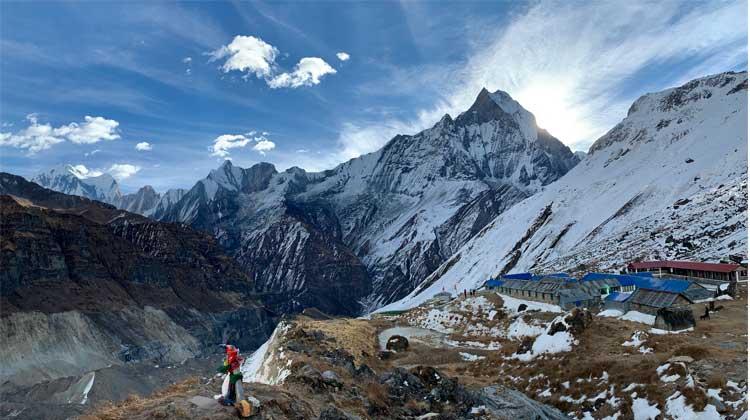
Day 9: Trek from Deurali via Machhapuchhare Base Camp (3,700 meters) to Annapurna Base Camp (4,130 meters)
Day 10: Trek down from Annapurna Base Camp to Bamboo or Sinuwa (2,340 meters)
Day 11: Trek from Bamboo or Sinuwa to Jhinu Danda (1,780 meters) to Enjoy the Natural Hot Springs, then Drive to Pokhara
Day 12: Drive or Fly Back from Pokhara to Kathmandu
Inclusion / Exclusion
Inclusion
- Airport pick-up and drop-off by private vehicle
- Tourist bus transportation from Kathmandu to Pokhara and back to Kathmandu
- 2 nights' twin-sharing hotel accommodation in Kathmandu with breakfast
- 2 nights' twin-sharing hotel accommodation in Pokhara with breakfast
- 8 nights' accommodation in local mountain teahouses during the trek
- Three meals a day (breakfast, lunch, and dinner) during the trek with one main dish selected from the menu
- Fresh seasonal fruit served after dinner during the trek
- Annapurna Conservation Area Permit (ACAP)
- TIMS (Trekkers' Information Management System) Card
- Government-licensed, English-speaking trekking guide
- One experienced porter for every two trekkers (maximum luggage limit applies)
- All guide and porter expenses, including meals, accommodation, transportation, salary, and insurance
- First aid kit carried by the trekking guide
- Emergency helicopter evacuation arrangement in case of an emergency (covered by your travel insurance)
- Sleeping bag, down jacket, duffel bag, and trekking poles (to be returned after the trek)
- Pulse oximeter for monitoring oxygen levels and symptoms of altitude sickness
- Assistant guide for groups of 8 or more trekkers
- All government taxes and official service charges
Exclusion
- International airfare to and from Nepal
- Nepal entry visa fee
- Lunch and dinner in Kathmandu and Pokhara unless mentioned in the itinerary
- Additional hotel nights in Kathmandu or Pokhara due to early arrival, late departure, or itinerary changes
- Personal travel and medical insurance
- Personal expenses such as snacks, chocolates, desserts, soft drinks, tea, coffee, alcoholic beverages, and bottled drinks
- Laundry services and personal shopping
- Charges for hot showers, Wi-Fi, mobile charging, camera charging, and power bank charging during the trek
- Extra baggage beyond the porter weight limit
- Entrance fees for sightseeing in Kathmandu (if applicable)
- Tips for guides, porters, and other trekking staff
- Any expenses caused by flight delays, bad weather, natural disasters, political events, or other situations beyond our control
- Any services not specifically mentioned under "Cost Includes"
Check List
Packing the right gear is an important part of preparing for the Poonhill via Annapurna Base Camp Trek. Since the trek takes you from lower villages to an altitude of 4,130 meters, you will experience different weather conditions along the way. Bringing the right clothing and equipment will help keep you comfortable, warm, and safe throughout the journey. If you do not have all the necessary trekking gear, there is no need to worry. Most trekking equipment can be easily bought or rented in Kathmandu before your trek begins.
Head
- Headlamp with extra batteries
- Sun hat or cap
- Warm woolen hat or beanie
- Scarf or neck gaiter
Face
- Sunscreen (SPF 30 or higher)
- Lip balm with SPF
- Sunglasses with UV protection
- Face or body wipes
Hands
- Hand sanitizer
- Lightweight trekking gloves
- Warm insulated gloves
- Waterproof or windproof outer gloves
Trekking Clothing
- Down jacket
- Fleece jacket
- Moisture-wicking trekking T-shirts (2–3)
- Long-sleeved trekking shirt
- Trekking pants (2 pairs)
- Thermal top and bottom
- Breathable underwear
- Warm fleece layer
- Waterproof and windproof jacket
- Waterproof trekking pants
Clothing for Kathmandu
- Comfortable T-shirts
- Casual pants or jeans
- Light jacket
- Comfortable shoes or sandals
Footwear
- Waterproof trekking boots
- Sports shoes or sandals
- Trekking socks (3–4 pairs)
- Warm woolen socks
- Gaiters (optional during snow season)
Backpack
- Duffel bag (if using a porter)
- Daypack (20–35 liters)
- Rucksack
- Rain cover for your backpack
Essential Trekking Gear
- Reusable water bottles (2 liters total)
- Water purification tablets or filter
- Trekking poles
- Sleeping bag (rated to around -15°C)
- Pocket knife or multi-tool
- Watch or alarm
- Mobile phone and charging cable
- Power bank
Toiletries
- Quick-dry towel
- Toothbrush and toothpaste
- Biodegradable soap and shampoo
- Deodorant
- Moisturizer
- Female hygiene products (if needed)
- Nail clippers
- Small mirror
- Toilet paper
- Dental floss
Personal Accessories
- Passport and photocopies
- Passport-size photos
- Cash (Nepalese Rupees)
- Camera
- Travel documents
Extra Items
- Notebook and pen
- Earplugs
- Energy or protein bars
- Personal first aid kit
- Personal medications
Trip FAQs
-
1. Do I need previous trekking experience for the Poonhill via Annapurna Base Camp Trek?
No, previous trekking experience is not required. This trek is suitable for beginners with a good level of fitness and determination. Regular walking, light exercise, or hiking before your trip will help you enjoy the trek more comfortably and confidently. -
2. Do I need a visa to visit Nepal?
Yes, most international travelers need a tourist visa to enter Nepal. You can easily get a visa on arrival at Tribhuvan International Airport in Kathmandu or apply in advance through a Nepalese embassy or consulate in your country. -
3. How difficult is the Poonhill via Annapurna Base Camp Trek?
The trek is considered moderately difficult. It includes several days of walking on stone steps, forest trails, and mountain paths. Good physical fitness is recommended, but no technical climbing skills are needed to complete the journey. -
4. What mountains can I see during the trek?
The trek offers stunning views of Annapurna I, Annapurna South, Machhapuchhre (Fishtail), Hiunchuli, Dhaulagiri, Nilgiri, and several other Himalayan peaks. The best mountain views can be enjoyed from Poon Hill and Annapurna Base Camp. -
5. What type of accommodation is available during the trek?
You will stay in comfortable hotels in Kathmandu and local mountain teahouses during the trek. The teahouses provide basic but clean rooms with twin beds, shared dining areas, and warm hospitality from local families. -
6. What kind of food is served on the trek?
Teahouses offer a variety of freshly prepared meals, including Dal Bhat, fried rice, noodles, pasta, soups, momos, eggs, potatoes, and pancakes. Vegetarian options are widely available, and meals are designed to provide enough energy for trekking. -
7. Is travel insurance necessary for this trek?
Yes, travel insurance is highly recommended. Your policy should cover high-altitude trekking up to 4,130 meters and include emergency helicopter evacuation, medical treatment, trip cancellation, and other unexpected situations during your journey. -
8. Is altitude sickness a concern on this trek?
Although the maximum altitude is 4,130 meters, some trekkers may experience mild symptoms of altitude sickness. Walking at a steady pace, staying hydrated, eating well, and following your guide's advice help reduce the risk significantly. -
9. What should I pack for the trek?
Pack comfortable trekking clothes, warm layers, a waterproof jacket, trekking boots, gloves, a hat, sunglasses, sunscreen, a reusable water bottle, toiletries, and personal medications. Trekking poles and a sleeping bag are also recommended for extra comfort. -
10. Can I rent trekking equipment in Kathmandu?
Yes, Kathmandu has many shops where you can rent trekking equipment at reasonable prices. Items such as sleeping bags, down jackets, trekking poles, gaiters, and backpacks are commonly available before the trek begins. -
11. Is it necessary to hire a guide or porter?
Hiring a licensed guide is highly recommended for safety, local knowledge, and navigation. A porter is optional but can make your trek more comfortable by carrying your heavy luggage, allowing you to enjoy the journey with a lighter backpack. -
12. Is there mobile network and internet access during the trek?
Mobile network coverage is available in many villages, but the signal may be weak at higher elevations. Some teahouses provide paid Wi-Fi, although internet speed can be slow and unreliable depending on the location and weather conditions. -
13. What is the best time to do the Poonhill via Annapurna Base Camp Trek?
Spring (March – May) and autumn (September – November) are the best seasons. These months usually offer stable weather, clear mountain views, pleasant temperatures, and excellent trekking conditions throughout the Annapurna region. -
14. How far in advance should I book the trek?
Booking at least a few weeks before your planned departure is recommended, especially during the busy spring and autumn trekking seasons. Early booking helps secure accommodation, permits, transportation, and your preferred departure date. -
15. Can this trek be customized or arranged as a private trip?
Yes, the itinerary can be customized to match your schedule, fitness level, and travel preferences. Private departures are available for solo travelers, couples, families, and groups who want a more flexible trekking experience.
All Inclusive Cost
USD 1390
Per Person
BOOK NOW QUICK ENQUIRY- Best Price Guarantee
- Hassle-Free Booking
- Team of highly experienced Experts
You may also like !!
Our Best Selling Packages You May Like.