Kanchenjunga Base Camp Trek
Overview
The Kanchenjunga Base Camp Trek is an arduous journey through the far-flung eastern region of Nepal, taking you through varied mountain terrain on the northern and southern sides of Kanchenjunga. This trek begins with a flight from Kathmandu to Bhandarpur, which is followed by a long drive to Taplejung. Your trekking journey begins at Sekathum and en route, the trail passes through some remote mountain settlements including Amjilosa, Gyabla, Ghunsa, Khambachen, and Lhonak before reaching Kanchenjunga North Base Camp at Pang Pema, situated at 5,143 meters. After exploring the northern base camp, you retrace your route to Tseram via Sele Le Base Camp before continuing toward Ramche and Oktang, a key viewpoint for Yalung South Base Camp at an altitude of 4,740 meters. On the return journey, you pass through Tortong and Yamphudin before drifting to Kanyam and Bhadrapur. Following this, you fly back to Kathmandu and rest before departing for your home destination the following day.
What to Expect on the Kanchenjunga Base Camp Trek – 20 Days
The Kanchenjunga Base Camp Trek is a challenging 20-day journey through the remote eastern Himalayas of Nepal. The journey combines a domestic flight, long road transfers, village trails, and extended days on foot. You will gradually move from lower valleys through forests and mountain settlements into the alpine zone. The route covers the northern side of Kanchenjunga before crossing toward the southern side and descending to lower elevations. After completing the trek, the journey continues back to Kathmandu through Kanyam and Bhadrapur. The journey begins with permit preparation, with optional sightseeing in Kathmandu if desired. Fly from Kathmandu to Bhadrapur, travel by road to Taplejung and Sekathum, and begin trekking through forests and valleys.
- Spend an acclimatization day at Khambachen.
- Continue toward Pang Pema, the Kanchenjunga North Base Camp.
- Cross the high route between Ghunsa and Tseram via Sele Le Base Camp.
- Continue through Tseram and Ramche toward Oktang.
- Descend through Tortong and Yamphudin.
- Travel by road to Kanyam and Bhadrapur.
- Fly from Bhadrapur to Kathmandu before the final departure.
Extra Highlights of the Kanchenjunga Base Camp Trek – 20 Days
The trek combines remote Himalayan landscapes, demanding mountain trails, and changing environments. Its route passes through some of the less-developed trekking areas of eastern Nepal. You will experience the contrast between forested valleys, narrow mountain trails, high alpine terrain, and glacial surroundings. The itinerary includes several long road journeys, making transportation an important part of the trip. The northern and southern sections offer different perspectives of the Kanchenjunga region. The route lies in the remote eastern Himalayas, away from the areas commonly visited by trekkers. The road journey through eastern Nepal passes through forests, rivers, bridges, and hill settlements.
- Subtropical areas gradually transition into alpine environments, with remote villages and simple mountain infrastructure along the route.
- The environment changes considerably with altitude, with high-altitude landscapes around Lhonak and Pang Pema.
- Sele Le Base Camp at 4,240 meters.
- Yalung Valley landscapes around the southern side.
- Oktang viewpoint at 4,740 meters.
- Descent through Tortong and Yamphudin into lower elevations.
- Combination of trekking, road travel, and domestic air travel.
Best Time for the Kanchenjunga Base Camp Trek
The main trekking seasons for the Kanchenjunga Base Camp Trek are spring and autumn. These periods generally provide better conditions for long-distance trekking at higher altitudes. Spring is characterized by warmer temperatures at lower elevations and the growth of new vegetation after winter. Autumn follows the monsoon and often provides clearer visibility. Conditions can still vary considerably, particularly at higher elevations, so seasonal weather should be considered when planning the trek.
1. Spring Season: March to May
Spring season offers you more favorable trekking conditions, with warmer temperatures at lower elevations, fresh vegetation and greener valleys. During this season, mountain views are often clearer, and although higher elevations remain cold, conditions are generally pleasant for much of the journey. That said, do note that snow and changing weather may still affect the upper sections of the trek.
2. Autumn Season: September to November
Autumn brings more stable conditions after the wet and unpredictable monsoon season. This season offers you clearer skies and good visibility. Temperatures in this season are suitable for trekking through lower and middle elevations, but higher areas still have cooler nights and mornings. Toward the end of the monsoon, you may begin to notice colder conditions. However, weather can still change quickly in the mountain areas.
Trek Accommodation and Meals on the Kanchenjunga Base Camp Trek – 20 Days
Accommodation varies according to the location and available facilities along the route. You will stay in a hotel in Kathmandu and use local teahouses or lodges during the trekking section. Facilities become increasingly basic in the more remote settlements. Meals generally consist of simple dishes that are readily available in mountain teahouses. There are more food choices in Kathmandu compared to the trail.
1. Accommodation
The accommodation includes standard hotels in Kathmandu and teahouses or lodges along the trekking route. Twin-sharing accommodation will be provided wherever possible, while remote areas generally offer basic rooms with limited bathroom facilities. Accomodation can be found in Sekathum, Amjilosa, Gyabla, Ghunsa, Khambachen, Lhonak, Tseram, Tortong, and Yamphudin.
2. Meals
During the trek, meals include dal bhat, noodles, fried rice, pasta, soup, momos, vegetables, eggs, and bread. Tea, coffee and other hot drinks, as well as vegetarian meals are provided, and snacks can be taken for walking for longer periods, and boiled, filtered and purified water is supplied wherever possible. Many tea houses have dining rooms, and Kathmandu provides more food choices.
Cultural Experiences During the Kanchenjunga Base Camp Trek – 20 Days
The trek provides opportunities to observe the everyday life of communities living in remote mountain settlements. Villages along the route reflect the ways people have adapted their homes, livelihoods, and routines to the Himalayan environment. You may encounter traditional houses, religious features, and local agricultural practices during the journey. Interactions with residents and teahouse hosts can offer a closer look at life in the region. Respect for local customs and privacy is important throughout the trek.
- Observe traditional mountain settlement patterns.
- Experience everyday life in remote Himalayan communities.
- Interact respectfully with local residents and teahouse hosts.
- See traditional houses and locally adapted architecture.
- Study the farming methods in mountain areas.
- Note how the characteristics of local communities change with elevation.
- Observe religious elements such as prayer flags, mani walls, shrines, and other sacred places.
- Obtain information on the local culture by being polite.
- Get permission before taking photographs of people.
- Never go into anyone’s home or other private property without permission.
Trekking Difficulty of the Kanchenjunga Base Camp Trek – 20 Days
The Kanchenjunga Base Camp Trek is a challenging journey because of its duration, elevation, terrain, and remote setting. The itinerary includes several long trekking days. Also, the route has several steep climbs and descents. The highest point is Pang Pema at 5,143 meters, with several other sections above 4,000 meters. There is an acclimatization day planned before the highest stretch in the itinerary. Proper preparation, pace, and equipment are needed to walk the route.
- You can expect several days of trekking, taking between 4 and 8 hours.
- Walking on rocky, uneven and slippery trails.
- Preparation for several ascents and descents.
- Longer walking days in certain parts of the trek.
- Gradual adjustment to increasing elevation.
- Making proper use of the acclimatization day in Khambachen.
- Maintaining a proper walking pace.
- Adequate hydration.
- Taking adequate rest during difficult sections.
- Checking for signs of altitude sickness such as headache, dizziness, nausea, fatigue, shortness of breath, etc.
- Reporting any symptoms to the guide.
- Getting ready for cold weather at the higher elevation.
- Having suitable trekking shoes with enough support.
- Building up endurance with regular walking or hiking.
Permits Required For Kanchenjunga Base Camp Trek
Kanchenjunga region includes protected and restricted areas of Nepal. Therefore, trekkers need to obtain a few permits and registrations before entering this trekking region. Some of the key permits and registrations required to go on Kanchenjunga Base Camp include:
- Kanchenjunga Conservation Area Permit: This permit is required for trekking within the Kanchenjunga Reservation Area.
- Kanchenjunga Restricted Area Permit: Kanchenjunga Restricted Area Permit is a key permit that you as a traveller need for entering and trekking through the restricted areas of the Kanchenjunga region.
- TIMS Card: Trekkers Information Management System (TIMS) card is a document that is required for tourists doing general trekking across various regions in the country including Kanchenjunga Base Camp Trekking.
- Other Local Trekking Permits and Documentations: Depending on the updated regulations and route conditions, you may also require some local permits and documents.
Why Trek with Nepalaya Treks?
There are several logistical aspects of trekking in the Kanchenjunga region that need to be coordinated. Nepalaya Treks & Adventure can help organize these logistics before, during, and after your trek. This includes arranging trekking permits, transportation, accommodation, support staff, and route coordination. The team can also help manage changes caused by trail or weather conditions during the trek. This can simplify the overall travel process.
- Arranging for trekking permits.
- Domestic flight coordination.
- Travel by road transport.
- Accommodation arrangements.
- Guides and trekking support arrangements.
- Trail conditions communication.
- Transportation coordination when required.
- Return travel arrangements coordination.
- Emergency arrangements assistance when required.
Why Choose This Itinerary?
This itinerary is designed as a 20-day journey rather than a short trip focused on reaching a single viewpoint. You have enough time to gradually reach the Kanchenjunga area, trek to the northern base camp, cross to the southern side, and return via a different route. There is a day allocated for acclimatization before the higher trekking section. The combination of two base camp areas and varied landscapes creates a broad trekking experience. The final road and flight connections complete the journey without retracing the entire approach route.
- 20-day itinerary with time for both trekking and travel connections.
- Reach Pang Pema at 5,143 meters.
- Continue toward the Oktang viewpoint at 4,740 meters.
- Experience northern and southern sections of the Kanchenjunga region.
- Include an acclimatization day at Khambachen.
- Cross from Ghunsa toward Tseram through the Sele Le area.
- Explore the Yalung Valley surroundings.
- Approach the mountain from different directions.
- Experience a gradual transition between different ecological zones.
- Descend through Tortong and Yamphudin rather than retracing the entire approach.
- Include Kanyam on the return journey.
- Finish with a flight from Bhadrapur to Kathmandu.
Responsible Tourism
The area around Kanchenjunga requires appropriate conduct from the visitors because of the presence of isolated communities and natural areas in the region. Responsible trekking means reducing your environmental footprint and minimizing your impact on the area. This can be achieved through simple measures such as carrying reusable containers and staying on the trails. Local cultures and communities should be respected alongside natural sites. Guidance from the trekking team can help you follow responsible trekking practices.
- Ask for permission to take pictures of the local people.
- Respect all religious and cultural sites.
- Take reusable water bottles.
- Do not use disposable plastic.
- Do not litter the path with garbage.
- Dispose of the trash only in proper places.
- Stick to the trails.
- Do not disturb wildlife or plants.
- Do not remove natural or cultural objects from the area.
- Use water and electricity properly.
- Follow the environmental rules from your trekking team.
- Do not violate the privacy of the locals.
- Support local accommodation services.
- Do not interfere with natural and cultural places.
Group Size
The journey can be organized depending on your style of traveling. You can travel individually, as a couple, as a family, as friends, or even in a group. This will determine how transportation, accommodation, pace, and guidance are organized. Large groups will have to plan accordingly for remote accommodation and movement along the path. The trekking team can organize the group according to your preferences and the conditions on the trail.
- Individual travel can be planned.
- Couples and families can travel together.
- Friends can organize a joint travel date.
- Larger groups can be organized using the available staff.
- Consider the desired travel dates of the group.
- Take into consideration the physical ability of all members of the group.
- Travel at a pace comfortable for the whole group.
- Make rest stops as necessary.
- Coordinate well with the designated guide.
- Organize additional guides/staff for large groups.
- Discuss individual preferences clearly.
- Organize accommodation and transportation according to group size.
Private Departure Available
When traveling privately, you will travel in the company of your choice rather than being part of a set group. This option gives you greater control over the departure date and how the trek is conducted while following the scheduled itinerary. The group can inform the trekking team about its preferred pace and required rest periods.
- Travel in the company of your choice.
- Choose the preferred date of departure.
- Form the group according to your own travel schedule.
- Adjust the pace of walking according to the group's pace.
- Take additional rest whenever necessary.
- Make time for taking photos and personal interests.
- Inform about the requirements before departure.
- Arrange private transport where necessary.
- Organize flights according to the set itinerary.
Equipment Rental Information
Equipment rental can be useful if you do not want to purchase trekking equipment, especially for a single expedition. There are stores in Kathmandu where you can rent trekking equipment, although availability may vary by season. Heavy equipment like sleeping bags, insulated jackets, backpacks, duffel bags, and trekking poles may be considered the most convenient type to rent. Check the equipment and make sure it fits properly before starting your journey from Kathmandu. Sleeping bags can be rented where available.
- Warm or down jackets may be available for rental.
- Trekking poles can be rented.
- Backpacks may be available for rental.
- Duffle bags can be rented where available.
- Check the condition of all rented equipment.
- Confirm that clothing and equipment fit properly.
- Bring your own trekking boots.
- Bring personal socks and base layers.
- Bring personal underwear and hygiene products.
- Carry your own prescribed medicines.
- Do not rely on rental equipment for personal medical supplies.
- Consult the trekking team on the equipment needed during the different seasons.
- Select the right kind of equipment according to the prevailing circumstances.
Trip Highlights
- Combine trekking with road and air transportation between Kathmandu, Bhadrapur, and the Kanchenjunga region.
- Experience remote and underdeveloped mountain villages of eastern Nepal.
- View Mount Kanchenjunga and the surrounding Himalayan peaks depending on the weather and visibility.
- Experience the changing landscapes of the Kanchenjunga region as you ascend to and later descend from altitudes above 5,000 meters.
- Trek through high mountain terrain between Ghunsa and Tseram via Sele Le Base Camp.
- Acclimatize at Khambachen before moving to higher-altitude areas.
- Visit remote mountain villages such as Amjilosa, Gyabla, Ghunsa, Khambachen, Lhonak, and Tseram.
- Oktang, elevation 4,740 meters, with views towards the Yalung South Base Camp.
- Kanchenjunga North Base Camp (Pang Pema), elevation 5,143 meters.
- Explore the remote landscapes of the Kanchenjunga region in eastern Nepal.
Itinerary
Day 1: Arrival in Kathmandu (1,400 m | 4,593 ft)
Welcome to Nepal! Our representative from Nepalaya Treks & Adventure will be waiting for you at Tribhuvan International Airport upon your arrival and will take you to your hotel. Upon arriving at your hotel, you may relax or explore your surroundings depending on your arrival time. In the evening, you may prepare yourself for the Kanchenjunga Base Camp Trek. This is a good opportunity to inspect your trekking gear. You will also meet your guide in the evening and receive a briefing about the trek.
- Travel Distance: Approximately 5–10 km, depending on hotel location
- Travel Hours: Approximately 30–60 minutes
- Accommodation: Hotel in Kathmandu
- Meals Included: Breakfast, lunch, and dinner
Day 2: Trek Permit preparation Day (1,400m | 4,593ft.)
Day 3: Flight to Bhadrapur and drive to Taplejung (1,820m | 5,971ft.)
Day 4: Drive from Taplejung to Sekathum (1,650m | 5,413ft)
Day 5: Trek from Sekathum to Amjilosa (2,498m | 8,195ft.)
Day 6: Trek from Amjilosa to Gyabla (2,725m | 8,940ft.)
Day 7: Trek from Gyabla to Ghunsa (3,415m | 11,204ft)
Day 8: Trek to Khambachen from Ghunsa (4,145m | 13,599ft)
Day 9: Acclimatization and Rest Day
Day 10: Trek from Khambachen to Lhonak (4,792m | 15,721ft.)
Day 11: Hike to Kanchenjunga North Base Camp (Pang Pema) and Return to Lhonak (5,143m | 16,873ft.)
Day 12: Trek from Lhonak to Ghunsa (3,415m | 11,204ft)
Day 13: Trek from Ghunsa to Sele Le Base Camp (4,240m | 13,910ft)
Day 14: Trek from Sele Le Base Camp to Tseram (3,868m | 12,690ft)
Day 15: Trek from Tseram to Ramche and walk to Oktang (4,740m | 15,551ft.), then back to Tseram
Day 16: Trek from Tseram to Tortong (2,980m | 9,776ft.)
Day 17: Trek from Tortong to Yamphudin (1,692 m/5,551 ft)
Day 18: Driving from Yamphudin to Kanyam (1,210m | 3,969ft)
Day 19: Transfer from Kanyam to Bhadrapur and Following Flight to Kathmandu (1,400 m | 4,593 ft)
Day 20: Departure
Inclusion / Exclusion
Inclusion
- Airport pickup and drop-off in Kathmandu as per the itinerary.
- Standard hotel accommodation in Kathmandu on the scheduled nights.
- Domestic flight from Kathmandu to Bhadrapur and Bhadrapur to Kathmandu.
- Private or shared road transportation between Bhadrapur, Taplejung, Sekathum, Yamphudin, Kanyam, and Bhadrapur as per the itinerary.
- Accommodation in local teahouses or lodges during the trekking period.
- Full-board meals during the trekking days, including breakfast, lunch, and dinner.
- Experienced licensed trekking guide throughout the trek.
- Porters to carry your main luggage.
- Guide and porter meals, accommodation, salary, and insurance.
- Kanchenjunga Conservation Area Permit.
- Restricted Area Permit for the Kanchenjunga region.
- TIMS card or applicable trekking registration.
- Necessary local trekking permits and documentation.
- Guide and porter transportation and other field expenses.
- One acclimatization day at Ghunsa/Khambachen as included in the itinerary.
- Basic first-aid support and a trekking medical kit carried by the trekking team.
- Necessary government taxes and service charges.
Exclusion
- International airfare to and from Nepal.
- Nepal entry visa fees.
- Travel and medical insurance.
- Emergency helicopter evacuation or other emergency evacuation costs.
- Personal medical expenses and prescribed medicines.
- Personal expenses such as laundry, telephone calls, internet, and charging fees.
- Bottled water, soft drinks, alcoholic beverages, and other personal beverages.
- Bottled water, soft drinks, alcoholic beverages, and other personal beverages.
- Hot showers and other additional services at teahouses.
- Personal trekking equipment and clothing.
- Sleeping bag and down jacket rental or purchase, unless specifically included in the package.
- Tips for guides, porters, drivers, and other support staff.
- Expenses caused by flight delays, cancellations, road blockages, bad weather, natural disasters, or other circumstances beyond the agency's control.
- Additional accommodation or meals caused by itinerary changes or delays.
- Any sightseeing, entrance fees, or activities in Kathmandu not mentioned in the itinerary.
- Any other expenses not specifically listed under the cost inclusion section.
Check List
Your packing list should take into consideration the different temperatures and landscapes that you will face in the course of your trip. The low altitudes may be quite warm compared to the high ones. Layering is important so that you can modify your clothing according to the temperature at different points in time. You should bring your footwear, medical supplies, documents, and electronic equipment.
General Equipment
- Four-season or high-altitude sleeping bag.
- Trekking duffle bag.
- 25–35 liter daypack.
- Waterproof backpack cover.
- Dry bags or waterproof packing bags.
- Trekking poles.
- Sleeping bag liner.
- Basic repair kit.
Head and Sun Protection
- Warm wool or fleece hat.
- Sun hat or cap.
- Buff or neck gaiter.
- UV-protection sunglasses.
- Headlamp with spare batteries.
- Sunscreen.
- SPF lip balm.
Handwear
- Lightweight gloves.
- Insulated gloves.
- Waterproof gloves.
- Thin glove liners.
Upper Body
- Moisture-wicking T-shirts.
- Long-sleeve trekking shirts.
- Thermal base layers.
- Fleece or wool mid-layer.
- Insulated jacket.
- Waterproof and windproof shell jacket.
Lower Body
- Thermal leggings.
- Trekking pants.
- Waterproof or windproof trousers.
- Fleece or insulated pants.
- Comfortable underwear.
- Warm base layers.
Footwear
- Waterproof trekking boots with ankle support.
- Four to five pairs of warm trekking socks.
- Sock liners.
- Camp sandals or lightweight shoes.
- Gaiters.
- Traction equipment if required by conditions.
First Aid and Personal Health
- Regular prescription medicines.
- Basic first-aid kit.
- Bandages.
- Blister treatment.
- Pain-relief medication.
- Prescribed altitude-related medication if applicable.
- Antiseptic supplies.
- Oral rehydration salts.
- Water purification tablets or equipment.
- Personal medical supplies.
Toiletries and Hygiene
- Toothbrush and toothpaste.
- Biodegradable soap.
- Hand sanitizer.
- Wet tissues.
- Toilet paper.
- Quick-drying towel.
- Moisturizer.
- Lip balm.
- Personal hygiene products.
- Small waste bags.
Documents
- Passport.
- Nepal visa information.
- Passport-size photographs.
- Travel and high-altitude trekking insurance documents.
- Emergency contact details.
- Copies of important documents.
- Flight and travel documents.
- Required trekking permits.
Electronics
- Mobile phone.
- Power bank.
- Charging cables.
- Travel adapter.
- Camera and memory cards.
- Spare batteries.
- Headlamp.
- GPS device or trekking watch if required.
Optional Items
- Reusable water bottle or hydration bladder.
- Water filter.
- Trekking snacks.
- Notebook and pen.
- Book or cards.
- Earphones.
- Binoculars.
- Thermos.
- Travel pillow.
Trip FAQs
-
1. Is the Kanchenjunga Base Camp Trek Suitable for Beginners?
The Kanchenjunga Base Camp Trek can be undertaken by beginners who are physically fit and well-prepared for a long and challenging trek at high altitude. However, this trek is not easy because it reaches 5,143 meters at Pang Pema and includes several long trekking days, steep terrain, and remote trails. Past experience of trekking will be beneficial but not essential. -
2. How Do I Prepare for the Kanchenjunga Base Camp Trek?
Begin preparing several weeks or months before the trek through regular walking, hiking, stair climbing, running, cycling, or other activities that improve your endurance. Training with a day pack will also help you get used to carrying some weight when walking. Try to improve your endurance gradually instead of putting too much effort into extremely challenging training before the trek. -
3. What Is the Highest Point of the Kanchenjunga Base Camp Trek?
The highest point of the trek is Kanchenjunga North Base Camp, which is called Pang Pema, and is at an altitude of 5,143 meters. This place is reached after the trek passes through Lhonak that is at 4,792 meters. Reaching this altitude requires careful preparation. -
4. How Difficult Is the Kanchenjunga Base Camp Trek?
The Kanchenjunga Base Camp Trek is difficult because it involves long walking days, steep ascents and descents, rocky terrain, remote trails, and significant changes in altitude. There are several parts of the path that go above 4,000 meters, and the whole trail goes up to 5,143 meters at Pang Pema. Moreover, the crossing between Ghunsa and Tseram through Sele Le is also characterized by great changes in elevation.By comparison, the Kanchenjunga Circuit Trek is considered even more demanding, covering a longer route with additional high-altitude passes. -
5. What Are the Difficult Sections of the Trek?
The route between Ghunsa and Tseram through the Sele Le area is another challenging section because of the elevation gain and descent. The hike toward Oktang from Tseram also involves a long day at high altitude. -
6. Do I Need Technical Mountaineering Skills for This Trek?
No. Technical climbing abilities are not required for the Kanchenjunga Base Camp Trek. However, you have to be physically fit and capable of walking continuously for many hours on mountainous paths. Proper trekking gear becomes particularly important at high altitudes. -
7. What will I see during my Trek?
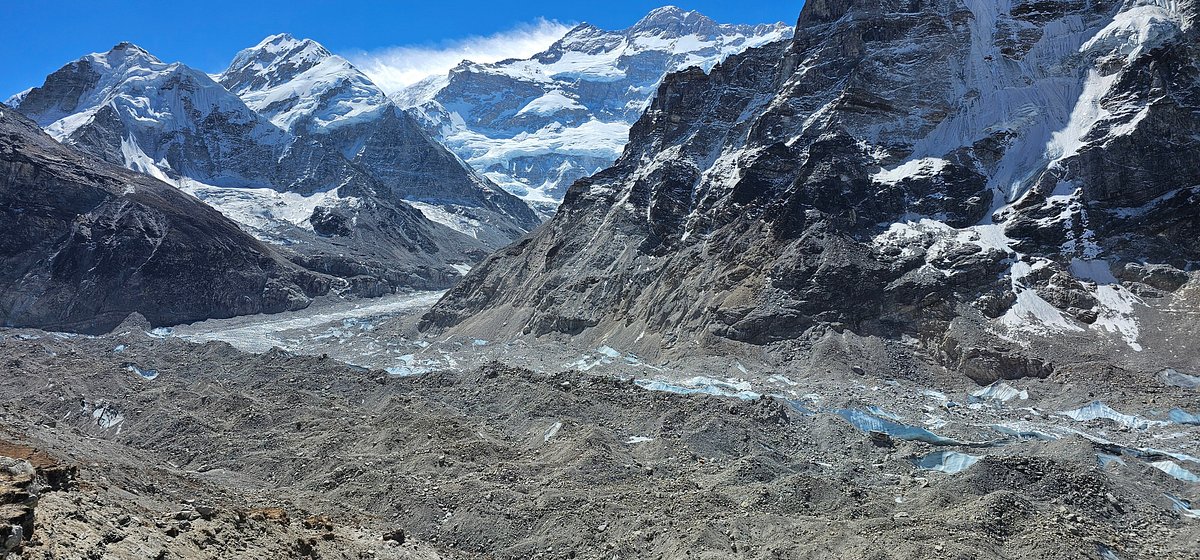
You will see forests, river valleys, isolated villages of the mountains, Alpine scenery, rugged terrain, and glaciers. The route also provides views toward the Kanchenjunga mountain range from areas around Pang Pema and Oktang. Villages such as Amjilosa, Ghunsa, Khambachen, Lhonak, Tseram, and Yamphudin provide different perspectives of life in the region. -
8. What Kind of Accommodation Is Available During the Trek?
Accommodation includes a hotel in Kathmandu and local teahouses or lodges during the trekking section. Twin-sharing rooms are normally used if available, and the bathrooms are shared. In general, facilities become more basic in remote areas, especially at higher elevations. -
9. What Kind of Food is Served While on the Trek?
Teahouses usually offer meals that are appropriate for trekkers such as dal bhat, noodles, fried rice, pasta, soup, veggies, momos, eggs, and bread. Most often, vegetarian food options are available. Tea, coffee, and other beverages are also available, while you can carry extra snacks for longer walking days. -
10. Is Altitude Sickness Possible on this Trek?
Yes. Altitude sickness is possible because the trek reaches 5,143 meters at Pang Pema. Moreover, there are several days spent at an elevation of more than 4,000 meters. An acclimatization day is scheduled at Khambachen to allow your body to adjust to the increasing elevation. It is important to keep a moderate pace, drink plenty of water, get proper sleep and follow the recommendations of your guide. -
11. What are the Symptoms of Mountain Sickness?
Common symptoms include headache, dizziness, nausea, vomiting, fatigue, loss of appetite, and difficulty breathing. You should inform your guide about any odd symptoms that you notice at high altitude. Never dismiss these symptoms as ordinary fatigue from strenuous trekking. -
12. How Can I Prevent Altitude Sickness?
Keep a moderate pace, stay hydrated, eat properly and get a good sleep. If symptoms appear or become worse, inform your guide and follow the recommended response rather than continuing without assessment. -
13. What Sort of Equipment Will I Need?
Pack layered clothing, an insulated jacket, a water-repellent and windproof jacket, trekking boots, warm socks, gloves, a cap, sunglasses, a sleeping bag, trekking poles, a headlamp, medications, and a basic medical kit. You need to pack a backpack, a duffle bag, a water bottle, sunblock cream, and some personal hygiene stuff. Your equipment must be suitable for low-altitude valleys as well as high altitudes. -
14. Do I Need any Special Gear to do Kanchenjunga Base Camp Trek?
No technical climbing gear is required for the trek. You will require high-altitude sleeping bags, thermal jackets, weather-resistant clothing, trekking poles, and trekking shoes. Gaiters or traction equipment might be helpful according to the trail condition during the season. -
15. Will I Have a Guide and Porters?
Guide trekking services may be offered to you during the trekking phase of your adventure trip. The guide will assist with navigation, pacing, trail conditions, accommodation, and altitude-related concerns. Porters will carry your main luggage, allowing you to trek with a lighter daypack. -
16. Why Do I Need a Guide For the Kanchenjunga Base Camp Trek?
The guide will assist you before and during the trek, covering aspects such as trail conditions, weather, pacing, accommodation, and altitude management. -
17. Do I Need Permits for the Kanchenjunga Base Camp Trek?
Yes. The trekking permits are needed to enter the Kanchenjunga region and are to be organized before heading to the restricted areas. The trekking agency can prepare the required permits and other documents before the trek. -
18. How Can I Get to the Kanchenjunga Trekking Area?
The journey starts with a flight from Kathmandu to Bhadrapur. After that, you will have a road journey to Taplejung and finally Sekathum, where the actual trekking will begin. After completing the trek, you will travel from Yamphudin through Kanyam to Bhadrapur and then fly to Kathmandu. -
19. How Many Hours Do I Need to Walk Each Day?
Each trekking day involves approximately 4 to 8 hours of walking, depending on the trail and changes in elevation. For instance, there will be days when you have to hike to Pang Pema and trek Oktang, which will take much more time than other days. Adjust your pace based on the weather, topography, altitude, and physical condition. -
20. Can I Make My Kanchenjunga Base Camp Trek Private Departure?
Yes. The trek can be made a private departure for single persons, couples, families, or groups of friends. A private departure offers greater flexibility regarding the departure date, group composition, walking pace, and rest stops while following the planned itinerary.
All Inclusive Cost
BOOK NOW QUICK ENQUIRY- Best Price Guarantee
- Hassle-Free Booking
- Team of highly experienced Experts
You may also like !!
Our Best Selling Packages You May Like.