EBC Trek
Overview
What to Expect on the Everest Base Camp Trek – 11 Days
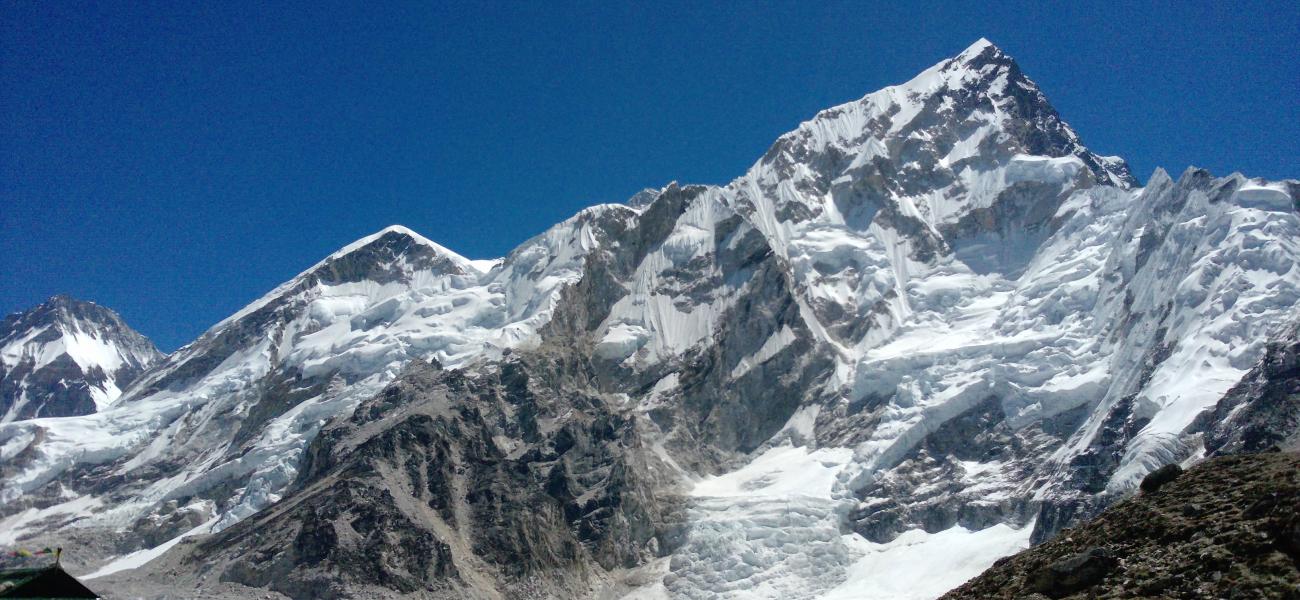
The Everest Base Camp Trek is among the world’s most famous and popular trekking expeditions that provides travelers with an unforgettable adventure in one of the most beautiful regions of Nepal known as Khumbu. In 11 days, you will be passing Sherpa villages, old monasteries, alpine forests, glacial valleys, and mountain areas until reaching the very base of the highest mountain on Earth. Although there are long walks and the trek passes through areas higher than 5,500 meters, it is not too difficult for fit trekkers. The Everest Base Camp Trek is recommended to beginners and experienced trekkers equally.- From the peak of Kala Patthar (5,545 m), the most popular spot in the Everest region, observe amazing panoramas of the mighty Mt. Everest, Nuptse, Lhotse, Pumori, and other Himalayan giants.
- Stay overnight at Gorak Shep (5,164 m), the highest overnight stop on the trekking route.
- Viewing the majestic mountain range that includes Mt. Everest, Ama Dablam, Lhotse, Nuptse, Thamserku, Pumori, Lobuche Peak, and others snow peaks of the Himalayas during the trekking experience.
- Enjoying the scenic beauty of the Sagarmatha National Park, which is a UNESCO World Heritage Site, famous for its unique flora, alpine grasslands, glaciers, and wildlife native to the Himalayas.
- Learning the native Sherpa culture through visiting the lovely villages of Phakding, Namche Bazaar, Tengboche, Dingboche, and Lobuche with their majestic mountain culture.
- The visit to Tengboche Monastery, the largest Buddhist monastery in the Everest region, located in the majestic Himalayan region.
- Cross many hanging bridges decorated with colorful prayer flags while trekking along the majestic Dudh Koshi River valley.
- Stay in cozy mountain teahouses run by local Sherpa families who will offer you a friendly atmosphere and an experience of the local way of life in the Himalayas.
- Taste delicious Nepali cuisine as well as various types of food offered in teahouses in order to get enough energy during the hike.
- Experience amazing Himalayan sunrises and sunsets, as the snowy peaks look fantastic with the play of colors like orange, pink, and golden.
Extra Highlights of the Everest Base Camp Trek – 11 Days
Apart from scaling Kala Patthar and witnessing the amazing views of the Himalayas, the Everest Base Camp Trek also offers many other exciting things that will surely make your experience unique. Every day spent there gives new views, new people to meet, and amazing mountain views. Here are just some of those other exciting things that make this trek one of the best Himalayan treks in Nepal.- Take a beautiful mountain flight around the world from Kathmandu to Lukla and see the beautiful views of the Himalayas.
- Walk in the ancient settlements occupied by the Sherpas who used them as their trade and mountaineering camps for many years.
- Watch beautiful colorful prayer flags, mani walls, chortens, and Buddhist sculptures along the trail of the trek.
- Witness the amazing transformation from evergreen forest with pines and rhododendrons to the alpine zone with glaciers and mountains.
- Wake up in the morning with fresh Himalayan air around and snow-covered mountain peaks.
- Look for Himalayan wildlife such as musk deer, Himalayan monals, pheasants, and yaks grazing at mountain slopes.
- Enjoy cozy dining rooms of teahouses where trekkers from around the world gather to share stories and experiences with each other.
- Get acquainted with Sherpa traditions, Buddhism, local festivals, mountaineering history, and the unique life of people of the Everest region.
- Enjoy crystal clear sky filled with an endless number of stars far from the hustle and bustle of the city.
- Discover Sagarmatha National Park with its rich ecosystems and unique Himalayan plants and animals living on some of the highest mountains in the world.
- Get breathtaking photographs of Mt. Everest and its majestic Himalayan surroundings from some of the most picturesque viewpoints on Earth.
- Experience a great sense of achievement while trekking through one of the most legendary mountain areas and getting to the feet of the Himalayas.
Best Time for the Everest Base Camp Trek
The best time for the Everest Base Camp Trek is either in spring (March to May) or in autumn (September to November). This period allows for relatively stable weather, comfortable temperatures, and impressive views of the mountains, which creates perfect conditions for trekking around the Everest area. In addition, during these months, trails are in great shape, and the views of Mt. Everest and other Himalayan peaks are splendid. However, although it is also possible to do the trek in winter and monsoon season, special preparations for the trip should be made in view of the colder temperatures or changeable weather.- Spring (March-May): Spring provides pleasant temperature of the days, blossoming rhododendron forests at lower altitudes, and good visibility in the whole area of Khumbu. Due to the impressive views and comfortable weather conditions, spring is among the busiest and best seasons for the Everest Base Camp Trek.
- Autumn (September-November): Autumn is regarded as the best trekking season in Nepal. Having passed the monsoon rains, the sky becomes clear, the trails are dry, and weather conditions are stable. As a result, cool mountain air and good visibility ensure the best views of Mt. Everest, Ama Dablam, Lhotse, Nuptse, and the whole Himalayas.
- Winter (December-February): Winter provides calm trekking trails that have fewer trekkers than other seasons of the year and allow for a peaceful experience of the mountains. Despite the extreme coldness in high-altitude areas, like Dingboche and Gorak Shep, the snow-covered mountains and excellent views of the Himalayas attract the attention of trekkers.
- Monsoon (June-August): The lower part of the Everest area becomes lush and green due to rains during the monsoon season, but the trail itself becomes slippery, and the visibility is poor. Despite the occasional rainfalls, cloudy skies, and sometimes flight delays to Lukla, the trekkers who prefer quiet trails are able to visit the area.
Trek Accommodation and Meals on the Everest Base Camp Trek – 11 Days
During the Everest Base Camp Trek, you will have comfortable accommodation and freshly cooked food to ensure your trip in the Himalayas is enjoyable and fruitful. Even though facilities will become more basic with rising altitude, the warm hospitality of the Sherpas and cozy atmosphere of mountain teahouses will make your trekking adventure unforgettable. Your meals will be prepared to supply you with the energy for trekking days and at the same time will offer a variety of dishes, Nepali and international cuisine.- Have comfortable hotel accommodation in Kathmandu before the trek to get well-rested and prepared for the trip into the Himalayas.
- Have comfortable accommodation in twin-sharing teahouses during the whole trek through the Everest region, staying in basic rooms with very basic facilities.
- Relax in cozy dining halls where trekkers from all over the world come to eat their warm meals, share their stories, and prepare for the next day.
- Start the day with a breakfast consisting of eggs, porridge, pancakes, toast, Tibetan bread, muesli, chapati, and different types of hot drinks.
- Have freshly cooked lunches and dinners consisting of dal bhat, fried rice, noodles, pasta, soup, potatoes, momos, curry, seasonal vegetables, and other energy foods suitable for high-altitude trekking.
- Buy hot drinks – tea, coffee, ginger tea, lemon tea, peppermint tea, and hot chocolate – to stay warm in the cold mountain air.
- Have vegetarian food options among numerous choices offered in most teahouses, as fresh meals of vegetarian cuisine are prepared in all of them using available products.
- See how the food menu becomes simpler in the places where it is hard to bring supplies, mainly around Lobuche and Gorak Shep, but still, there will be freshly prepared food there.
- Get a safe drinking water supply by filling up water bottles at teahouses and by using water purification tablets or water filters in order not to generate plastic trash during the trek.
Cultural Experiences During the Everest Base Camp Trek – 11 Days
The Everest Base Camp Trek is an extremely diverse tour not only because of the unique Himalayan landscape but also thanks to the possibility to explore the culture and traditions of the Sherpa nation. During this expedition, you get the chance to see traditional mountain villages, ancient Buddhist temples, and religious objects which have been part of the life of the Sherpa people for hundreds of years. This tour gives an insight into Sherpa culture, Buddhism, mountaineering history, and the lifestyle of the residents of the Everest region.- Get acquainted with traditional Sherpa villages like Phakding, Namche Bazaar, Tengboche, Dingboche, and Lobuche and feel the unique mountain hospitality of Himalayan people.
- Read about the culture, customs, religion, festival celebrations, mountaineering culture, and way of life that have been developed in the Everest area over the years.
- See traditional stone houses, temples, terraced farms, and mountain villages with beautiful architecture.
- Watch traditional prayer flags, mani walls, chortens, prayer wheels, and other symbols of Buddhism religion on the trekking trail.
- Visit Tengboche Monastery - the spiritual hub of the Khumbu region and take part in a traditional Buddhist prayer ritual against a magnificent background of high mountains.
- Feel the warm hospitality of traditional teahouses run by Sherpa families and taste food prepared by your hosts.
- Try the dishes of genuine Nepalese and Sherpa food, using the locally cultivated vegetables and fruits and get knowledge about their food culture.
- Interact with the locals and learn about their lifestyles through agricultural and yak herding activities, tourism and other forms of livelihood.
- Get information about the history of the expeditions on Mt. Everest and the contribution of Sherpa mountaineers and guides to the development of mountaineering in the Himalayas.
- Learn about the special way of living of the people of Khumbu Valley with their Buddhist culture and sustainable tourism.
Trekking Difficulty of the Everest Base Camp Trek – 11 Days
The Everest Base Camp trek is known as a moderately challenging to challenging trek in the Himalayas and is therefore appropriate for physically fit and determined people. Despite the fact that this trek does not require any technical knowledge of mountaineering, it will include several consecutive days of high-altitude walking, climbs, descents, and walking on rocky trails, with thin mountain air above 5,000 meters. With appropriate preparation, a proper itinerary, and the help of experienced guides, physically fit people will be able to complete this impressive adventure in the Himalayas.- For physically fit beginners and experienced trekkers who are ready for several days of high-altitude trekking.
- You should expect to spend about 5 to 8 hours per day depending on the destination, condition of the trails, weather and walking pace of your group, with regular stops to rest and take photographs.
- Climbing to Kala Patthar (5,545 m) is going to be the most challenging part of the trek because of its steepness and much lower concentration of oxygen.
- Trek along different types of landscape including forest trails, rocky trails, glacial moraines, suspension bridges, mountain villages, river valleys and alpine landscapes in the Everest region.
- Be prepared for high altitude effects, which mean less oxygen in the air and a slower walking pace above 4,000 meters altitude.
- Take advantage of the carefully designed itinerary, which includes gradual altitude rise and an acclimatization day.
- No technical skills or special mountaineering equipment are needed in order to complete this trek if you have good physical fitness, preparation and trekking gear.
- Enhance your trekking experience by preparing in advance with some regular hiking, walking, stairs climbing, cycling or cardio exercises several weeks before your trip.
- Complete this trek safely with a comfortable pace, drinking enough water, eating healthy food, taking the advice of your guide and being attentive to the reaction of your body to the altitude.
Permits Needed for the Everest Base Camp Trek
All trekkers are required to obtain the necessary permits before entering the Everest region. These permits help protect the natural environment, support local communities, and maintain the trekking infrastructure within the protected areas. If you book your Everest Base Camp Trek with Nepalaya Treks Adventure, we will arrange all the required permits before your trek begins, allowing you to focus entirely on your Himalayan adventure.- Sagarmatha National Park Permit: All trekkers wishing to enter Sagarmatha National Park, a UNESCO World Heritage Site which includes Mt. Everest as well as several other renowned mountains of the Himalayas, require a Sagarmatha National Park Permit. This is priced at NPR 3,000 (including VAT) for foreign nationals and NPR 1,500 for SAARC nationals. It can be obtained from the Nepal Tourism Board Office in Kathmandu or at the park entry gate in Monjo. A valid passport and Nepal visa are required when applying.
- Khumbu Pasang Lhamu Rural Municipality Entrance Permit: This local permit is mandatory for all trekkers entering the Khumbu region. It has replaced the former TIMS Card requirement for most Everest treks. The permit costs NPR 3,000 per person for the first four weeks and can be obtained at the permit counter in Lukla or Monjo before entering the trekking route.
Travel Insurance for the Everest Base Camp Trek
The Everest Base Camp Trek reaches an altitude of 5,545 m at Kala Patthar, making comprehensive travel insurance essential for every trekker. As a result of the high altitude, mountainous terrain and Himalayan weather, certain risks may arise, which include altitude sickness, injuries, flight delays or emergency evacuations. Therefore, purchasing appropriate travel insurance prior to your travels will guarantee your security financially and psychologically during the Himalayan adventures.- Travel insurance should cover you during your trekking up to 5,600 meters. Thus, making sure that you are properly insured during the entire Everest Base Camp Trek.
- Make sure that your travel insurance includes emergency helicopter evacuation, in case Acute Mountain Sickness (AMS) or injuries appear, and road transportation is not available.
- Your insurance should cover all of your expenses concerning healthcare, such as hospitalization, consultation with a doctor, drugs, and other costs related to healthcare during the trekking.
- Choose a policy which covers your trip cancellation, trip interruption, and travel delays, as flights between Kathmandu and Lukla are very sensitive to weather conditions.
- Your insurance policy should cover your luggage in case of damage or loss.
- Print out and keep in your pocket your travel insurance policy, emergency contacts, and emergency assistance number provided by your insurance company during the entire trekking.
- Make sure that your travel insurance policy covers your activities during the trekking in Nepal up to the highest point you will reach, for instance, Kala Patthar 5,545 m.
Safety on the Everest Base Camp Trek – 11 Days
Your safety is our highest priority throughout the Everest Base Camp Trek. Although this trek does not require technical climbing or mountaineering experience, reaching Kala Patthar at 5,545 m requires proper planning, gradual acclimatization, and professional guidance. Nepalaya Treks adheres to all safety procedures, which will make sure that your trek is safe, comfortable and enjoyable from your arrival in Kathmandu up to your departure from Nepal.- Trained, government-licensed, and experienced trekking guides will guide you throughout the route, taking care of your safety as well as providing professional guidance on the route.
- The trip plan is made in such a way that there is a gradual increase in height with one acclimatization day in Dingboche.
- Your health check-up is done regularly during the whole trek by your guide, who checks your general condition and uses a pulse oximeter in case you need it.
- The guide has an ample first aid kit with him on the trek route, thus making possible the treatment of any minor injuries or diseases, common among trekkers.
- Our guides have been trained to recognize the symptoms of AMS at the earliest possible point, and they immediately take appropriate action like resting, descending, or evacuating you to hospitals.
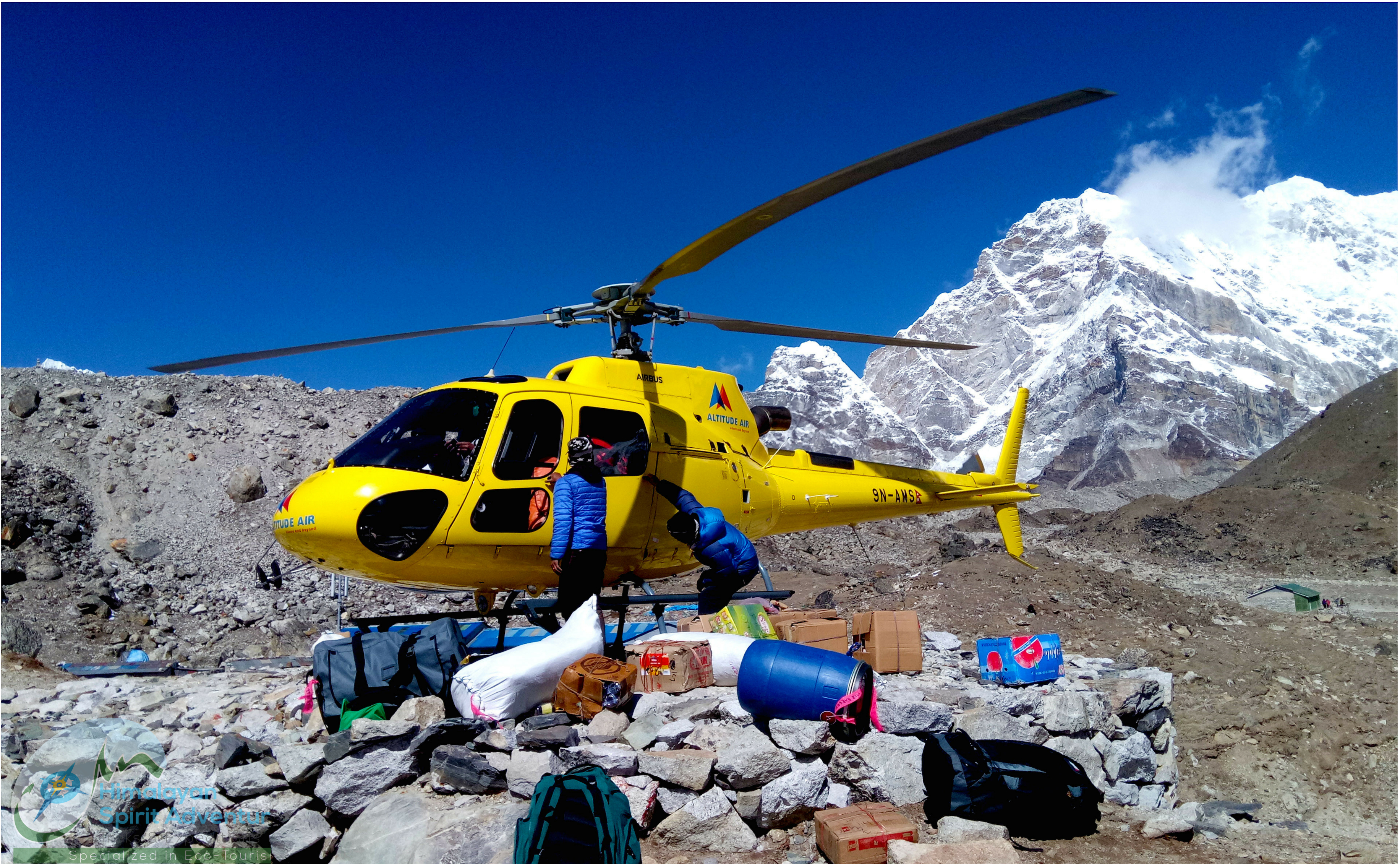
- Emergency helicopter evacuation can be arranged if needed, provided that your travel insurance allows it, as well as weather conditions.
- The guide makes changes in the itinerary as and when required, based on daily weather forecasts and trail conditions so as to avoid harsh weather, snowstorms, landslides or anything else hazardous to you.
- Proper hydration, walking pace, healthy food, rest and following the instructions of your guide are very important to reduce exhaustion and acclimatize properly.
Altitude and Acclimatization on the Everest Base Camp Trek – 11 Days
The highest elevation in the Everest Base Camp Trek is Kala Patthar (5,545 m), which is one of the finest viewpoints in the Everest region. Now that you are climbing over 5,000 meters, it is important that you get used to altitude so that you have a safe trip overall. You will plan out your trip in such a way that you will have a gradual hike along with one acclimatization day in Dingboche. Your guide will be with you all through the way to see how physically fit you are.Get to the highest spot on the route at Kala Patthar (5,545 m), where acclimatization is required to get the beautiful view of the Himalayas.
- Trekking at a properly arranged itinerary that includes a gradual trekking route will give you the opportunity to acclimatize yourself all along during the Everest trek.
- Sleeping at increasing altitudes with a separate acclimatization day at Dingboche will help you reduce the possibility of contracting AMS.
- Enjoy the trekking expedition with the supervision of an experienced trekking guide who will be present to monitor your health all along the way.
- Check out the oxygen saturation level and heart rate of your body with the aid of a pulse oximeter throughout your trekking journey.
- Adhere to the advice of your guide when you start experiencing any signs of AMS; you could either rest, descend or arrange for emergency evacuation.
- Hydration, a healthy diet, and walking at an easy speed will help to facilitate acclimatization.
- Make sure to inform your guide if you start having any symptoms of altitude sickness such as headache, dizziness, nausea, loss of appetite, tiredness, and difficulty breathing.
Why Trek with Nepalaya Treks?
The trekking company that you choose for an EBC trekking adventure has a great impact on what your expedition will be like. The Nepalaya Treks Adventure Company aims to provide you with a unique and exciting adventure in the Everest region from the time you arrive in Nepal to the last day of departure. We ensure to plan everything to give you an adventurous, memorable and safe experience.- Hike with experienced and licensed guides who have ample knowledge about the Everest region and guide you through the entire trekking journey with professionalism.
- Make use of the assistance provided by guides and porters who are experienced in their work. They will ensure that everything about your trekking trip is arranged in such a manner that you are able to enjoy yourself.
- Enjoy comfortable accommodation throughout your trekking experience from comfortable hotels in Kathmandu to mountain teahouses managed by the Sherpas.
- Go trekking in small groups for a more personalized experience, more flexibility, individual attention from your guide and a more comfortable walking pace.
- Leave the logistics to us, and we take care of all the necessary things like trekking permits, internal flight tickets, airport pickup and drop-off, accommodations, etc.
- Get free trekking equipment with our packages, which includes a sleeping bag, down jacket, duffle bag and trekking pole and save money from packing and traveling comfortably.
- Enjoy trekking with utmost security; we always keep the well-being of our clients as top priority. Our guides keep a constant watch on their health condition and use the pulse oximeter to check the oxygen saturation and heart rate.
- Get round-the-clock customer service before, during and after the trekking. Our customer service team works 24 hours and is ready to solve your queries and problems.
- Get a complete EBC trekking package with clear pricing, a transparent package and without any hidden charges.
- Travel with an environmentally responsible and sustainable tourism operator.
Why Choose This Itinerary?
The Everest Base Camp Trek itinerary in just 11 days has been perfectly planned to combine elements of adventure, comfort, and safety. This itinerary takes you on one of the world's most famous trekking trails while providing enough time to admire the majestic Himalayan views and the unique culture of Sherpas, as well as giving your body enough time to get accustomed to the changing elevations.- Follow a well-planned itinerary which includes moderate increases in elevation levels and a dedicated acclimatization day in Dingboche to allow your body to adapt to the changes gradually.
- Make it to Kala Patthar (5,545 m), which is the most famous spot in the Everest region, offering you a chance to have fantastic views of Mt. Everest and its surrounding peaks.
- Have a mountain flight from Kathmandu to Lukla, where you will be flying over the beautiful peaks of the Himalayan Range.
- Take part in a trekking adventure that will appeal to both physically fit beginners and experienced trekkers due to its perfectly planned itinerary focused on providing safety and comfort.
- Enjoy yourself in comfortable lodging, which consists of luxurious hotels located in Kathmandu along with traditional mountain teahouses managed by the local Sherpa community.
- Enjoy some of the best views you will ever see of some of the most famous mountains like Mt. Everest, Lhotse, Nuptse, Ama Dablam, Pumori, Thamserku, and many more on your treks.
- Experience the culture of the Sherpa people in some of their mountain villages like Phakding, Namche Bazaar, Tengboche, Dingboche, Lobuche, and Gorak Shep.
- Trek under the guidance of some highly experienced and local guides.
Responsible Tourism
Here at Nepalaya Treks Adventure, we strongly believe that responsible tourism is of great importance when it comes to maintaining the beauty of the Everest region for the upcoming generations. We ask each of our trekkers to become responsible tourists who will respect the environment of the Himalayas, support the local community and respect the traditions of the Sherpas. Responsible actions during your tour will help you protect Sagarmatha National Park and give opportunities for the upcoming generations to visit this beautiful place.- Respect the local customs, traditions and religion by wearing appropriate clothing and seeking permission before taking pictures of locals; be respectful while visiting monasteries, chortens, mani walls and other sacred places.
- Take a water bottle that is not one-use. Refill your water bottles in teahouses or special stations which offer drinking water. Take some purification tablets or a water filter.
- Properly dispose of the waste in the special rubbish bins; never throw garbage on the trail or in mountain villages.
- Walk along marked trekking routes in order not to contribute to erosion and protection of fragile alpine ecosystems of Sagarmatha National Park.
- Support the local community by staying in teahouses run by locals, buy souvenirs made by locals, and consume local products and services where possible.
- Use water and electricity properly as these important resources are limited in remote Himalayan villages.
- Respect the wildlife and environment by watching the animals from a safe distance and do not harm the plants, forest, and alpine vegetation.
- Listen to the guide concerning environmental issues and local customs, responsible trekking.
- Apply the "Leave No Trace" principles.
Group Size
Everest Base Camp Trek can be arranged both for individual travelers and big group trekkers. Whichever you belong to, whether you have traveled alone, as a couple, family, friends, or part of a bigger group, Nepalaya Treks Adventure guarantees a safe and joyful adventure into the Everest region.- Enjoy our assured departures with as low as a minimum of one participant, allowing solo travelers to start the trek even in the absence of further bookings or any threat of trip cancellation.
- Our Everest Base Camp Trek is perfect for solo trekkers, couples, families, friends groups, or private groups looking for tailor-made trekking according to their travel style and preference.
- Our smaller group trek allows travelers to have personalized attention from their guide, walk at their comfort level of pace, and give enough time for picture taking and sightseeing during the trip.
- For bigger groups, there are fully supported services provided by licensed government trekking guides, experienced porters, and other necessary trekking crew members.
- For groups of eight participants or more, an assistant guide will accompany you along with the trekking guide and other necessary staff for better group management and improved safety along the trail.
- Walk at the desired pace under your trekking team’s supervision with regular breaks for acclimatization, food intake, photographing, and relaxation.
- Have a private group departure according to your choice of travel dates, pace of trekking, accommodation facilities, and other special preferences.
Private Departure Available
If you would like to experience a personalized adventure in the Himalayas, we have the option of a private departure for the Everest Base Camp Trek – 11 Days. With the help of a private trek, you will get the chance to trek through the Everest area on your own terms without being part of a large group of people. In other words, you will travel alone with your family or friends or any person of your choice.- Ideal for solo travelers, couples, families, corporate teams, and all kinds of private groups wanting to customize their trekking experience.
- Choose your preferred date of departure to plan your Everest trek according to your own schedule.
- Get a flexible itinerary which can be adjusted, wherever possible, as per your group’s speed of hiking, photography breaks, acclimatization requirements, and preferences.
- Get the benefit of the personal attention and flexibility provided by your trekking guide.
Equipment Rental Information
If you do not have all the needed trekking equipment, you have nothing to be afraid of. All important pieces of trekking equipment can be easily hired in Kathmandu prior to starting your trekking expedition to the Everest Base Camp. Nepalaya Treks Adventure can help you hire all the needed and good-quality pieces of equipment at affordable prices, saving your luggage space and providing you with all the necessary equipment for trekking in the difficult climatic conditions of the Everest region.- You can rent such basic pieces of trekking equipment like sleeping bags, down jackets, trekking poles, duffel bags and so on through Nepalaya Treks Adventure, some of which are provided free of charge in your trekking package.
- You can rent additional trekking equipment in reputable trekking shops in Kathmandu, including trekking boots, backpacks, gaiters, microspikes (in case of winter conditions and when it is required), crampons (when it is needed due to heavy snowfalls) and other trekking accessories that you need for trekking in the Everest region.
- Make sure that you hire high-quality equipment that is regularly cleaned, checked and serviced.
- It is important to check the size and the quality of the equipment that you hire before your departure to make sure that it will be comfortable enough for you during many days of high altitude trekking.
- You should take all your personal equipment, including thermals, gloves, trekking socks, base layers and other personal clothes, as they are not usually available for hire and better to choose them yourself according to your preferences.
- If you have comfortable and well-broken-in trekking boots, it is strongly recommended to take them because well-fitted trekking boots reduce your chance of having blisters significantly and make your trekking more comfortable.
- You can consult your trekking guide about additional equipment, replacements or recommendations of what to rent or buy in advance before your arrival in Lukla.
Trip Highlights
- Enjoy the hospitality of the Sherpa community, staying in their teahouses.
- Teahouse accommodation and acclimatizing in Dingboche village before the high-altitude trekking starts.
- Discover the famous Tengboche monastery, which is the largest monastery in the region of Mt. Everest.
- Trek through the well-known Sherpa villages of Phakding, Namche Bazaar, Tengboche, Dingboche, and Lobuche.
- Cross iconic suspension bridges on the Dudh Koshi River, which is embellished with colorful prayer flags.
- Trek through Sagarmatha National Park (a UNESCO World Heritage Site) and viewing Himalayan flora and fauna.
- Admire the awe-inspiring views of Mt. Everest, Lhotse, Nuptse, Ama Dablam, Pumori, Thamserku, besides numerous other stunning peaks of the Himalayas.
- Overnight stay at Gorak Shep (5,164 m) on the trekking route.
- Reach Kala Patthar (5,545 m) for an ideal panoramic view of Mt. Everest.
- Experience the legendary Everest Base Camp Trek through the heart of the Khumbu region.
Itinerary
Day 1: Arrival in Kathmandu (1,400 m)
Upon reaching Tribhuvan International Airport in Kathmandu, one of our members will meet you and guide you to your hotel. As you drive through the lively streets of the Nepalese capital city, you will have the opportunity to see for yourself how the culture of Nepal mixes with the urban setting. Having checked in at your hotel, you are free to relax after your long international flight or just go for a walk through the busy streets of Thamel, an area popular among tourists, which offers plenty of cafes, restaurants, souvenirs and trekkers' equipment shops.
In the evening, you will have a briefing with your trekking guide. Here, you will learn all the details about the trekking route, altitude safety and weather conditions, and ask whatever questions you may have. Your trekking gear will be checked to make sure that you are ready for the trek. And to mark the start of your Himalayas trip, have a traditional Nepali dinner while meeting fellow trekkers joining the adventure on the way to Everest.
- Max Elevation: 1,400 meters (Kathmandu)
- Travel Hours: 20–30 minutes
- Accommodation: 3-Star Hotel
- Meals: Dinner
Day 2: Fly to Lukla (2,840 m) and Trek to Phakding (2,610 m)
Day 3: Trek from Phakding to Namche Bazaar (3,440 m)
Day 4: Trek from Namche Bazaar to Tengboche (3,860 m)
Day 5: Trek from Tengboche to Dingboche (4,410 m)
Day 6: Acclimatization Day in Dingboche
Day 7: Trek from Dingboche to Lobuche (4,910 m)
Day 8: Trek from Lobuche to Gorak Shep (5,164 m)
Day 9: Hike to Kala Patthar (5,545 m) and Trek to Pheriche (4,240 m)
Day 10: Trek to Lukla (2,840 m)
Day 11: Final Departure
Inclusion / Exclusion
Inclusion
- Airport pickup and drop-off services.
- One night's accommodation in a 3-star hotel in Kathmandu on a twin-sharing basis.
- Welcome dinner at a traditional Nepali restaurant.
- Flight from Kathmandu to Lukla.
- Flight from Lukla to Kathmandu.
- Meals during the trek (breakfast, lunch, and dinner).
- Twin-sharing teahouse accommodation throughout the trek.
- Licensed English-speaking trekking guide.
- Porters (as per group size).
- Sagarmatha National Park Entry Permit.
- Khumbu Pasang Lhamu Rural Municipality Entrance Permit.
- All wages, meals, accommodation, equipment, medical expenses, and accident insurance for the trekking staff.
- Comprehensive first aid kit carried by the trekking guide.
- Complimentary Nepalaya Treks duffel bag, trekking T-shirt, or cap.
- Emergency oxygen cylinder with mask and regulator carried by the guide (usage charges apply only if the oxygen is required).
Exclusion
- International airfare to and from Nepal.
- Nepal entry visa fees.
- Personal travel insurance covering trekking at high altitudes, emergency medical care and helicopter evacuation.
- Lunch and dinner during the stay in Kathmandu.
- Personal trekking equipment and gear.
- Personal costs including drinking water, soft drinks, alcohol, snacks, laundry, telephones, internet, battery charging, etc.
- Tipping the trekking guides, porters and other support personnel.
Check List
The Everest Base Camp Trek needs proper preparation and proper trekking equipment for the successful accomplishment of the trek. The trek begins from the busy city of Kathmandu and leads one through green forests, traditional Sherpa settlements, alpine regions, glaciated areas, and finally to Kala Patthar (5,545 m), which is the highest altitude of the trek. The climate changes very quickly in the Himalayas, especially at altitudes higher than 4,000 m, where temperatures may fall below zero. Warm and waterproof clothes along with the proper trekking equipment are needed for comfort during the trek. The following is the list of items that should be packed for the trek.
General
- Four-season sleeping bag
- Down jacket
- Duffel bag
- Windproof and waterproof lightweight jacket
- Daypack (25-35 liters)
- Rain cover for your backpack
- Headwear and Accessories
- Warm hat that covers your ears
- Sun hat or cap
- Neck gaiter or buff
- UV-protected sunglasses
- Headlamp with extra batteries
- Sunscreen (SPF 35-60)
- Lip balm with SPF
Hands
- Lightweight trekking gloves
- Warm insulated gloves
- Waterproof outer gloves (recommended during spring, autumn, and winter)
Upper Body Clothing
- Moisture-wicking long-sleeve trekking shirts
- Thermal base layer
- Fleece jacket or wool sweater
- Insulated down or synthetic jacket
- Waterproof and windproof outer shell jacket
- Sports bra (for female trekkers)
Lower Body Clothing
- Thermal leggings or base layer pants
- Waterproof and windproof trekking pants
- Fleece pants for colder elevations
- Comfortable trekking pants
- Lightweight casual pants for evenings
- Undergarments
Footwear
- Waterproof trekking boots with good ankle support
- Comfortable sandals or camp shoes
- Lightweight sneakers (optional for Kathmandu)
- 4-5 pairs of warm trekking socks
- Sock liners (optional)
Personal First Aid and Medications
- Personal prescription medications
- Adhesive bandages
- Blister treatment supplies
- Pain relievers (Ibuprofen or Paracetamol)
- Diamox (only if prescribed by your physician)
- Antiseptic cream
- Anti-itch or insect bite cream
- Water purification tablets
- Toiletries and Personal Care
- Toothbrush and toothpaste
- Biodegradable soap and shampoo
- Hand sanitizer
- Wet wipes
- Toilet paper
- Quick-dry towel
- Nail clipper
- Waterproof bags for wet clothes and waste
Important Documents
- Original passport
- Four passport-size photographs
- Nepal entry visa (if applicable)
- Travel insurance documents
- Flight tickets or travel itinerary (printed and digital copies)
- Emergency contact information
Electronics
- Power bank
- Mobile phone
- Camera with memory card
- Extra camera batteries
- Charging cables
- Universal travel adapter
- Smartwatch or GPS device (optional)
Optional Items
- Trekking poles
- Reusable water bottle or hydration bladder
- Portable water filter or purifier
- Energy bars, nuts, or dried fruits
- Notebook and pen
- Playing cards or a small book
- Earphones or headphones
- Binoculars (optional)
Trip FAQs
-
1. Is the Everest Base Camp Trek suitable for beginners?
Yes, the Everest Base Camp Trek is ideal for novice trekkers as long as you have enough physical fitness and are willing to trek in the high altitudes for a few days. Although the trek will take you up to Kala Patthar, which is located at 5,545 m in height, you do not require any skills in climbing or mountaineering. If you prepare well, you will easily be able to complete the trek. -
2. How can I prepare for the Everest Base Camp Trek?
You can prepare for this trek through walking, hiking, jogging, cycling, stair climbing, and other cardiovascular activities a few weeks before the trek. Endurance and strong legs are advised. It is always a good idea to break in your trekking boots prior to the trip, along with keeping appropriate clothes for different weather, and living healthy before you land in Nepal. -
3. Which permits do I require for the Everest Base Camp Trek?
You will require a Sagarmatha National Park Entry Permit and Khumbu Pasang Lhamu Rural Municipality Entrance Permit. While booking your trek with Nepalaya Treks Adventure, we take care of your permits. -
4. How difficult is the Everest Base Camp Trek?
The difficulty level of the Everest Base Camp Trek ranges from moderate to difficult. On average, you will hike for about 5 to 8 hours per day on forest, rock, suspension bridges, glacier, and high mountain trails. Even at such high altitudes in the trek, the trek can be undertaken if you are fit and well prepared. -
5. What is the highest altitude covered during the trek?
The highest point that you will reach while trekking is Kala Patthar (5,545 m), which gives you an amazing view of Mt. Everest, Lhotse, Nuptse, Pumori, and others in the Himalayan Range. -
6. What kind of accommodation will be provided in the trek?
Before you set out on the trek, you will have to spend some days in a hotel in Kathmandu. During the trek, you will stay in local mountain teahouses in twin-sharing rooms with basic facilities. The cozy dining halls and warm Sherpa hospitality make the experience comfortable despite the simple accommodations. -
7. What meals are provided during the trek?
The teahouses will give you fresh food such as dal bhat, fried rice, noodles, pasta, soups, potatoes, momos, curries, fresh vegetables, and other healthy foods. In the morning, you will be able to have porridge, eggs, pancakes, Tibetan bread, toast, tea, coffee, and other healthy foods. -
8. Is drinking water available along the trekking route?
Yes. Drinking water will be available all the way along the trekking route. Your water bottle can be filled from teahouses, and you will be able to purify the drinking water via tablets or filters. -
9. Is there a risk of altitude sickness during the Everest Base Camp Trek?
Yes. As the trek goes up to the height of 5,545 m, there will be a chance of having Acute Mountain Sickness (AMS). The trip will have an acclimatization day in Dingboche, and your guide will monitor your health to help prevent altitude sickness. -
10. When is the best time to do the Everest Base Camp Trek?
Springtime, which is from March to May and autumn time, which is from September to November, are the best times for the Everest Base Camp Trek because at these times the weather, temperature, visibility, and sightseeing are perfect. -
11. What should I pack for the Everest Base Camp Trek?
You should pack moisture-wicking clothes, thermal clothes, down jackets, waterproof clothes, trekking shoes, gloves, a warm cap, sunglasses, sunscreen, toiletries, personal medicines, water bottles, and other equipment required for trekking. Some trekking gear will be supplied by Nepalaya Treks Adventure as part of their package. -
12. Is it possible to hire trekking gear in Kathmandu?
Yes. There are plenty of trekking gear stores available in Kathmandu from which one can rent sleeping bags, down jackets, trekking poles, backpacks, etc. Nepalaya Treks Adventure will also be able to help in arranging the rental equipment prior to starting the trek. -
13. Do I get a guide and a porter for my trek?
Yes. The trek will be guided by a licensed English-speaking guide who will manage all the logistics and ensure your safety, besides offering you some useful information about the Everest region. Porters will carry your main duffel bag, enabling you to trek only with your daypack. -
14. How much weight can a porter carry?
A porter usually carries 20–25 kg for two trekkers, allowing each trekker around 10–12 kg of personal luggage. Usually, each trekker will be allotted 10 to 12 kilograms of baggage in his duffel bag, whereas other personal items like drinking water, snack foods, camera gear, and extra clothes will be carried in a daypack. -
15. Is there Wi-Fi connectivity on the trek to Everest Base Camp?
Yes. Most of the teahouses on the trek to Everest Base Camp offer Wi-Fi services at extra cost. It varies from place to place regarding its availability and connectivity depending upon the location, altitude and weather. -
16. Can I charge my electronic devices?
Yes. Usually, the teahouses offer charging services for electronic devices for extra charges. Usually, the charging cost goes up according to the elevation because power sources for most teahouses are through solar power and hydro power plants. -
17. Why do trekkers going to the Everest Base Camp fly to Lukla?
Lukla is the primary entry point to the Everest region, and there are no roads that can link Lukla to Kathmandu. This is the quickest route to begin the trekking to the base camp of Everest. -
18. Are Lukla flights subject to delay or cancellation?
Yes, Lukla flights are very weather-dependent. Windy and rainy weather conditions might cause delays or cancellation of the flights. It is advisable to plan an extra 1 to 2 buffer days for your trip just in case. -
19. How much luggage do I need to check on the Lukla flight?
Most airlines which operate flights to Lukla provide each passenger with approximately 15 kg luggage allowance per person, including checked baggage and hand luggage. If you have extra weight, then there may be some extra baggage fees. -
20. What do I do if my Lukla flight is canceled?
In case your plane is cancelled for whatever reason, the trekking firm will arrange an alternative flight for you. Helicopters can be utilized in case of emergencies as well, although at a little bit higher price.
Overview
Nayan Jadnanansing
Netherlands

All Inclusive Cost
USD 2945
Per Person
BOOK NOW QUICK ENQUIRY- Best Price Guarantee
- Hassle-Free Booking
- Team of highly experienced Experts
You may also like !!
Our Best Selling Packages You May Like.