Annapurna Base Camp Trek Difficulty, Height and Fitness Guide
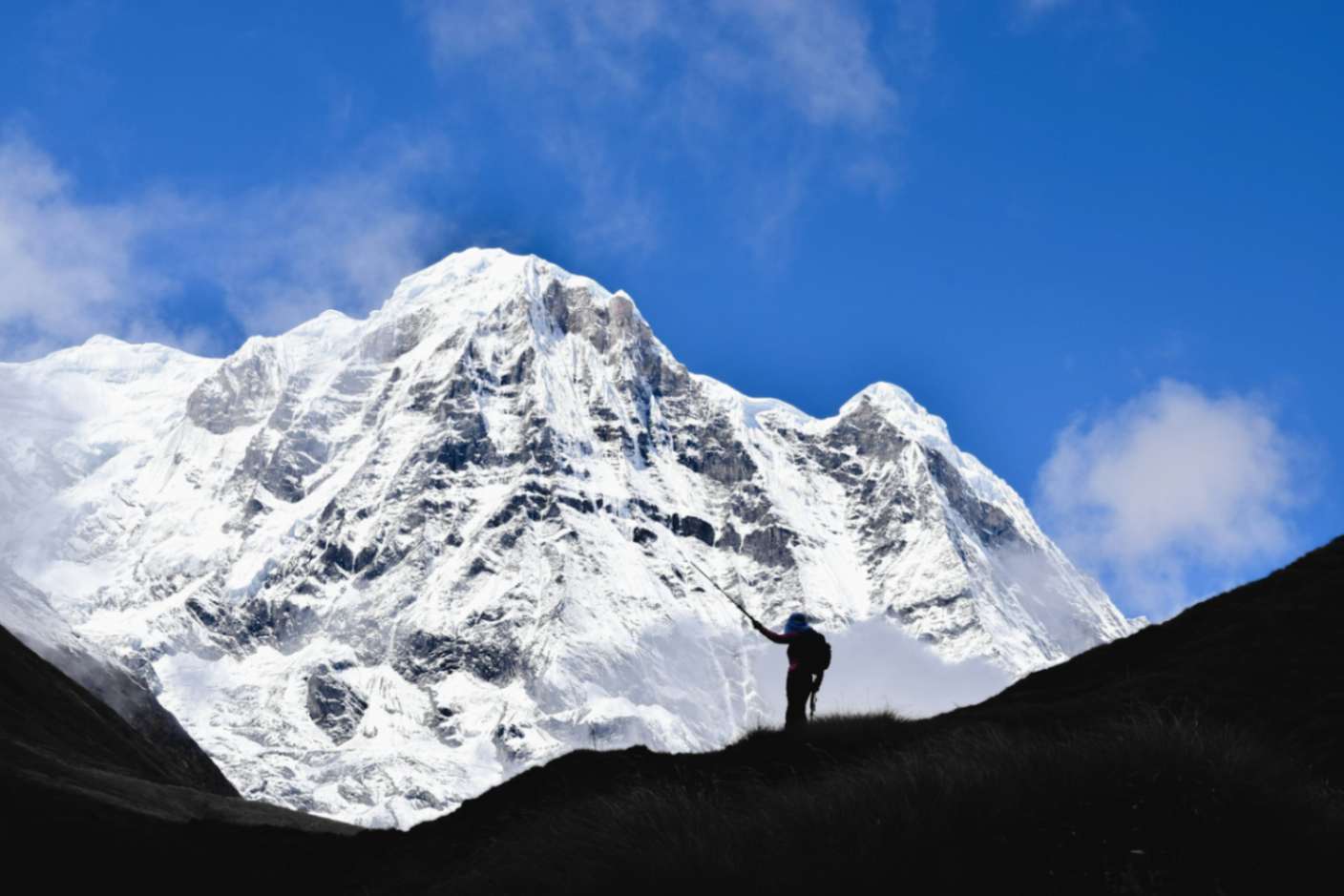
The Annapurna Base Camp Trek, also known as the ABC Trek, one of the most famous treks in Annapurna region of Nepal. It is a very tough trek as it involves tough climbs, walking long distances, and changes in the terrain of the mountains. Although this trek reaches up to 4,130 meters above sea level, it does not require you to be an experienced climber, but you should be prepared for some toughness. Due to the challenges that you will be facing while doing this trek, it falls under the category of a moderate trekking difficulty.
Here in this blog, we are going to provide you with some information regarding the trek difficulty, height, and fitness level required for the Annapurna Base Camp Trek, along with a few other pieces of information.
Here in this blog, we are going to provide you with some information regarding the trek difficulty, height, and fitness level required for the Annapurna Base Camp Trek, along with a few other pieces of information.
Annapurna Base Camp Trek Difficulty Level
The Annapurna Base Camp Trek is typically considered a moderate level of difficulty. This is because although you do need to be physically fit to go on this trek, you do not need technical climbing skills. This particular trek includes some very steep hills both upwards and downwards, stone staircases, difficult terrain, and several hours of hiking daily. It can be even harder due to the increase in altitude since you reach Annapurna Base Camp at 4,130 meters.
You should take into account that the difficulty of the trek depends on your physical shape, experience of hiking, weather conditions, and itinerary. Even though there might be some difficult parts, like steep ascents and higher altitudes, an appropriately arranged itinerary allows managing the trek. There are several important points that should be taken into account in relation to the difficulty of the trek:
You should take into account that the difficulty of the trek depends on your physical shape, experience of hiking, weather conditions, and itinerary. Even though there might be some difficult parts, like steep ascents and higher altitudes, an appropriately arranged itinerary allows managing the trek. There are several important points that should be taken into account in relation to the difficulty of the trek:
- Difficulty: This trek involves a combination of gradual walking, steep ascents, descents, and lots of stone steps. As you gain altitude, the difficulty grows along with the increase in the number of steep ascents.
- Highest Altitude: Annapurna Base Camp is situated at the height of 4,130 meters. This is rather low for Himalaya but the air is thin, which leads to tiredness and some altitude problems.
- Walking Duration: Trekking days last approximately 5-7 hours of walking, but there are days when it lasts longer and some shorter.
- Trail Conditions: The route passes through forests, villages, suspension bridges, rocky trails, and extensive stone staircases. The condition of the trail can also change with weather, so you should be prepared to walk on wet, slippery, or uneven surfaces.
- Physical Challenges: The most difficult physical challenges will be the numerous climbs and descents, especially in areas where there are lots of stone stairs. As altitude increases, low oxygen might cause fatigue and make the same speed of walking tougher.
- Required Fitness Standard: You must be fit enough to be able to walk continuously for several hours and also to walk on slopes. Walking, hiking, stair climbing, and cardio exercises will help you build up your fitness level.
- Good For Beginners: In order for the beginner to be able to complete the trek successfully, he/she needs to have a certain fitness standard and also follow an appropriate itinerary.
- Best Way to Prepare: A few weeks prior to your trekking experience, you need to start preparing yourself physically. It involves increasing the walking distance and time gradually and training through hiking, stair-climbing, jogging, cycling, and some cardio exercises.
Annapurna Base Camp Trek Height and Altitude Profile
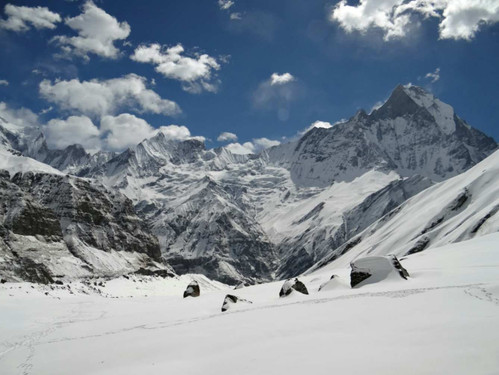
One of the key reasons why Annapurna Base Camp is considered to be moderate in difficulty is its altitude and trekking height. The Annapurna Base Camp trek reaches a maximum altitude of 4,130 meters or around 13,550 feet above sea level. But because you have to ascend from a lower elevation of 822 m in Pokhara, you need to ascend a lot. This high ascent contributes to the difficulty of the trek. Thus, to understand the impact that height and altitude have on the difficulty, you should understand the altitude profile of this trek.
The journey starts from the low-lying areas near Pokhara and eventually moves up through thick forest areas, villages, and mountain valleys until it reaches the high-altitude base camp area. The steady gain in altitude is one of the key reasons that make this journey difficult.
Here is a typical journey through ABC that goes through:
The journey starts from the low-lying areas near Pokhara and eventually moves up through thick forest areas, villages, and mountain valleys until it reaches the high-altitude base camp area. The steady gain in altitude is one of the key reasons that make this journey difficult.
Here is a typical journey through ABC that goes through:
| Trekking Point | Approx. Elevation |
| Pokhara | 822 m |
| Ghandruk | 1,940 m |
| Chhomrong | 2,170 m |
| Himalaya | 2,920 m |
| Machhapuchhre Base Camp | 3,700 m |
| Annapurna Base Camp | 4,130 m |
The lower portions of this trail are quite warm and are made up of forests along with terraced fields, offering the enjoyment of a nice trekking experience. The further you go, you come across a steeper landscape with low temperature and lower levels of oxygen. From Machhapuchhre Base Camp to Annapurna Base Camp, this change is most noticeable due to higher altitude and low temperature.
Although 4,130 meters is not technically a height at which you have to be concerned about technicalities, some fatigue, shortness of breathing, headache, or other issues caused by higher altitude can occur. Having a good speed, being well hydrated, sleeping well, and managing your time effectively could assist you in acclimatizing.
What Makes the Annapurna Base Camp Trek Challenging?
The Annapurna Base Camp Trek is not considered difficult due to the fact that technical mountaineering skill is not needed. But there are certain aspects of this trek that can make it quite challenging.
- Steeper ascent and descent: This trek consists of a lot of uphill and downhill sections where some parts are made up of long steps of stone.
- Long distances by walking: It will be necessary for you to walk for about 5-7 hours on many days of the trekking trip. It is quite exhausting to maintain an even pace through a series of several days if you are not used to constant hiking.
- Rise in altitude: The route goes to an altitude of 4,130 meters at Annapurna Base Camp. When you rise higher, the air becomes thinner, which will exhaust you faster during your physical activities.
- Uneven path: The trekking path will include many different kinds of roads – rocky, stoned stairways, forest trails, etc. In wet conditions, some of these sections can become hard to walk.
- Unstable weather: It can suddenly change the weather in the mountains – rain, snow, cold, and windy weather can impact your hiking conditions and will make your trekking experience harder.
- Low temperatures at high elevations: Temperatures fall drastically at the base camp of Machhapuchhre and Annapurna. Suitable clothing and sleeping gear are very important here.
- Continuous physical exertion: Although some sections can be easy to pass, the physical activity of several days of walking, climbing, and descending is going to accumulate.
The Fitness Level Required for Annapurna Base Camp Trek
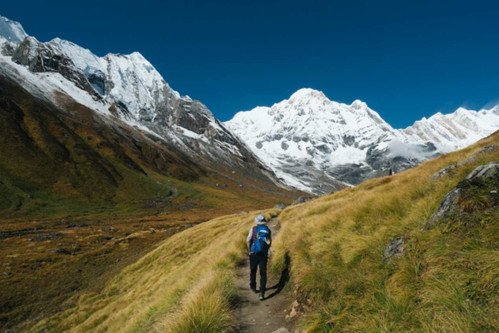
Though the Annapurna Base Camp trek is not a very tough trekking route, you need not be an athlete or a seasoned trekker. Yet, you must have at least a decent or good level of physical fitness. In other words, you must be able to walk for some time, climb stairs, and deal with ascending and descending stretches. It's not necessary for you to be physically fast or strong, but you need endurance.
It is recommended that you be able to walk from 5 to 7 hours comfortably per day, including sections with steep steps in stone. Therefore, during your preparation for this trek, you should concentrate more on improving your endurance than on speed or strength. The following are some of the activities that will help improve your endurance:
It is recommended that you be able to walk from 5 to 7 hours comfortably per day, including sections with steep steps in stone. Therefore, during your preparation for this trek, you should concentrate more on improving your endurance than on speed or strength. The following are some of the activities that will help improve your endurance:
1. Endurance of the Cardiovascular System
With cardiovascular endurance, you will be able to maintain a steady pace on long trekking days and climbing sections without getting tired or short of breath. Cardiovascular endurance will help you to recover quickly from strenuous climbing sessions and walk comfortably for several days consecutively.
- Walk, jog, cycle, and do other cardiovascular workouts.
- Increase the time of your workouts slowly.
- It is more beneficial to practice walking for several hours rather than trying to increase speed alone.
- Incorporate uphill walks or stair climbs into your workout plan.
2. Legs and Core Muscle Strength
Having strong leg muscles may be helpful when going up and down the mountains. Core strength is beneficial for balance.
- Train squats and lunges to develop your leg muscles.
- Step-ups can help you to get ready for numerous stone stairs that will be met on the way.
- Perform some calf raises.
- Try some core muscle training.
3. Hiking Training
Hiking on a regular basis prior to trekking helps you to get used to walking on irregular surfaces. Start hiking shorter distances and slowly increase the distance, elevation, and time spent outside. Try to incorporate some hikes that have stairs or are somewhat uphill to prepare for the ABC trail conditions.
4. Timeline for fitness preparation for trekking
The optimal time to start preparing is 6-8 weeks before trekking. Start with manageable sessions and gradually increase the workload instead of suddenly doing long or difficult hikes immediately before departure.
Annapurna Base Camp Trek and Altitude Sickness
While talking about the difficulty, one thing that we have not mentioned so far is altitude sickness, as it deserves a section of its own. This is because altitude sickness is one of the primary health concerns to consider during the Annapurna Base Camp Trek, especially if you ascend over 3,000 meters. Altitude sickness develops due to your inability to adjust to reduced oxygen levels.
Common symptoms of altitude sickness include headache, dizziness, feeling of nausea, poor appetite, extreme fatigue, and insomnia. While minor symptoms may be alleviated by enough rest, if your symptoms get worse, then you need to alert your guide right away. In any case, the positive thing about all of this is that there are some preventive measures that you can undertake to minimize the chances of developing altitude sickness. Here they are:
Common symptoms of altitude sickness include headache, dizziness, feeling of nausea, poor appetite, extreme fatigue, and insomnia. While minor symptoms may be alleviated by enough rest, if your symptoms get worse, then you need to alert your guide right away. In any case, the positive thing about all of this is that there are some preventive measures that you can undertake to minimize the chances of developing altitude sickness. Here they are:
- Ascend slowly without making haste.
- Walk slowly.
- Drink plenty of fluids while trekking.
- Take enough rest while trekking.
- Do not drink alcohol or smoke at higher altitudes.
- Be aware of your symptoms and alert your guide or trekking companions if necessary.
- Descend if symptoms get too severe for you.
Being physically fit is helpful in handling the trek, though it doesn't ensure immunity from the effects of altitude sickness. Appropriate acclimatization and proper reaction to the first symptoms of problems are part of the safety measures on the ABC Trek.
Is It Possible for Beginners to Do the Annapurna Base Camp Trek?
This is probably the most frequently asked question concerning the complexity of Annapurna Base Camp. The simplest answer would be yes; beginners can do the Annapurna Base Camp Trek. A well-prepared and carefully thought-out itinerary will allow even an absolute beginner to join in on the trip, provided that the latter has an acceptable physical condition. Neither specialized skills nor high-altitude trekking experience is necessary for the journey.
While this trek can be physically demanding, with a gradual ascent and enough preparation, you can easily do this trek. That said, you do have to prepare well, and you can follow the points we mentioned above to increase your endurance and stamina.
While this trek can be physically demanding, with a gradual ascent and enough preparation, you can easily do this trek. That said, you do have to prepare well, and you can follow the points we mentioned above to increase your endurance and stamina.
Tips for Making the ABC Trek Easier
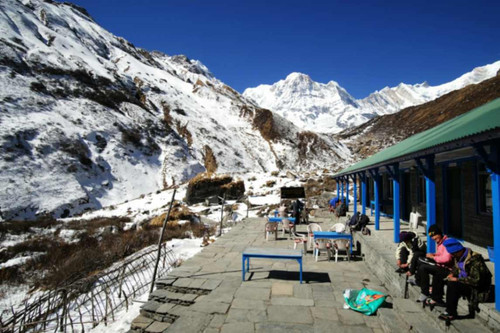
Annapurna Base Camp Trek will be easier for you if you prepare your body, walk at an appropriate pace, and pack lightly. The trekking in Annapurna is of moderate level; however, long walking days, steep stone stairs, unpredictable weather, and high altitude may eventually cause exhaustion. Some precautions taken in advance and tricks are all you need to make sure you do not get tired during the trekking journey.
- Get ready for the trekking in advance: Start walking and other types of exercises like hiking, stair climbing, and aerobics a few weeks in advance. Gradually increase the intensity and the duration of the exercise.
- Maintain a proper speed for trekking: Trekking at fast speeds, especially during an uphill trekking route, is not recommended. Trek slowly.
- Take breaks: Ensure that you have breaks so that your legs get an opportunity to rest, along with having food and drinks.
- Take water: Ensure that you drink sufficient amounts of water all day long, especially during high-altitude trekking. This is important regardless of whether you are feeling thirsty or not.
- Do not overload yourself: Carry only those things which are necessary.
- Wear trekking shoes: You must wear shoes that are specifically made for trekking and are well-tractioned. Moreover, you must wear shoes that are well broken in.
- Keep a simple itinerary: Do not overdo things. Do not climb too fast.
- Ensure your eating habits remain unchanged: Always ensure that you eat adequately to conserve energy as you trek. Carbohydrate-rich foods are beneficial while trekking.
- Be aware of changing weather conditions: Put on a number of layers of clothes according to the temperature change. A rain jacket is needed due to weather changes.
- Pay heed to what your body tells you: Do not ignore any signs of fatigue, dizziness, headaches, nausea, or difficulty breathing. Stop and rest and tell your guide about the condition.
- Use trekking poles: Trekking poles can be beneficial while walking downhill, on rocky paths, and when climbing up many stone steps.
- Sleep enough: Good sleep at night will restore your body after hard walking during the day and prepare it for further walking sections.
Conclusion
The Annapurna Base Camp is one of the most popular trekking destinations in Nepal. Because of this, there are many questions that surround this destination, some of which are associated with its height, difficulty, and the physical requirements. The highest point of this trek is 4,130 m above sea level at the base camp, and to get here, you need to ascend from Pokhara at 822 m. Because of the high ascent, you need to be decently physically fit, which, in addition to factors such as uneven trails and the risk of altitude sickness, makes this trek of moderate difficulty.
At Nepalaya Treks - one of the best tour and travel agencies in Nepal , we help you arrange the Annapurna Base Camp Trek according to your preferred itinerary, available time, and travel plans. We can guide you in every possible aspect, starting from route mapping, booking of hotels, to travel arrangements. Whatever may be the case, we will ensure that you have a trouble-free and well-prepared trek on the ABC Trail.
At Nepalaya Treks - one of the best tour and travel agencies in Nepal , we help you arrange the Annapurna Base Camp Trek according to your preferred itinerary, available time, and travel plans. We can guide you in every possible aspect, starting from route mapping, booking of hotels, to travel arrangements. Whatever may be the case, we will ensure that you have a trouble-free and well-prepared trek on the ABC Trail.
Recommended Blogs:
1. How to Get a Trekking Permit in Nepal: Step-by-Step Guide
2. Trekking in Nepal During Monsoon: Is It Possible?
2. Trekking in Nepal During Monsoon: Is It Possible?
Frequently Asked Questions(FAQs)
1. Is the Annapurna Base Camp Trek difficult?
The Annapurna Base Camp Trek is moderate in difficulty. The difficulties faced include the fact that there are steep climbs and descents, long trekking days, stone steps, rough ground, and high elevations.
2. What is the elevation of Annapurna Base Camp?
The elevation of Annapurna Base Camp is 4,130 meters (13,550 feet). The rising elevation makes walking tough and increases the chances of altitude sickness.
3. Is the Annapurna Base Camp Trek suitable for a beginner?
A beginner may undertake the ABC Trek as long as he or she is physically fit and prepared. You don't necessarily need any technical climbing or high-altitude trekking experience.
4. How fit do you have to be for the ABC Trek?
You must be physically fit enough to walk for about 5–7 hours each day and also deal with ascending and descending terrain as well as stairs.
Leave Your Comment.
Best Selling
Our Best Selling Packages You May Like.