Kanchenjunga Two Base Camp Trek
Overview
The Kanchenjunga Two Base Camp Trek is a 20-day adventure into the remote eastern Himalayas that crosses both the northern and southern sides of the Kanchenjunga massif. This journey begins with a flight from Kathmandu to Bhadrapur, followed by a scenic drive toward Taplejung and Sekathum. After arriving at Sekathum, you continue through forested valleys and traditional mountain communities, including Amjilosa, Gyabla, Ghunsa, and Khambachen. Once you reach Khambachen, you take a day off to acclimatize to the increasing altitude. This rest day allows you to acclimatize before continuing toward Pang Pema, which is situated at an altitude of 5,143 meters. Following this, you return to Ghunsa and head toward the southern side through Sele Le before descending through Tortung and Yamphudin. The trek concludes with a drive from Kanyam to Bhadrapur, followed by a flight back to Kathmandu.
Additional Highlights of the Kanchenjunga Two Base Camp Trek
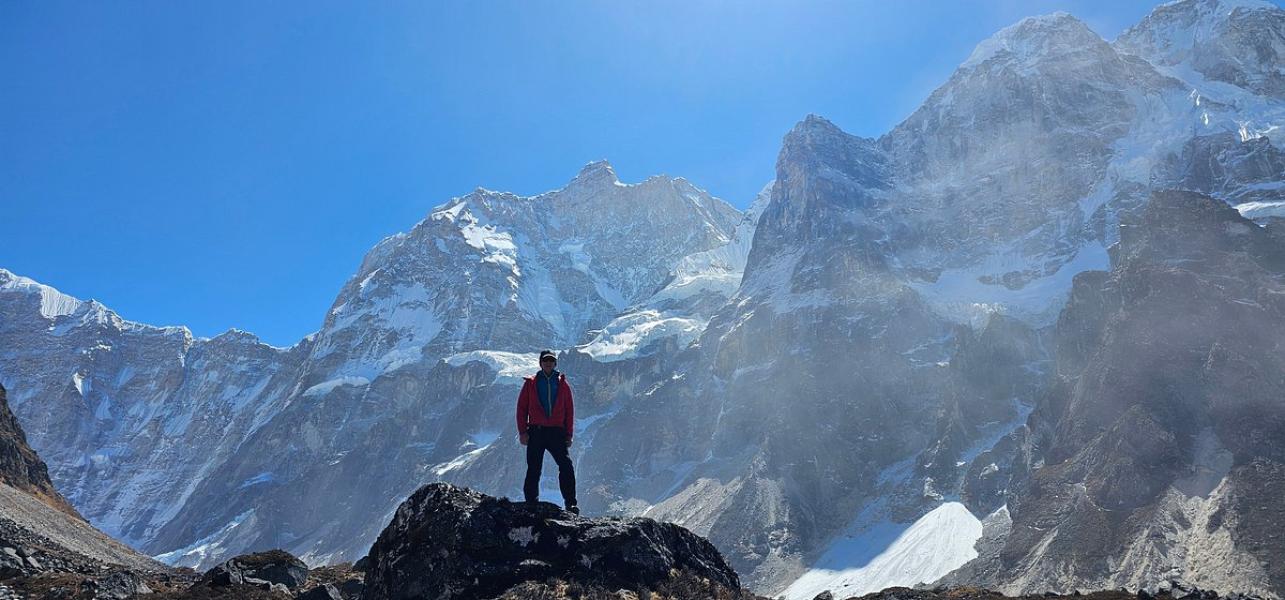
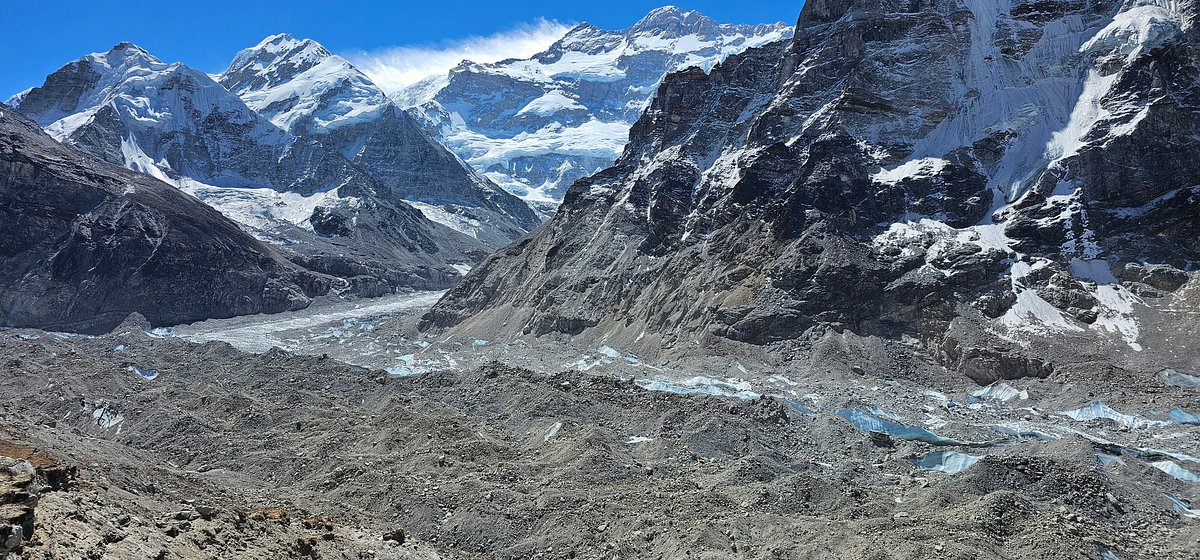
The Kanchenjunga Two Base Camp Trek takes you through remote areas of the eastern Himalayas, covering the northern and southern sides of the Kanchenjunga massif. The trek takes you through forests, valleys, mountain villages, alpine zones, and high-altitude areas before reaching Pang Pema (5,143m) and the Oktang viewpoint (4,740m). There is an acclimatization day at Khambachen, allowing you to rest before continuing into higher-altitude areas.
- Walk to the remote area of Kanchenjunga.
- Enjoy the view of Mount Kanchenjunga and other Himalayan peaks.
- Walk through the forests, valleys, mountain villages, alpine zone and high-altitude areas.
- Spend an acclimatization day at Khambachen (4,145m).
- Reach Pang Pema, which is also known as Kanchenjunga North Base Camp Area (5,143m).
- Experience the high-altitude zone of Lhonak.
- Cross the route around the Sele Le Base Camp (4,240 m).
- Trek the Yalung Valley, Ramche, and the southern part of the Kanchenjunga mountain range.
- Trek towards the Oktang viewpoint (4,740 m).
- Experience the lifestyle of communities in the eastern part of Nepal.
- Walk through the rhododendron, pine, and other forests of the Himalayan Range.
- Explore the northern and southern base camp areas of the Kanchenjunga region.
Best Time for Kanchenjunga Two Base Camp Trek
Spring and autumn can be said to be the best times for the Kanchenjunga Two Base Camp Trek since visibility is good, weather remains stable, and trekking conditions are favorable. Winter causes very cold and snowy weather in the higher regions, while monsoon season may cause wet and muddy trails and roads in the lower sections.
1. Spring Season: March to May
Temperatures gradually rise in the lower sections during spring, while the higher sections remain cold. The forest may become colorful with blossoming rhododendrons and other vegetation as well. Clear mornings generally provide opportunities to see the mountains. Temperatures remain low at Lhonak, Pang Pema, Sele Le, and Oktang.
2. Autumn Season: September to November
The weather will be stable, and mountain views will be clear due to the absence of rain after the monsoon season. October and November generally offer good visibility and lower rainfall, making them suitable months for trekking. The weather will become colder by the end of autumn.
3. Winter Season: December to February
The winter season will bring very cold weather in Kanchenjunga. There will be snow and freezing weather in the higher sections like Lhonak, Pang Pema, Sele Le, and Oktang. High snowfall may make some trails challenging to cross.
4. Monsoon Season: June to August
The monsoon brings heavy rainfall to the lower sections of eastern Nepal. Frequent rainfall can make trails muddy and slippery, while landslides may affect travel between Bhadrapur, Taplejung, and Yamphudin.
Accommodation and Meals
Accommodation during the Kanchenjunga Two Base Camp Trek is mainly provided in local teahouses and lodges along the trekking route. Rooms are generally basic and commonly arranged on a twin-sharing basis. Facilities are much simpler in remote destinations such as Khambachen, Lhonak, and Sele Le, while more accommodation options are available in accessible locations such as Kathmandu and Taplejung.
- Food is generally served as simple and nutritious local and trekking food.
- Common breakfast foods comprise eggs, bread, pancakes, porridge, Tibetan bread, tea, and coffee.
- Dinner and lunch usually consist of dal bhat, noodles, rice, pasta, soup, vegetables, and potatoes.
- As the trekking route reaches higher altitudes, food options become increasingly limited.
- A water bottle is advisable to carry during the entire trekking journey.
- Water must always be boiled, filtered, or purified before consuming.
- It will be wise to carry energy bars, nuts, and dried fruits on longer trekking days.
The Kanchenjunga Two Base Camp Trek: Why Is It Popular?
The trek's remote setting, high altitudes, traditional villages, and access to both sides of Kanchenjunga contribute to its appeal. It involves road travel, trekking across valleys, acclimatization in Khambachen, and visiting Pang Pema and the Oktang viewpoint.
The trek starts with flying from Kathmandu to Bhadrapur and then driving towards Taplejung. Thereafter, the trekking trail goes past Sekathum, Amjilosa, Gyabla, Ghunsa, Khambachen, Lhonak, Pang Pema and crosses over to the south through Sele Le and Tseram.Important activities include:
The trek starts with flying from Kathmandu to Bhadrapur and then driving towards Taplejung. Thereafter, the trekking trail goes past Sekathum, Amjilosa, Gyabla, Ghunsa, Khambachen, Lhonak, Pang Pema and crosses over to the south through Sele Le and Tseram.Important activities include:
- Flying from Kathmandu to Bhadrapur and driving to Taplejung.
- Trekking in the forested valleys and settlements.
- Exploring remote communities and the mountain lifestyle.
- Acclimatization at Khambachen before going to higher altitudes.
- Going to Lhonak and the high-altitude landscape of the north side.
- Visiting Pang Pema at 5,143 meters.
- Crossing toward the southern side through Sele Le.
- Exploring the Yalung Valley and Ramche.
- Hiking toward the Oktang viewpoint at 4,740 meters.
- Experiencing both northern and southern sides of the Kanchenjunga massif.
- Descending through Tortong and Yamphudin before returning toward Kanyam and Bhadrapur.
Culture Experience
The Kanchenjunga Trek offers you a chance to witness the traditional way of life of remote mountain communities in eastern Nepal. Settlements along the route reflect mountain lifestyles shaped by agriculture, livestock rearing, and tourism.
- With an increase in altitude, the settlements around, as well as the lifestyle, also change.
- Villages like Amjilosa, Ghunsa, Khambachen, and Tseram allow you a peek into the lifestyle of the remote Himalayan settlers.
- Watch traditional houses and mountain settlements.
- Witness the lifestyles of remote Himalayan settlers.
- Respect the local culture and traditions in the trekking process.
Altitude and acclimatization
Kanchenjunga Two Base Camp Trek steadily ascends from low hills to the high altitudes of the Kanchenjunga region. The maximum altitude in the schedule is Pang Pema at an elevation of 5,143 meters. The itinerary includes a rest day at Khambachen, at 4,145 meters, before you continue toward Lhonak and Pang Pema. Some important altitudes on the itinerary are:
- The trekking portion starts at Sekathum, which is at 1,650 meters.
- Pang Pema is the highest point of the itinerary at 5,143 meters.
- The route passes through several settlements at progressively higher elevations.
- Khambachen provides a scheduled acclimatization and rest day.
- The Pang Pema excursion reaches a significant high-altitude environment.
- The height of Sele Le is around 4,240 meters.
- The altitude of Oktang Point is around 4,740 meters.
- It is advisable to maintain a steady pace without rushing at high altitudes. You should also drink enough water and eat properly.
- Take precautions against altitude sickness and inform your guide about any symptoms or changes in your physical condition.
Difficulty of the Kanchenjunga Two Base Camp Trek
The Kanchenjunga Two Base Camp Trek is an extremely difficult trek due to its remoteness, long trekking days, significant altitude gains, and rugged mountainous terrain. Some of the difficult sections include those around Lhonak, Pang Pema, Sele Le, and Oktang. On most trekking days, one will walk for about 4 to 8 hours, with a few extending beyond that. Some factors contributing to the difficulty of the trek include:
- Up and down sections through rock, forest, and uneven trails.
- High altitude terrain of Pang Pema (5,143 meters).
- Difficult trek from Lhonak to Pang Pema and back.
- Rough section around Sele Le (4,240 meters).
- Ascent towards the Oktang viewpoint (4,740 meters).
- Acclimatization to higher altitudes.
- Previous high-altitude trekking experience can be beneficial.
- Physical fitness.
- Use of trekking poles when needed.
Permits for Kanchenjunga Two Base Camp Trek
As there are some protected and restricted zones in the Kanchenjunga region, it is very important for the trekkers to obtain the respective permits and registrations before setting out on their trekking journey. Some of the commonly obtained permits and registrations are:
- Kanchenjunga Restricted Area Permit: Permit required for trekking in the restricted zones of the Kanchenjunga region.
- Kanchenjunga Conservation Area Permit (KCAP): Required for trekking in the Kanchenjunga Conservation Area.
- TIMS: Registration is mandatory; however, depending on the regulations for that trek, the registration may vary.
The permit fees and other requirements will depend upon the current regulations of the government. Restricted area permits can usually be arranged through a certified trekking agency. Required permits and documents can also be organized through the trekking agency before the trek begins.
Travel Insurance
It is highly advisable to have travel insurance in case you embark on this trek because the trail will lead you to 5,143 meters, going through remote mountain regions where access to healthcare services might not always be available. Travel insurance must cover:
- High-altitude trekking insurance.
- Coverage extending to at least 5,143 meters.
- Emergency medical treatment.
- Helicopter evacuation where medically necessary and covered by the policy.
- Trip cancellation or interruption coverage.
- Coverage for delays caused by severe weather where applicable.
- Coverage for injuries or medical conditions related to altitude sickness.
- Coverage for any pre-existing conditions that may exist.
- Copy of the insurance policy and emergency contacts.
- Confirmation of coverage under the insurance for the activity and altitude of the trek.
Why Choose This Itinerary?
In this 20-day itinerary, you will get to visit both the north and south regions of the Kanchenjunga area. In doing so, you can enjoy Pang Pema and Oktang viewpoint during a single expedition. There is an acclimatization day planned in Khambachen, and there is a gradual approach through the landscapes to the areas of forest, mountains, and high altitude before coming back through Yamphudin, Kanyam, and Bhadrapur. Itinerary includes:
- Landscapes in the eastern Himalayan region.
- Traditional settlements including Amjilosa, Ghunsa, Khambachen, Lhonak, and Tseram.
- A dedicated acclimatization day at Khambachen.
- A trek to Pang Pema at 5,143 meters.
- High-altitude landscapes around Lhonak.
- Sele Le trek at an altitude of 4,240 meters.
- Expedition into the valley of Yalung and Ramche.
- Oktang Viewpoint trek at an altitude of 4,740 meters.
- Access to both northern and southern sides of the Kanchenjunga region.
- A descent through Tortong and Yamphudin.
- Return travel through Kanyam and Bhadrapur toward Kathmandu.
Safety on the Kanchenjunga Two Base Camp Trek
Safety is important on the Kanchenjunga Two Base Camp Trek because the route reaches high elevations, passes through remote mountain terrain, and includes demanding sections around Pang Pema and Oktang. The difficulty level of the hike may be affected by weather conditions, the altitude level, the condition of the trails, and long hours of hiking.The following tips must be kept in mind during the trek as per the acclimatization plan.
- Inform the guide in case you suffer from altitude sickness symptoms.
- Check the weather before going to exposed or high altitude areas.
- Have enough clean drinking water.
- Wear proper, warm, windproof, and waterproof clothes.
- Travel together with other trekkers.
- Take all precautionary measures during the road trips.
- Have travel insurance and emergency contacts.
Responsible Tourism
Responsible tourism is important in the Kanchenjunga area because the trek passes through protected environments and remote communities. Responsible practices can help minimize environmental impacts and support local communities that provide accommodation, food, and guiding services.
- Properly dispose of your waste.
- Do not litter non-degradable waste on the trail.
- Try to remain on the trekking trail that is marked.
- Show respect to the local culture and traditions.
- Obtain permission for photographing the locals where necessary.
- Do not harm the natural flora or structures constructed by man.
- Conserve water, particularly in far-flung places.
- Be respectful of your guides, porters, and the local community members.
- Minimize plastic material usage.
- Support the local teahouses and other community-based enterprises.
Group Size
The Kanchenjunga Two Base Camp Trek can be arranged for couples, families, friends, colleagues, or private groups. A guide will take care of guiding, logistics, route management, and altitude-related concerns, whereas the porters will help transport heavy trekking gear and luggage. The small groups will find it easier to coordinate the walking pace, whereas private groups will have more flexibility regarding dates.
- A guide takes care of the route and trekking logistics.
- Porters can transport heavy trekking gear and luggage.
- Small groups can coordinate walking pace more easily.
- Personal departures provide increased flexibility.
- Dates of departure may be chosen by the group based on their availability.
- The size of the group may be fixed based on the requirements of the travelers.
Private Departure Options: Tourist Bus, Private Vehicle, or Flight
Private departures provide greater flexibility in choosing the dates for the Kanchenjunga Two Base Camp Trek. The travel arrangements for certain routes will be available according to the schedule, which might include flights, tourist buses, as well as private cars as per availability. The private group will also coordinate the pace of the trekking as per their convenience.
- Choose a suitable departure date for the private group.
- Flight to Bhadrapur from Kathmandu.
- Use tourist buses/private cars for the applicable routes.
- Arrange transportation as per your requirements wherever possible.
- Coordinate trekking speed as per the group.
- Travel only with the selected group members.
- Plan your accommodation and transportation needs with the trekking agency.
Equipment Rental
Trekking equipment can be hired from Kathmandu, which helps travelers avoid having to buy any particular equipment. Equipment that can be hired includes sleeping bags, down jackets, trekking poles, and duffle bags. Make sure that all the hired equipment is checked prior to departure, especially those to be used in cold and high-altitude areas like Lhonak, Pang Pema, Sele Le, and Oktang.
- Sleeping bags can be hired in case of cold weather in the mountains.
- Down jackets can help in case of high altitude areas.
- Trekking poles will help travelers get extra support on rugged trails.
- Duffle bags can be hired for carrying trekking equipment.
- Hiring equipment can help travelers avoid buying special equipment.
- All hired equipment should be inspected before departure.
- Ensure that the clothing is warm enough for the higher altitude.
- Before embarking on the journey, ensure that the trekking shoes fit properly.
- The trekking agency can assist you with arranging the necessary equipment.
Check List
Kanchenjunga Two Base Camp Trek involves passing through many climate zones, from the warmer zones to the colder high altitudes. The trekking equipment should comprise light trekking gear for the low-altitude zones as well as warmer, water-resistant, and wind-resistant gear for zones such as Lhonak, Pang Pema, Sele Le, and Oktang.
General Equipment
- Sleeping bag suitable for cold high-altitude conditions
- Warm down jacket
- Waterproof and windproof jacket
- Waterproof outer layer
- Trekking duffle bag
- Comfortable daypack
Head and Sun Protection
- Warm hat or woolen cap
- UV-protection sunglasses
- Buff or neck gaiter
- Sunscreen with SPF 35 to 60
- Headlamp with spare batteries
Handwear
- Lightweight trekking gloves
- Warm insulated gloves
- Glove liners
Upper Body Clothing
- Moisture-wicking base layers
- Long-sleeved trekking shirts
- Thermal inner layers
- Fleece or woolen layers
- Warm mid-layer
- Waterproof and windproof shell
- Suitable sports bras where required
Lower Body Clothing
- Thermal trousers
- Warm trekking trousers
- Comfortable trekking pants
- Waterproof or windproof outer trousers
- Casual or lightweight sportswear for lower sections
Footwear
- Waterproof trekking boots
- Comfortable sandals
- Four to five pairs of warm trekking socks
- Sock liners
- Lightweight spare footwear
First Aid and Personal Medication
- Basic bandages
- Blister treatment
- Wound dressings
- Personal pain relief medication
- Prescribed medicines
- Altitude-related medication only as advised by a qualified medical professional
- Water purification tablets or other suitable purification methods
Documents and Miscellaneous Items
- Passport and required photographs
- Reusable water bottle
- Water filter or purification system
- Flight details and copies of important documents
- Personal toiletries
- Toilet paper and wet wipes
- Small towel
- Biodegradable soap
- Waste bags
Additional Items
- Trekking poles
- Energy bars and lightweight snacks
- Power bank
- Charging cables and suitable adapters
- Camera and memory cards
- Camera charger and spare batteries
All Inclusive Cost
BOOK NOW QUICK ENQUIRY- Best Price Guarantee
- Hassle-Free Booking
- Team of highly experienced Experts
You may also like !!
Our Best Selling Packages You May Like.