Kanchenjunga Circuit Trek
Overview
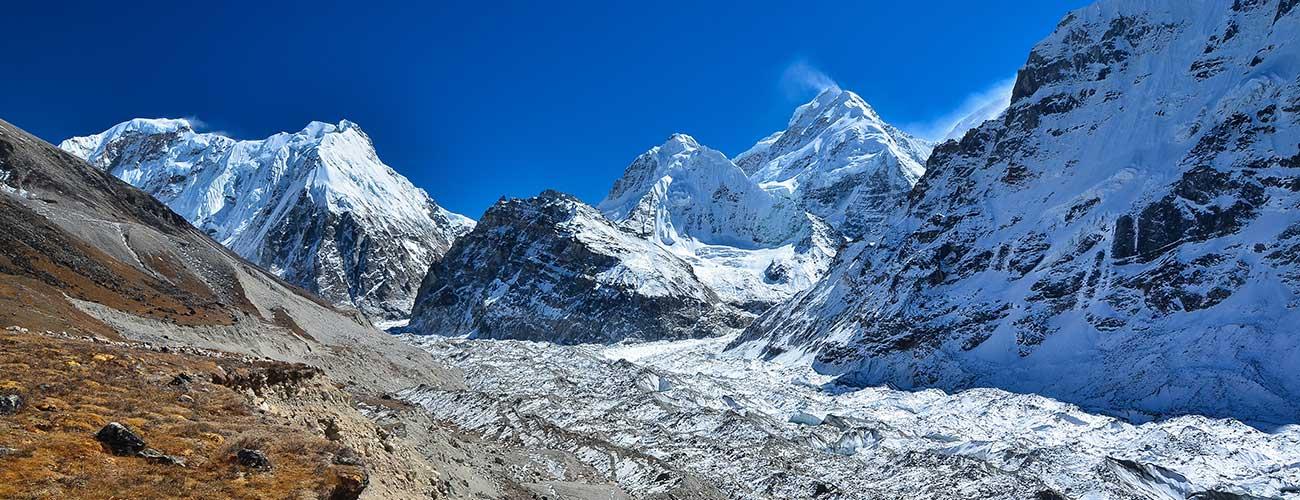
Kanchenjunga Circuit Trek is a 23-day trek in the remote eastern region of the Nepalese Himalayas. This hike weaves through undisturbed rural mountain towns and villages, forests, valleys, high passes, and some of the most spectacular scenery in the Kanchenjunga area. Also, it takes you near Kanchenjunga, the third-highest peak in the world. The trail starts from Kathmandu by flight to Bhadrapur and then a long drive to Taplejung and Suketar. Thereafter, the journey slowly passes through the villages of Sinuwa, Tapethok, Amjilosa, Gyabla and Ghunsa. The view shifts from green forest and a village to rocky valleys and high Himalayan landscape as the height rises.
Ghunsa is an important acclimatization point which is to be considered before going ahead to Khambachen and Lhonak. The trail from Lhonak passes through the Kanchenjunga Base Camp, where one can have a view of the surrounding peaks before heading back to lower levels. Second leg of the trek passes through the Sele La Pass and then heads to the south towards Tseram and Oktang Base Camp of Kanchenjunga. Track then heads down to Tortong and Yamphudin, before arriving at the road at Simbu. Then a drive back to Bhadrapur and then a flight to Kathmandu.Long days on foot, high altitudes and off-the-beaten-path mountain trails make this trek a challenging but rewarding experience. Completing this trip comfortably requires good physical fitness and acclimatization.
Ghunsa is an important acclimatization point which is to be considered before going ahead to Khambachen and Lhonak. The trail from Lhonak passes through the Kanchenjunga Base Camp, where one can have a view of the surrounding peaks before heading back to lower levels. Second leg of the trek passes through the Sele La Pass and then heads to the south towards Tseram and Oktang Base Camp of Kanchenjunga. Track then heads down to Tortong and Yamphudin, before arriving at the road at Simbu. Then a drive back to Bhadrapur and then a flight to Kathmandu.Long days on foot, high altitudes and off-the-beaten-path mountain trails make this trek a challenging but rewarding experience. Completing this trip comfortably requires good physical fitness and acclimatization.
What to Expect on Kanchenjunga Circuit Trek?
Kanchenjunga Circuit Trek is a long and tough trek to the most eastern part of the Nepal Himalayas. Walking through forests, through villages of the mountain, valleys and high altitude trails, views of Kanchenjunga and the surrounding peaks. The hike will also feature a day of acclimatization and include challenging and potentially changing conditions at high elevations, so be ready for some tough walking days.
- Extended walking time: The walking time for most days is about 4-8 hours, and there are a few longer walking days.
- Transforming landscapes: Stroll through the green forests, through the valleys, through the rocky paths and through the high mountain regions.
- High altitude: Up to 5143m at Kanchenjunga Base Camp and 4730m at Oktang Base Camp.
- Difficult areas: Cross through the Sele La Pass and walk through steep and rocky areas.
- Stay in small mountain villages, enjoy the peaceful surroundings.
- Day hikes: A number of day hikes are possible along the trek to offer views of Kanchenjunga and other Himalayan peaks.
- Stay in basic accommodations: Tea house, lodge, primarily on trekking route.
- Acclimatization means taking a rest day in Ghunsa to acclimatise to the higher altitude.
The ideal times for the Kanchenjunga Circuit Trek
Spring and autumn are the most suitable seasons to do Kanchenjunga Circuit Trek. In those seasons, the conditions are likely to be more settled, clear skies, and better mountain views. The trails are also more suitable for crossing over high altitude sections and passes.
- Spring (March to May): Mild weather, clear mountain views and blooming rhododendrons make this a good time for trekking.
- Fall (September - November): Clear skies, stable weather and good mountain visibility typically during this time.
- Winter (December-February): snowy and rough trails at higher elevations.
- Monsoon (June-August): Lower trails may be wet and muddy, and mountain views may be obscured by clouds. Trekking in Nepal during monsoon is possible but comes with added challenges.
Accommodation and Meals on Kanchenjunga Circuit Trek
In the Kanchenjunga Circuit Trek, stay at hotels in Kathmandu and Bhadrapur and local tea houses/lodges during trek. The housing along the path is basic, but it offers a nice place to rest and relax after a day's walk. Facilities and food options may be limited as these areas are more remote and go to higher elevations, therefore making it best to be prepared for basic meals. Generally, meals may include:
- Dal Bhat: Rice, lentils and vegetables.
- Tibetan bread or chapati.
- Noodles and pasta.
- Fried rice.
- Soups.
- Potatoes.
- Eggs.
- Porridge.
- Tea and coffee.
Kanchenjunga Circuit Trekking: Why is it Popular?
Kanchenjunga Circuit Trek is a popular trek among the trekkers who like to experience the remote and challenging Himalayan area. The trek goes through less crowded trails and the traditional mountain villages and is endowed with stunning landscapes, with a close view of Kanchenjunga.
- Remote trekking experience: Explore one of the less-developed trekking areas of Nepal.
- Kanchenjunga views: Impressive views of Kanchenjunga, the third highest Mountain of the world and nearby peaks.
- Base Camp experience: Trek to both Kanchenjunga Base Camp and Oktang Base Camp.
- Try out challenging trails: high mountain trekking and crossing of the Sele La Pass.
- Visit traditional villages: Go through the mountain villages and taste the life of the villagers.
- Different landscapes: Stroll through forests, through valleys, through rivers and through rugged landscapes of mountains.
- Less crowded trails: Have a quieter trekking experience than popular treks like Everest Base Camp Trek, Annapurna Base Camp Trek, or Annapurna Circuit Trek.
Cultural Experience During the Kanchenjunga Circuit Trek
Apart from the mountain views, the Kanchenjunga Circuit Trek also offers the opportunity of experiencing the culture of eastern Nepal. You will be able to see traditional houses throughout the different villages, meet their people and learn about their simple mountain life. In addition, the remote location can help break down cultural barriers and create a more serene and authentic experience.
- Traditional villages: Go through villages like Ghunsa, Tseram and Yamphudin.
- Local communities: Get to know people of remote mountain regions of Kanchunjunga.
- Traditional Life style: Visit the local communities to experience the lifestyle of the local people in a natural environment of Himalayas.
- Local food: Have a basic local meal at a tea house and lodge.
- Buddhist influence: Minister in some mountain villages the Buddhist cultural practices and prayer flags.
- Experience the customs of traditions and way of life of communities along the trekking route.
Altitude and Acclimatisation on the Kanchenjunga Circuit Trek
Proper acclimatisation is the most important thing to keep in mind as the Kanchenjunga Circuit Trek climbs to a maximum elevation of 5,143m at Kanchenjunga Base Camp. After a gradual ascent, the trail leads through the lower villages to the high mountain areas, giving your body time to ascend and acclimate as you walk. An acclimatisation day will be conducted at Ghunsa (3,595m), prior to ascent to higher areas.
- The route is done in a gradual manner, from the low-lying villages to higher regions.
- The acclimatisation day: Military day where you take in a rest day so that your body can acclimate to the elevation.
- High elevation parts: Overnight stays in Khambachen (4.050m), Lhonak (4.780m) etc.
- Summit: Kharma Kanchenjunga Base Camp 5143m.
- Drink plenty of water and get adequate rest on the trail.
- Listen to your body: TELL YOUR GUIDE: If you have a headache, dizziness, unusual tiredness or other symptoms of altitude sickness.
Required Permits for the Kanchenjunga Circuit Trek
The Kanchenjunge Circuit Trek passes through Taplejung, thus a trekker has to get permit for the Trek. But it is important to note that foreign trekkers are not directly granted permits to trek in areas of restricted access; permits are only issued by an authorised trekking agent. These are the main permits needed:
- Kanchenjunga Conservation Area Permission (KCAP): Permission needed to enter the Kanchenjunga Conservation Area.
- Restricted Area Trekking Permit: It is required for the designated restricted areas in Taplejung where walking is permitted. The present immigration fee for the mentioned areas of Taplejung is USD 20 per person/four weeks and USD 25 per week for the subsequent period.
- Depending on the rules in effect on the trek and on the arrangement that is made by the trekking company, a TIMS card might be needed on the trek.
Travel Insurance for the Kanchenjunga Circuit Trek
For the Kanchenjunga Circuit Trek, travel insurance is crucial, especially considering the remote areas and high altitudes involved. Consider an insurer that will provide trekking coverage up to the highest elevation of 5,143m and also provide for the emergency evacuation should it be necessary. Your insurance should ideally include:
- Trekking at high altitudes: Ensure that your policy includes the cost of trekking up to 5143m.
- Emergency evacuation: Helicopter or other emergency evacuation should be included.
- Medical treatment: Care in the event of a medical need on the trek.
- Trip cancellation: Coverage for trip cancellations for a covered reason.
- Travel delays: Assistance with unexpected delays while traveling.
- Personal accident: Insurance that might be applicable to happenings during the trek.
Difficulty Level of the Kanchenjunga Circuit Trek
The Kanchenjunga Circuit Trek is a difficult trek and the preparation as well as fitness are very important. There are long walking days, steep and rocky approaches and trails up to high altitudes and crossing of Sele La Pass on this route. Altitude is also a challenge as the trek reaches Kanchenjunga Base Camp at 5,143m.
- Long walking days: You may walk for around 4–9 hours on different days.
- High altitude: The hike goes above 5,000m so the atmosphere will be thinner at high altitudes and walking may be harder.
- Extraordinary travel: Crossing Sele La Pass is a challenging part of the trek.
- Roadless trails: Many trails are not close to any road and are poorly equipped.
- Changing Terrain: Forest areas, steep paths, rock trails and high mountain areas.
- Acclimatisation: On a rest day in Ghunsa, you allow your body to acclimise before heading upwards.
- Physical preparation: Before this trek, walk for a regular amount of time, go for hikes and do cardio exercise to prepare for the long trekking days.
Why Choose Kanchenjunga Circuit Trek?
The Kanchenjunga Circuit Trek is an excellent option for individuals seeking to discover an offbeat region of the Nepal Himalayas. This journey leads you through the quiet mountain villages, forests, valleys and high altitude scenery. On the way, you can witness the view of Kanchenjunga, visit the North side and the South side of Kanchenjunga, enjoy challenging trails and high mountain passes. For the trekkers who need a longer and more adventurous trek in Nepal, it is a rewarding journey.
- Enjoy a more out of the way trek in Nepal.
- Enjoy a longer trek through peaceful and less-crowded mountain trails.
- Get the chance to explore both the northern and southern sides of Kanchenjunga.
- Enjoy breathtaking views of Kanchenjunga and the surrounding Himalayas.
- Visit to traditional mountain villages combined with high altitude trekking.
- Try out high passes and challenging mountain trails.
- Enjoy various terrain – green forests, rough high mountain valleys.
- Have a memorable trip in one of Nepal's beautiful and less explored area.
Why Trek with Nepalaya Treks?
Nepalaya Treks offers you a well-planned and supported way to explore the Kanchenjunga Circuit Trek. We want to make your journey safe, comfortable and enjoyable as you go on exploring remote trails of the Himalayas in Nepal.
- Skilled team of trekkers: Go trekking with experienced team members.
- Well-planned tourism programme: Given a touristic programme with enough time for acclimatisation.
- Local knowledge: Hike in Kanchenjunga with a custom-made group, which knows its way around the trails and villages.
- Safety assistance: Guidance and support at the trek (specially in the high altitudes).
- Comfortable accommodation: Accommodation, meal arrangements with local people, transportation, necessary permits are arranged.
- Personalised service: Support as per your needs and requirements of the trek.
Why Choose This Itinerary?
This trek is planned to accommodate 23 days, which is a sufficient amount of time perched in the Kanchenjunga region as the body acclimatises gradually with the heights. It runs on both sides of the area and has significant halts.
- Holiday for the whole Kanchenjunga: Visit both Northern and Southern side of the area.
- Good acclimatisation: Reserved a day at the acclimatisation stage in Ghunsa, before ascending the elevation.
- Onward hikes: Hike up to Kanchenjunga Base Camp and Octagon Base Camp.
- High mountain passes: Cross Sele La Pass on the circuit as it passes high mountains.
- Distanced villages: Visit and pass through traditional villages without crossing the mountains.
- Balanced route: The route has high altitude areas and some gradual areas.
- Scenic journey: See the forests, the valleys, the rivers and landscapes of the high Himalayas during the trek.
Safety on the Kanchenjunga Circuit Trek
The Kanchenjunga Circuit Trek is a remote area and goes up to high altitudes, so safety is important. It comprises acclimatisation day and a progressive section, however the walking days will be long and there will be some difficult days replaced by sections in changing weather.
- Ensure proper acclimatisation: Take a planned rest day in Ghunsa - give your body time to acclimate.
- Avoid walking alone: Remain within your group and do not stray from this group from your guide, particularly when in remote areas.
- Watch the weather: Conditions are best in the mountains and can change rapidly, pack for cold, rain and snow.
- Proceed slowly: Be extra cautious going up, down, across steep, rocky, and slippery portions of the trail.
- Get plenty of water: Take frequent breaks during hiking.
- Be sure to watch for signs of "altitude sickness": If you get a severe headache, dizziness, vomiting, breathing issues or unusual weakness, let your guide know immediately.
- Pack travel insurance: Be sure to have high-altitude trekking and emergency evacuation insurance.
- Follow your guide's advice: Your Guide's guidance can help you to make safe decisions about the trail, weather and your conditions.
Responsible Tourism
Responsible tourism is essential for natural conservation and to promote the local people of the Kanchenjunga Circuit Trek. The area is also off the beaten path and relatively undeveloped, so hikers can contribute to the cleanliness of the trails and the preservation of the area's cultural heritage along the way.
- Take trash with them and dispose of it in an appropriate location.
- Use an alternative to the investment of plastic bottles.
- Adhere to local traditions, take care of villages, religious sites, and local people.
- Take this as practice to stay in local, not just foreigners but local, lodges and ‘tea houses' and buy locally when possible.
- Do not harm plants or animals or create waste in nature.
- Do not waste water, food and electricity, particularly in villages far from the area.
- Do your best to maintain the pristine condition of the mountains and trekking trails.
Group Size
A walker's permit can be arranged for a small group of people, for a Kanchenjunga Circuit Trek with Nepalaya Treks. The smaller group also makes for closer communication with the guide and greater flexibility on the trek.
- Trekking small groups: Take an easier yet more challenging trek.
- Guide Decision Making: If the bird is choosing between different trees/winds, let the guide know.
- Adaptable pace: group will adjust pace as needed for trail and trekking conditions.
- Private trek: The trek can be made available as a private tour for groups of one, two, families or friends.
Private Departure Available
For those who want to travel on a private tour, honeymooners of Kanchenjunga Circuit Trek also can choose it from the available list of tours. You can select any travel dates and travel with your friends and family or travel with your trekking partners, our trekking team will be able to assist you with the selection of the trekking dates.
- Flexible dates: Set a departure date that will fit your itinerary.
- Private group: Trek with your own family, friends or travel companions.
- Custom pace: The hike can be timed to fit the sped and ability of your group.
- Support from our guide and trekking team: They will support you on the trek.
Equipment Rental Information
There are a few trekking gear that can be used or bought in Kathmandu prior to the trek for Kanchenjunga Circuit Trek. If you do not wish to bring or purchase everything you might require for a high-altitude expedition it may be necessary to rent some or all of the equipment you need.
- Sleeping bags: Appropriate on colder nights at higher elevations.
- Down jackets: Useful for keeping warm in cold mountain areas.
- Use of trekking poles: Appropriate on steep, rocky and rough terrain.
- Backpacks: There are various sizes to choose from based on requirements.
- Headlamps: They are helpful in the early morning and in the dark.
- Other trekking gear: Kit and accessories: basic trekking kit and accessories can also be purchased in Kathmandu.
Trip Highlights
- Take on a challenging trek through remote villages, high-altitude terrain, and gorgeous mountain landscapes.
- Have a long and picturesque ride down to the lower valleys and villages.
- See the different landscapes ranging from green forests to hills to rocky high altitude areas.
- Visit mountain villages like Tseram, Tortong, Yamphudin and Kande Bhanjyang.
- Make a stop at Oktang Base Camp, the south side of Kanchenjunga, at 4,730m.
- On the trek, cross the tough Sele La Pass.
- Have a great view of the Kanchenjunga mountain and the surrounding Himalayan mountains.
- Reach Kanchenjunga Base Camp at an altitude of 5,143m.
- Hike through the high altitude villages of Khambachen and Lhonak.
- Take some time in Ghunsa and acclimatize before heading towards the mountains.
- Go through the villages of Sinuwa, Tapethok, Sekathum, Amjilosa and Gyabla.
- Experience walking through the quiet forest, along the rivers, valleys, and traditional mountain villages.
- One of the most beautiful flights from Kathmandu to Bhadrapur and a drive to Taplejung.
- Explore the remote area of Kanchenjunga in eastern Nepal; a scenic and challenging area.
Itinerary
Day 1: Fly from Kathmandu to Bhadrapur and drive to Taplejung/Suketar
Your journey begins with a flight from Kathmandu to Bhadrapur. From Bhadrapur, one will then head towards Taplejung and Suketar on land, passing through the eastern hills of Nepal. Drive through green hills, small villages and countryside as you make your way to the trekking area.
Road trip will take some time but will get you closer to the start of the trek. Once you arrive at Suketar (Approx 2400 m), you can stay at the Lodge and recuperate from the long journey. This will also allow you time to get ready for the days of the trek.
Road trip will take some time but will get you closer to the start of the trek. Once you arrive at Suketar (Approx 2400 m), you can stay at the Lodge and recuperate from the long journey. This will also allow you time to get ready for the days of the trek.
- Max Elevation: Approx. 2,400 m (Suketar)
- Travel Distance: By flight and road
- Travel Duration: Approx. 8–10 hours
- Accommodation: Lodge
- Meals: Breakfast, Lunch and Dinner
Day 2: Trek from Taplejung to Sinuwa
Day 3: Trek from Sinuwa to Tapethok
Day 4: Trek Tapethok to Sakathum (1,575m) Duration: 5-6 hours.
Day 5: Trek to Amjilosa (2,310m) Duration: 5-6 hours.
Day 6: Trek to Gyabla (2,730m)
Day 7: Trek to Ghunsa (3,595m)
Day 8: Acclimatization Day in Ghunsa.
Day 9: Trek to Khambachen (4,050m)
Day 10: Trek to Lhonak
Day 11: Trek to Kanchenjunga Base Camp and return to Lhonak
Day 12: Trek to Ghunsa
Day 13: Trek to Sele la Kharka (4,200m).
Day 14: Trek over Sele la Pass & down to Tseram (3,870m) Duration: 7-8 hours.
Day 15: Trek to Oktang Base Camp and back to Ramche
Day 16: Trek back to Tseram (3,870m)
Day 17: Trek to Tortong (3,370m).
Day 18: Trek to Yamphudin (1,690m)
Day 19: Trek to Phumphe Danda (1,780m) Duration: 5-6 hours.
Day 20: Trek to Kandebhanjung (2,100m) Duration: 5-6 hours.
Day 21: Trek to Simbu (1,600m) and drive to Taplejung (1,580m)
Day 22: Drive to Bhadrapur (2,38km).
Day 23: Flight from Bhadrapur to Kathmandu
Inclusion / Exclusion
Inclusion
- Picking up and dropping you off at the airport in Kathmandu.
- Inland air transport between Kathmandu and Bhadrapur (round trip).
- Bhadrapur-Taplejung and vice versa transport service.
- Hotel accommodation in Kathmandu.
- Standard accommodation at tea houses/lodges while trekking.
- Breakfast, lunch and dinner during the trekking days.
- Experienced and licensed trekking guide.
- Porter service including their food, accommodation, wages and insurance (as required).
- Kanchenjunga Conservation Area Permit (KCAP).
- Restricted Area Trekking Permit.
- TIMS Card (if necessary).
- Guide and porter insurance.
- Government taxes & service charges.
Exclusion
- International airfare to/from Nepal.
- Entry visa fees in Nepal.
- Snacks, drinks, bottled water and alcoholic beverages.
- Own equipment and clothing for walking.
- Hot showers, and laundry(available at extra cost).
- Emergency evacuation and medical costs.
- Tips for guides, porters and other staff.
- Additional accommodation or meals due to delays, early return or itinerary changes.
- Any costs not listed under the Cost Includes section.
Check List
The Kanchenjunga Circuit trek is good as you face different climatic conditions and even cross the Kanchenjunga Base Camp at 5143m, you are required to pack the right type of gears. Lower parts may be warmer with higher parts much cooler and snow may be present. Take light packing but be prepared for changing weather conditions with warm clothing, comfortable trekking boots, waterproof layers and other essentials.
Clothing
- Trekking T-shirts and shirts
- Fleece jacket
- Down jacket
- Waterproof jacket and trousers
- Trekking trousers
- Thermal innerwear
- Warm hat and sun hat
- Gloves
- Warm socks
Footwear
- Comfortable trekking boots
- Lightweight shoes or sandals for the lodge
- Extra pairs of trekking socks
Bags
- Trekking backpack
- Daypack
- Waterproof backpack cover
- Small dry bags for keeping clothes and valuables dry
Personal Items
- Sunglasses
- Sunscreen and lip balm
- Water bottle or reusable water bottle
- Headlamp with extra batteries
- Trekking poles
- Personal toiletries
- Quick-drying towel
- Power bank and charging cables
- Camera and extra batteries, if needed
Documents and Money
- Passport
- Copies of important travel documents
- Travel insurance documents
- Permits and other required documents
- Nepali cash for personal expenses
Health and Safety
- Personal medicines
- Basic first-aid kit
- Water purification tablets or a filter
- Hand sanitiser
- Face masks, if required
- Any medication recommended by your doctor for high-altitude trekking
Trip FAQs
-
1. Is the Kanchenjunga Circuit Trek safe?
The Kanchenjunga Circuit Trek is a trek that can be undertaken safely with the right preparation and an experienced trekking guide. The route is remote and reaches high altitudes, so it is important to follow the itinerary and take care of your health. -
2. How difficult is the Kanchenjunga Circuit Trek?
The path is steep, long and challenging on high days and nights. A certain degree of fitness and stamina is required and traverses should be able to walk for several hours per day. -
3. What should I pack for the Kanchenjunga Circuit Trek?
Warm layers (comes in handy), comfortable hiking attire, waterproof clothes and accessories, and fine trekking boots. Other must-haves: sleeping bag, trekking poles, sun cream, sun glasses, water bottle and personal medicines. -
4. Do I need a guide for the Kanchenjunga Circuit Trek?
Yes, you need a guide for the areas which are restricted in the Kanchenjunga. A guide can also provide details on permits, accommodation and safety while on the trek, and map out the route. -
5. How is the weather during the Kanchenjunga Circuit Trek?
The weather will vary through varying altitudes, being warmer at lower elevations and cooler at higher elevations. However, spring and autumn are usually the best seasons for trekking, except for winter and monsoons when the weather may be harsher. -
6. Is there a mobile network and internet on the Kanchenjunga Circuit Trek?
Many of the areas along the route do not have mobile phones or internet. There will be villages with connectivity coverage, but be ready in places without mobile networks. -
7. Where do we stay during the Kanchenjunga Circuit Trek?
On the trek you are staying in a hotel in Kathmandu, a hotel in Bhadrapur and a local Hotel in tea houses and lodges. The route start of the remote sections gets more basic by the end of the route. -
8. What food is available during the trek?
Routine breakfasts, lunches and dinners are dal bhat, noodles, pasta, fried rice, potatoes, eggs, soups or porridge. In addition to them there is also tea and coffee, in remote areas the choice of food can be less. -
9. Can I book a private Kanchenjunga Circuit Trek?
Yes, private departures are available for persons, families, friends and small groups. You can select the appropriate time of departure and the pathway may be undertaken with one's own group. -
10. What is the best time for the Kanchenjunga Circuit Trek?
The best time is in the spring months (March-May) or in the fall months (September-November). It is generally clearer this time of year, and the mountain view is easier to enjoy at this time, as well as hiking more comfortably outside.
Overview

Veitiorce
United States
Did the 3 pass trek for Base Camp. Everything went well. We were lucky to have clear skies the whole time, which allows you to enjoy the great views. Great service from both Basu at the agency and the guide at the mountains. Both were very attentive to make sure I was doing ok and that everything was provided. They helped me to make sure every detail was taken care of from before the trek, during, and even after.


All Inclusive Cost
USD 2399
Per Person
BOOK NOW QUICK ENQUIRY- Best Price Guarantee
- Hassle-Free Booking
- Team of highly experienced Experts
You may also like !!
Our Best Selling Packages You May Like.