Resham Firiri Lyrics: Meaning & Why Trekkers Love It
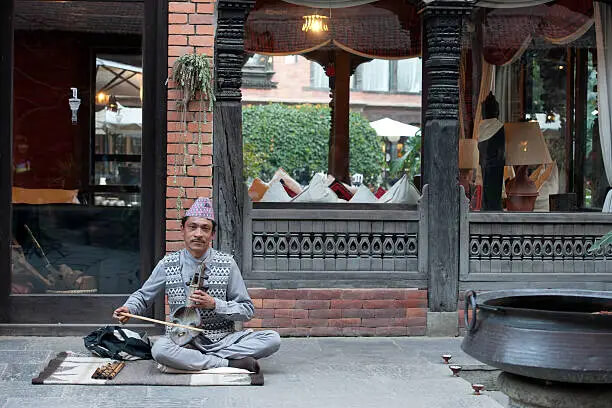
Resham Firiri is one of the most listened Nepali folk songs, which has a cheerful tune and lively rhythm. It is a tune which is learned and liked by all the people in Nepali irrespective of their age. This song can be heard during cultural programmes, community events or on the streets in the villages and hills of Nepal. Its lyrics are easy to sing because they are simple and it has an easy-to-sing tune.
Many travellers consider Resham Firiri to be one of their Nepali experiences. If you are hiking, you might hear it sung by people from your area in teahouses or when they gather in the evening. Even if you do not know the Nepali lyrics, the music is easy to enjoy. This blog explores the Resham Firiri lyrics, their meaning and why this traditional Nepali folk song remains popular to this day.
What Is the Resham Firiri Song About?
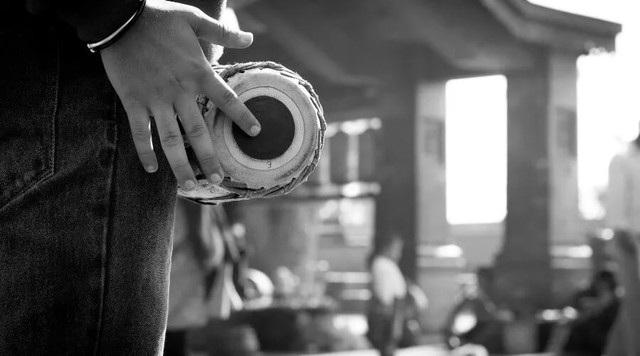
The popular Nepali folk song with playful lyrics, cheerful melody and lively rhythm is Resham Firiri. The song is playful, very positive and about love and happiness and so on. It's easy to understand the words, and it has an attractive melody that is wonderful for all ages. Not only those who speak the Nepali language but it is easy to recognise the song melody and enjoy the song. It has been one of the songs that people like to sing along to throughout the years, be it at home, on the go, or among friends.
Similarly, this song is an important part of the folk culture of Nepal. This song can be heard in many circumstances, especially at festivals, cultural programmes, village gatherings and social celebrations. It is a song that is not only listened to, but sung, and danced along to. It has energetic beats that unite and foster good cheer. Many guests from abroad are made familiar with traditional Nepali music by Resham Firiri. Over time, people hear it while visiting a local village, on a trek or at a cultural event at a teahouse; a brief moment that will leave a lasting impression on Nepal's musical heritage and domestic culture.
Resham Firiri Lyrics in Nepali and English
Resham Firiri is actually a repetition laced with a simple beat. The song is sung in familiar Nepali expressions, it is playful and enjoyable to sing. The original song is in Nepali, but its lyrics are also written in Romanised Nepali to make them easier to read for people who cannot read the Nepali script. For international visitors, providing them with English translations of the song could also be useful to help them with the overall message.
Resham Firiri..., Resham Firiri
Udera Jaamki, Dadama Bhanjyang
Resham Firiri,
Udera Jaamki, Dadama Bhanjyang
Resham Firiri
Resham Firiri..., Resham Firiri
Udera Jaamki, Dadama Bhanjyang
Resham Firiri,
Udera Jaamki Dadama Bhanjyang
Resham Firiri...
-Interlude-
Ek Naale Banduk, Dui Naale Banduk
Mirgalai Taakeko
Mirgalai Maile, Taakeko Hoina
Maayalai Daakeko
Ek Naale Banduk, Dui Naale Banduk
Mirgalai Taakeko,
Mirgalai Maile, Taakeko Hoina
Maayalai Daakeko
Resham Firiri..., Resham Firiri
Udera Jaamki Dadama Bhanjyang
Resham Firiri,
Udera Jaamki Dadama Bhanjyang
Resham Firiri...
-Interlude-
Saanoma Saano, Gaaiko Bachha
Bhiraima Raam Raam
Chhodera Jaana, Sakina Maile
Baru Maaya Sangai Jaam,
Saanoma Saano, Gaaiko Bachha
Bhiraima Raam Raam
Chhodera Jaana, Sakina Maile
Baru Maaya Sangai Jaam
Resham Firiri..., Resham Firiri
Udera Jaamki Dadama Bhanjyang
Resham Firiri
Udera Jaamki Dadama Bhanjyang
Resham Firiri...
-Interlude-
Kukuralaai Kutima Kuti-
Biraalolaai Suri
Timro Haamro Maaya Pirti-
Dobaatoma Kuri
Kukuralaai KutiMa Kuti,
Biraalolaai Suri
Timro Haamro Maaya Pirti-
Dobaatoma Kuri
Resham Firiri..., Resham Firiri
Udera Jaamki, Dadama Bhanjyang
Resham Firiri
Udera Jaamki, Dadama Bhanjyang
Resham Firiri...
What Is the Meaning of Resham Firiri?
Resham Firiri translates to "silk that bends in the wind." Resham means silk and Firiri is a fluttering movement. They form one together and show an image of something light and free in the movements of the breeze. The song is primarily related to love, affection and fun discussion between two people. Some lines are about waiting for someone in a meeting place, other lines with silly comparisons and expressions. Not all the lines are in one definite story; some words are selected for sound and rhythm also.
The following are some of the principal concepts of the song:
- Love/affection: Song about love and feelings between two persons; loving someone for the first time.
- Wait for someone: Two people waiting for each other at a meeting point of two roads.
- Playful expressions: Nepali lullabies are used in the lyrics, creating a lively and cheerful ambiance.
- Flow and movement: Silk swirling in the wind conveys feelings of freedom, movement and happiness.
There's no fixed meaning to the song. Some of the lines are humorous and have poetic phrases in them and other lines have expressions of love in them. Making this simple combination is one of the reasons Resham Firiri is favourite for various generations.
The following is a literal English translation of the Resham Firiri song lyrics:
Udera Jaamki, Dadama Bhanjyang
Resham Firiri,
Udera Jaamki Dadama Bhanjyang
Resham Firiri
The silk that flitters in the wind
Makes me wish to fly towards the hill
Ek Naale Banduk, Dui Naale Banduk
Mirgalai Taakeko
Mirgalai Maile, Taakeko Hoina
Maayalai Daakeko
One barrelled gun, Two barrelled gun,
Aiming at the deer,
I wasn't aiming at the deer
But calling my love
Saanoma Saano, Gaaiko Bachha
Bhiraima Raam Raam
Chhodera Jaana, Sakina Maile
Baru Maaya Sangai Jaam,
A small calf
Praying to Lord Ram at the hill
Couldn't leave my love
So let's go together
Kukuralaai Kutima Kuti-
Biraalolaai Suri
Timro Haamro Maaya Pirti-
Dobaatoma Kuri
Like puppy for the dog
And Meow for the cat
Our love
Waiting at the crossroad
Why Do Trekkers Love the Resham Firiri Song?

Resham Firiri is not just a favourite folk song in Nepal! It has also come to be strongly associated with trekking and mountain travelling. It is considered a famous use of it because trekkers hear it when passing through the villages and when in a teahouse or during cultural performance en route. It is an upbeat song; and an exciting transformation, particularly after an afternoon stroll.
For the people visiting from abroad, the song is also a fine tool to get in touch with the Nepali culture. They probably don't catch every word but its repeated tune helps to remember and sing along.
Trekkers love this song for a number of reasons:
- Easy to remember: Even non-Nepali speakers can easily learn it, as the experience of enjoying these catchy tunes is achieved through repetition of words and catchy melody.
- A connection to local culture: The song familiarises the trekkers with the traditional folk culture of Nepal and also with the expressions.
- Creates a friendly atmosphere: Singing together makes a jolly moment between trekkers, guides, porters and locals.
- Perfect for campfire evenings: This is a true sight and sound experience that is pleasant to hear during campfire evenings, evening stays at mountain lodges, etc.
- A memorable part of the journey: Hearing or singing the song in the Himalayas can become a special memory of travelling in Nepal.
Resham Firiri also wants to emphasize to those who want to trek that Nepal is not just about mountains, landscapes and trekking. This music and traditions, plus the local communities, also play a vital role in the trekking experience.
Travellers interested in experiencing local culture can explore Nepal's cultural trekking experiences and traditional mountain communities.
Where Can You Hear Resham Firiri in Nepal?
It is not mandatory that you go to a special concert to listen to Resham Firiri in Nepal. The song is known by many people and can be heard in various locations, especially where traditional music and tourism coexist in Nepal. These are sometimes played by the local musicians, chanted at cultural events and are loved by travelers who walk through a country.
You might hear it in villages, teahouses and other village gatherings during a trekking trip. Children and locals can sing it when they encounter trekkers on more popular paths as well. Recorded versions of these can also be appreciated in music or video sites prior to or while visiting.
You might hear the song around the following times or places:
- Trekking trails: Resham Firiri is the main song which is sung in villages along the trekking routes in the Everest, Annapurna and other trekking regions.
- Mountain teahouses: After hours on the trail, mountain teahouses offer the opportunity to hear traditional Nepali music, allowing trekkers to escape to the joys of local upbeat song.
- Cultural programmes: Cultural programmes may feature a popular Nepali folk song in tourist areas such as Kathmandu, Pokhara etc.
- Campfire gatherings: Trekkers and guides with the trekking party may sing together at night a song that is in the local Nepali language.
- Social events: This song at community events such as festivals, gatherings, etc. - Singing and dancing enjoyment: You can hear it when people enjoy singing and dancing.
When some words are learned before the journey it is even more fun. It is not required to sing liturgically. If you enjoy the music, you would make more memorable time in Nepal by simply participating in the music.
You can experience the local culture and mountain lifestyle on popular routes such as the Everest Base Camp Trek and the Annapurna Circuit Trek.
Conclusion
Resham Firiri is more popular than just a folk song of Nepal. Due to its cheerful tune, it is a folk song with simple words and lively beat which represent the joys of Nepal's folk music and culture. This song brings people together, it's heard at someone's gathering, in a cultural programme or in a teahouse on a trek track. It is also a beautiful chance for people to visit a part of Nepal and experience the traditions and life of the country.
At Nepalaya Treks, we believe that travelling in Nepal is about more than visiting beautiful places. It's also about enjoying the cultural diversity, getting to know people and discovering the country's traditions. As an experienced trekking and tour company in Nepal, we provide trekking and travel packages to explore exotic nature and cultural heritage of Nepal. Let's dive in and uncover more about the specialness of travelling in Nepal.
Frequently Asked Questions (FAQs)
1) What does Resham Firiri mean in English?
English translations of these words are Resham, silk, and Firiri, fluttering or moving lightly in the wind. The combination forms a picture of the flow of silk in the wind. The word is also a facet of the mellow and bouncy vibe of the song.
2) Who composed the Resham Firiri song?
It is generally believed that Resham Firiri is by the original composer ‘Buddhi Pariyar’. It was recorded at Radio Nepal in 1969, and in the early accounts of the original recording, Sunder Shrestha and Dwarika Lal Joshi are listed along with the other singers. Later it became one of the most popular folk songs in Nepal.
3) Why is Resham Firiri popular among trekkers in Nepal?
The catchy melody, simple words and cultural linkage makes Resham Firiri a popular trekking song among the trekkers. It is sometimes heard in mountain villages, teahouses, cultural gatherings and others. It's also a very jolly song, which makes it pleasant for foreign visitors to sing along with the locals.
4) Is Resham Firiri a traditional Nepali folk song?
Yes, Resham Firiri is a popular traditional Nepali folk song. It features straightforward phrases, a boisterous tune and themes of love and everyday life. It continues to be a favourite song, and is still played during cultural celebrations in Nepal as well as on trekking tours.
Leave Your Comment.
Best Selling
Our Best Selling Packages You May Like.